




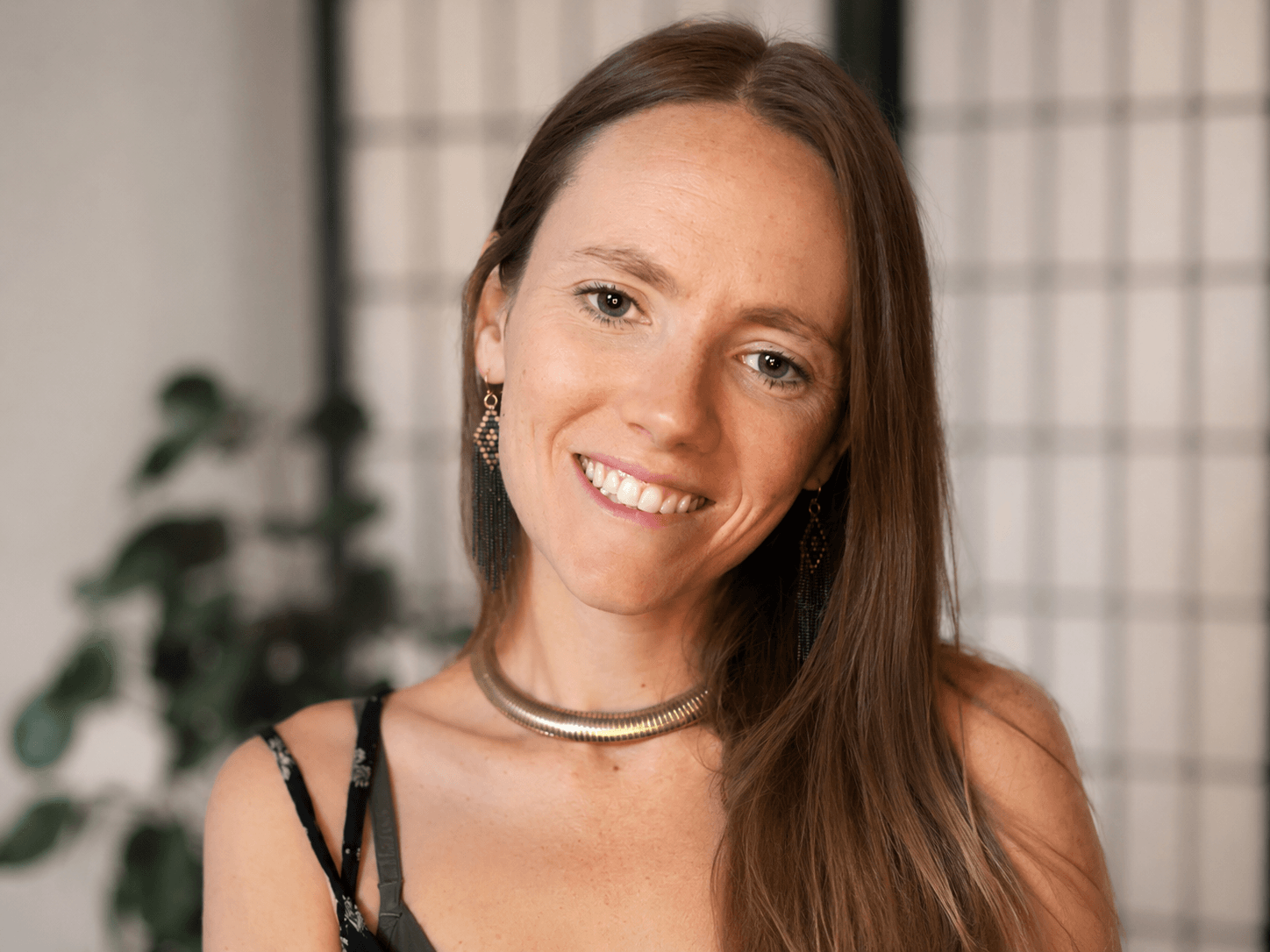
Today we’d like to introduce you to Julia Dyer.
Hi Julia, please kick things off for us with an introduction to yourself and your story.
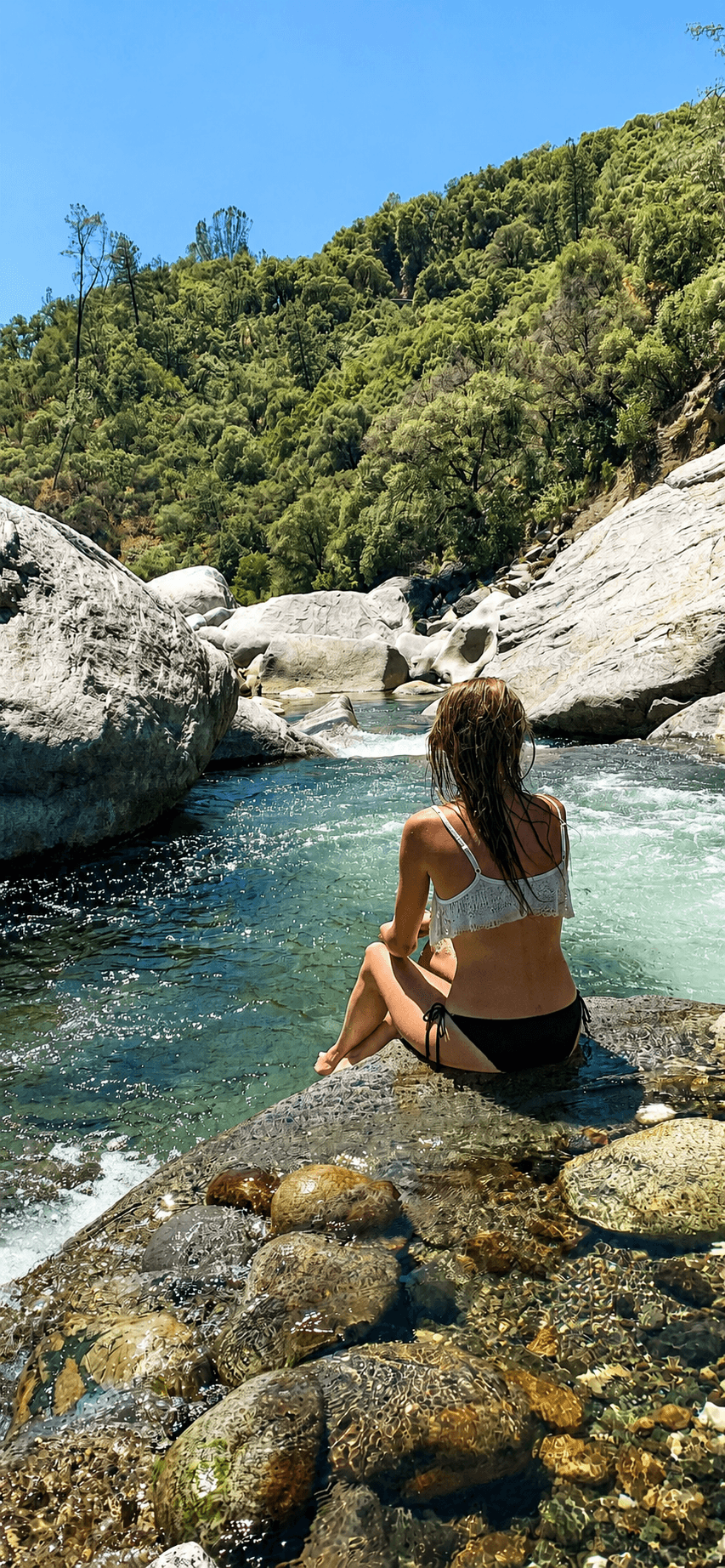
I have been blessed to have been raised on the land of the Sierra Nevada foothills and the people of the Nisenan Tribe, along the Yuba River, within a community that is warm, caring, and also chaotic and unconventional at times. I experienced a childhood in which I could walk downtown on Halloween with my friends at age nine, with no supervision and minimal worry back home weighing on my parents’ shoulders. From the outside, my childhood appeared to be strikingly close to perfect.
I don’t remember it, but I was told by my mom that I had my first panic attack at age four. I had a beautiful childhood growing up in the Sierra Nevada foothills and playing along the banks of the South Yuba River. I also had an internal life that, at times, felt scary and out of control and, to put it bluntly, like anxiety shows up in many children: a very, very frequent stomach ache.
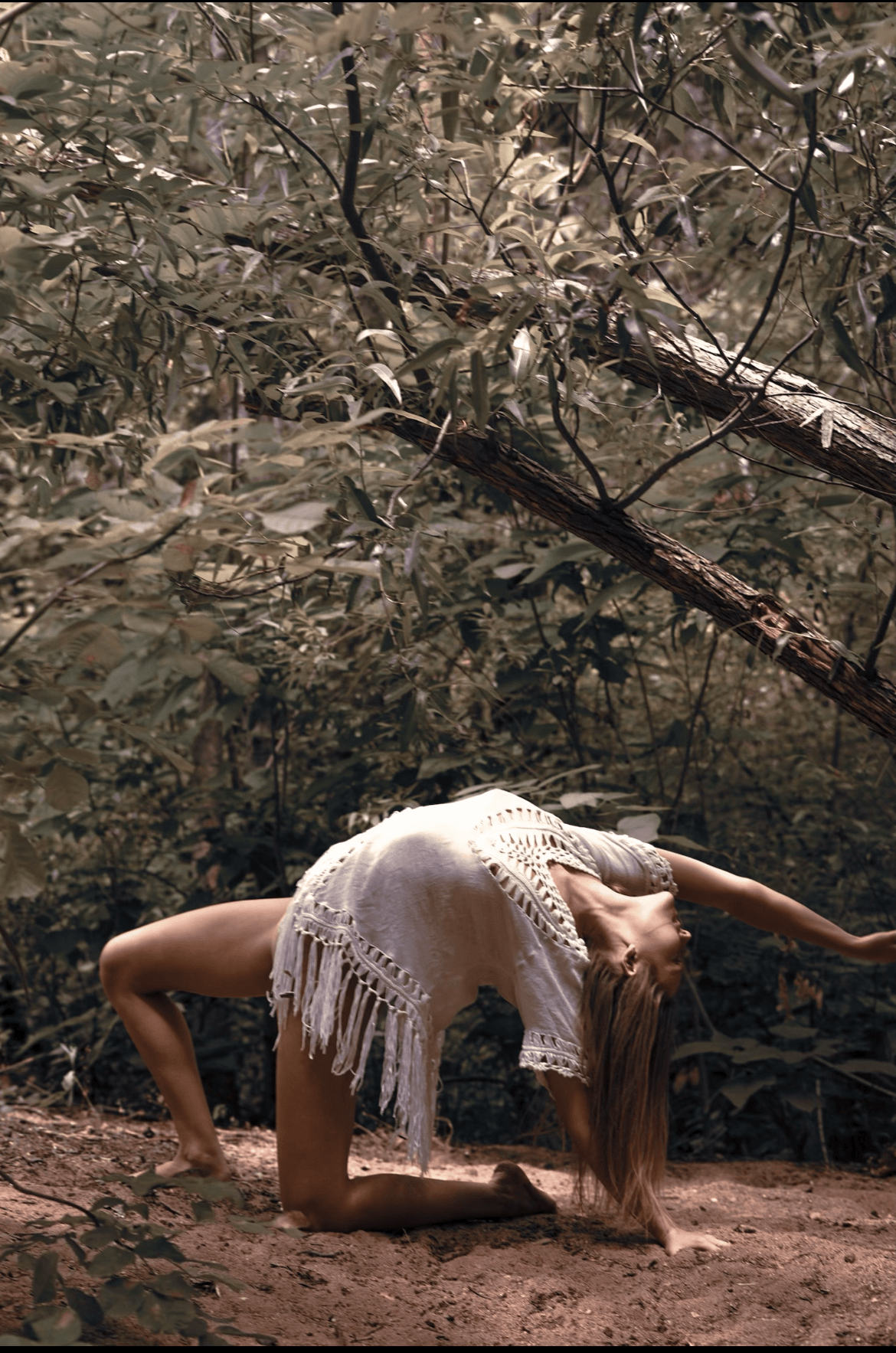
School was an overwhelming place, and dance was one of the only places I found reprieve. Over time, not until my mid-twenties, I began to learn how to walk in the world as a person with an activated nervous system. An activated nervous system is sensing, scanning, always differentiating between safe and unsafe. And it’s not a character flaw—it is an expression of the mind and of attention.
I have always had an urge to educate and facilitate. As a child, I had three cousins who were younger than me that lived in the same town. One boy, three years younger than me, and two girls, seven years younger than me. When I was about ages nine through twelve, we would set up a full classroom in the living room, and I would always play the teacher, and my younger cousins would play the students.
What I’ve learned over the course of my work as an educator, and more importantly, as a student, is that where we are raised will almost never be perfect. That feels like a guarantee for me. What we can rely on is that the environment in which we are shaped is honest, and it’s within our responses to that environment that we can deeply learn about ourselves and about being human.
In other words, what do we do, or what do we turn to, when things don’t feel good, perfect, or even satisfactory on the inside?
These questions rose initially not from curiosity, but from a great need for support and, to put it bluntly, desperation.
During my late teens and early twenties, I entered a position as support staff at a residential substance abuse facility, providing detox support, managing medications, leading recovery groups, supervising clients, conducting drug screenings, and screening personal belongings. As a not-yet-self-disclosed person who had struggled with substances, this job became something like a giant mirror, serving as a consistent reminder of my own complicated and eventually detrimental relationship with substances.
I was 19 and living away at college when, one day, I woke up and my body erupted into extreme and often debilitating pain. I would go on to spend the next six years, into my mid-twenties, battling a chronic pain condition highly known to women and extremely disregarded by public health officials: vulvodynia.
I managed for a while, maybe about five or six months, and eventually was unable to sit through my classes, accepted academic disqualification, and moved back to the Sierra Nevada foothills to be with my parents and extended family.
Then, one day, I was waiting for a smoothie at our local streetside smoothie spot, where there was a large billboard containing a flyer for a yoga retreat at the base of Mount Shasta. At this time, I felt no calling toward much of anything. My focus was strongly invested in the distressed state of my own body.
My dad, George, has always told me, “When you just don’t know what to do, pick something.”
So I did.
I made the choice to load up my car and make the half-day drive to the town of Mount Shasta, where I would meet my teacher, Brooke Shannon Sullivan, whom I would go on to study with for over a decade.
My first day at the retreat at the base of Mount Shasta felt awkward, unfamiliar, and like uncharted territory. I sat in the back. I stayed quiet. I chose to just listen and observe this time—a way of being that is sometimes out of character for me when it comes to my own curiosity.
I expected some portion of lying around in relaxation, some healthy meals, and maybe a really wonderful yoga class.
What I did not expect to encounter was rigor.
Rigor in wisdom transmission, in practice, in relationship to philosophy and methodology.
Essentially, what I found there with my teacher was precision.
After returning to my hometown of Nevada City, California, I enrolled in my first 100-hour yoga teacher training course with Brooke Sullivan at the Wild Temple School of Yoga and Herbal Wisdom. I entered my formative training with little experience in yoga and almost no experience in meditation. In fact, I arrived with a strong aversion to meditation.
At this point in my life, I had an incredibly anxious mind, a dysregulated nervous system, and I was experiencing a decline in my mental health in response to my chronic pain condition. Ask me to close my eyes and “quiet my mind” – and I am immediately scanning for the nearest emergency exit. My aversion to being present with my own mind became strikingly apparent, and I got curious. What am I this afraid of sitting with in silence? What may happen if I do it anyways? And I did. And I did not enjoy what I witnessed within myself: old stories, avoided memories, outdated self-identifications. Then the next question: what do I do with all of this ‘stuff’?
Through the rigor and precision of these trainings, transmitted through the lens of Sri Vidya Tantra, I began to suspect that the mind was not simply a place of chaos, but that there was a kind of scaffolding within and around that chaos that could help us move through life with greater stability.
Sri Vidya Tantra is a highly structured tradition that offers us a detailed way of looking at the mind, attention, the energetic body, and lived experience. What has fascinated me over time is noticing places where some of these ancient frameworks seem to resonate with contemporary understandings of the nervous system, physiology, and neuroscience. I don’t see those systems as interchangeable, but I do find the conversation between them incredibly compelling.
I began to learn that both yoga and personal practice don’t only happen on the mat, but happen in both the mundane and extraordinary moments that thread through our daily lives.
When I later worked in the clinical setting of a behavioral clinic that provides services to families with children diagnosed on the autism spectrum, I experienced what development, behavior, nervous system regulation, communication, and relationship can look like outside the pages of a textbook and in the real world. Meeting individuals with these various challenges taught me more during the work itself than the job training at the beginning.
For me, working with a child who is a “non-speaker” was a profound experience because it asked me to become more open to the many forms communication can take: eye contact, body language, emotional expression, artwork, movement, sign language, gestures, and physically taking you by the hand and leading you in order to make their needs known.
Through undergoing training in yoga under the guidance of a Sri Vidya lineage initiate, curiosity about the nervous system, and clinical and behavioral exposure swirled together and brought forth a passion for teaching.
When I sat down to really think about what teaching means to me, I thought again of my teacher and mentor, Brooke Sullivan, and how the teachings and methodologies of the tradition have been passed to me by way of wisdom transmission and not simply regurgitation of instructional practice.
There was a time when I harbored a great tension between the mystical and scientific worlds. How could I hold the depth and beauty of mysticism while remaining fascinated by, and deeply respectful of, the scientific method?
The answer didn’t come immediately, yet it was rather simple. My own practice allowed me to begin to hold both simultaneously, like two threads coming together in conversation with one another rather than in conflict.
I wanted to create a space for people to just learn and experience being in the company of others in practice. As someone who loves to teach, I also became fascinated by what I call the art of pedagogy.
In addition to creating the space that is now Steady Self School, I wanted to provide a form of education that is progressive, sustainable, and realistic for my students to take into their daily lives, as well as into their personal practice, if that is part of their daily routine.
Steady Self School exists to provide a space for people to learn how to stay with themselves. The tools and techniques taught through Steady Self School aim to gently guide individuals toward a return to the self through movement, through writing, through artwork, through contemplative practice, through sound, and in community.
Steady Self School’s flagship program, The Architecture of Attention, is named as such because it is designed to guide students through the very architecture of the mind: mapping what tantric methodology provides onto tangible, accessible, safe ways of being in practice and in relationship with one’s own inner and outer life.
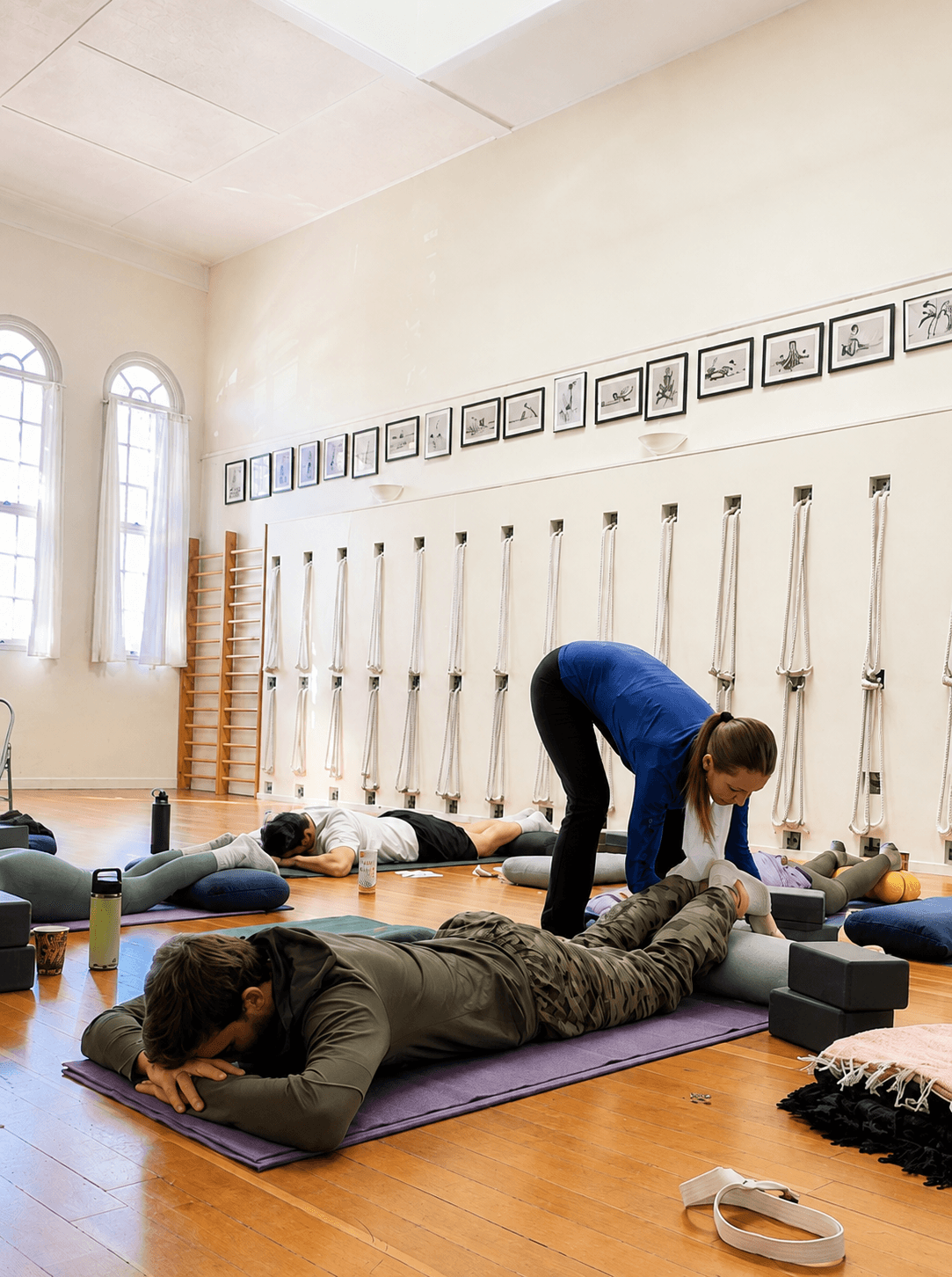
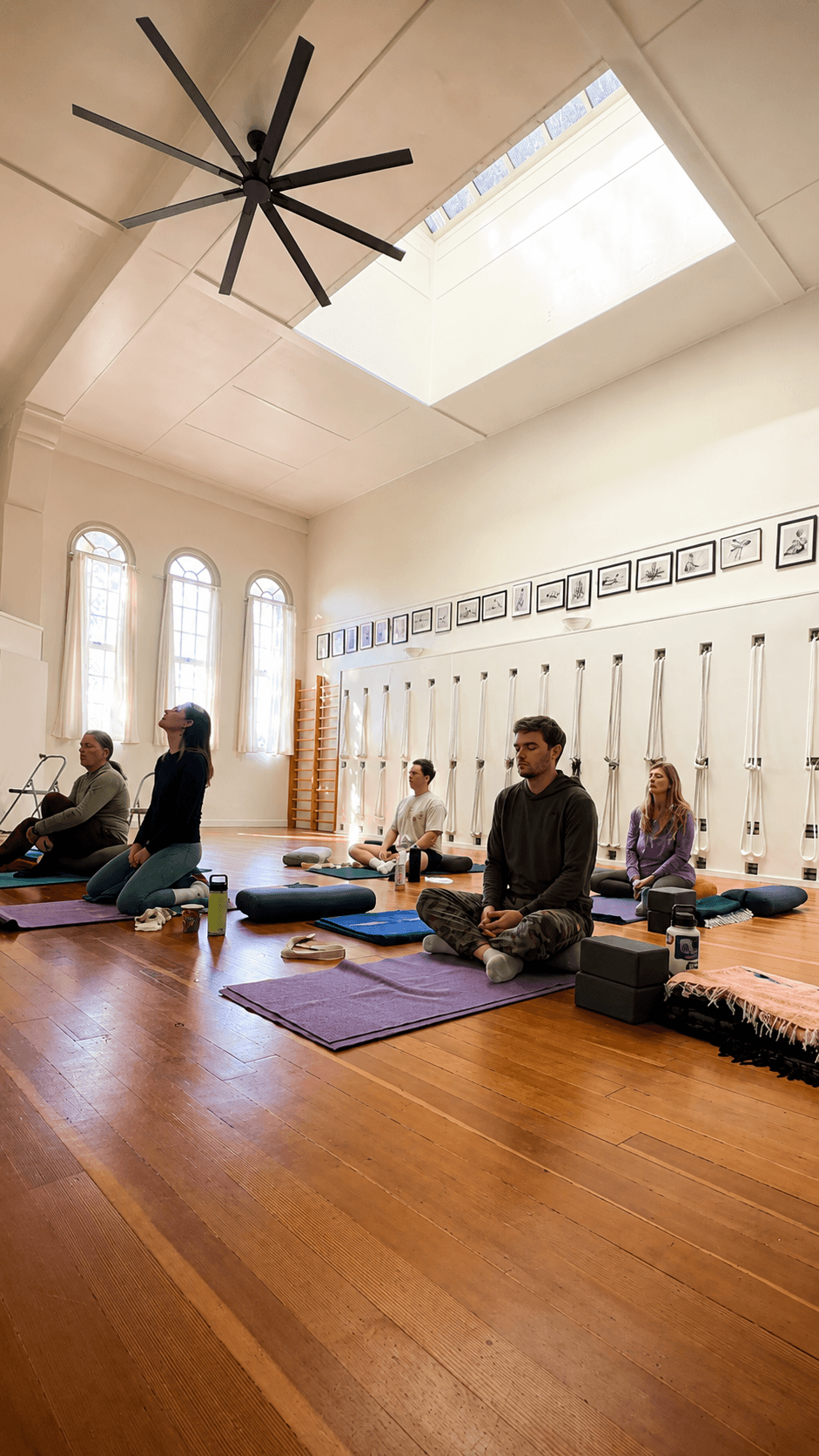
As I continue to teach local donation-based, tantra-informed Hatha yoga classes at Santa Barbara Yoga Center, I have also begun my latest and perhaps most exciting adventure with the Horse Project of Santa Barbara—bringing meditation, attention training, and rescued horses all into relationship with one another.
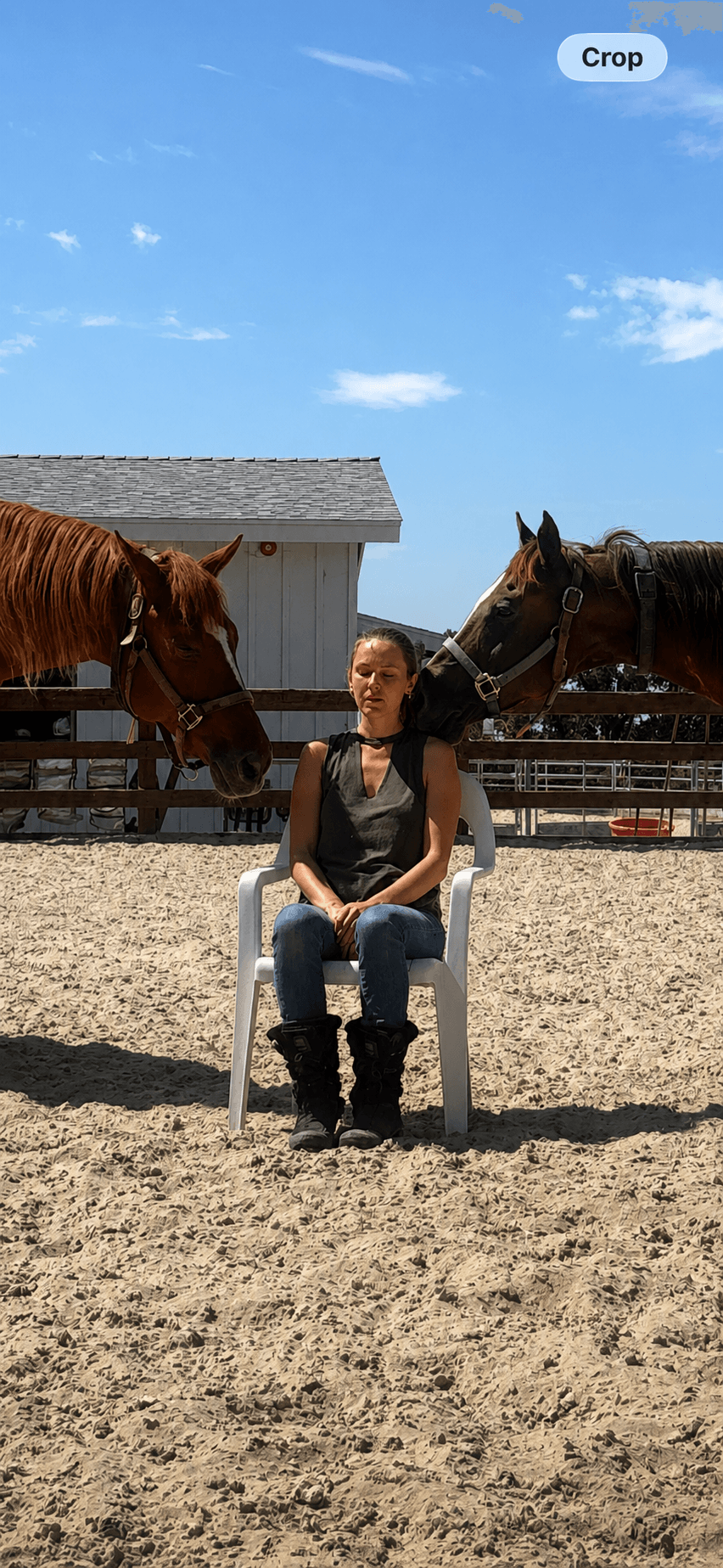
When I headed out to the Horse Project of Santa Barbara to lead the volunteers through a run-through of our fundraiser meditation in the presence of rescued horses, I walked into the arena as the teacher. I walked out with three things: my childlike nature, my heart more full, and the reminder that I am, above all, a student of life. The horses were not encouraged to come near me in the way that they did. Their choice to do so felt like a gift in that moment, and it brought me to tears with a sense of beauty and awe. I felt so safe in that moment that Diego (on the right; looking at the photograph; nose snuggled into my neck) and Ruby (on the left)
And now, I step into a beautiful new chapter. In September of 2026, I begin my graduate studies at Pacifica Graduate Institute in counseling psychology, with a focus on depth psychology and Jungian psychoanalysis.
One of my favorite ways of understanding the word “Tantra” comes through its relationship to weaving—the Sanskrit term carries the sense of a warp or framework, like the threads upon which something larger is woven. That’s what Steady Self School is, and what it will continue to grow into: a great weaving of contemplative practice, nervous system education, and clinical understanding.
Would you say it’s been a smooth road, and if not what are some of the biggest challenges you’ve faced along the way?
At age 29, looking back on my story thus far, it has not been a smooth road. And for that, I am truly grateful. If it were to be a smooth road, I may not have hit the bumps, turns, and potholes necessary to teach through the lens of personal experience.
As I mentioned before, I experienced my first panic attack at age four, according to my mom. It was frequent that I would leave for a field trip or a sleepover, and only hours in, my parents would receive a call that I needed to be picked up due to an intense stomachache. At school, as the classroom started to fill up with kids and buzz with voices, I began to feel overwhelmed. I started anticipating feeling overwhelmed at school around age six.
How did I meet these challenges as a six-year-old child? As many other children do, I pretended to be sick many times to avoid exposing my nervous system to the overwhelm that was school.
One of the most paradoxical challenges I have faced throughout my journey is working at a residential substance abuse facility while privately struggling with substance abuse myself. As years went on from childhood through adolescence, I discovered substances as a way to try to manage, dampen, and suppress what was happening internally. Witnessing the process of other people undergoing recovery, I couldn’t help but recognize my own familiarity with their stories.
By age 25, my relationship with substances had become detrimental, severing friendships, family connections, and my academic and professional life. One really important reason that I reached for substances in the first place is due to the sudden onset of vulvodynia. I spent six years of my adolescence and early adulthood in extreme pain. As a result, I used substances, tuned out of life, and was eventually academically disqualified from school, prompting me to move back to my hometown in Nevada County.
I found myself there with a loss of direction, identity, and purpose. A pre-existing anxiety disorder amplified during my twenties, leaving me often in a state of panic, activation, a trembling body, and extreme difficulty being present. Cognitive behavioral therapy and other conventional therapeutic approaches helped as much as they helped, and I still knew I had so much to learn about myself, my body, and my own system.
And so I began to understand that regulation is not something that you naturally possess, but something that you practice. And so I decided to try, and immediately, both yoga and meditation felt not peaceful or healing, but loud and chaotic.
Sitting with myself in silence surfaced memories, old stories, identities, and a fair amount of discomfort. I didn’t sit down one day and decide to be at peace with my own discomfort. It took time and practice to form a gradual relationship with my own inner attention in order to stay present with what is difficult. This process was assisted through my mentor demanding not perfection, but effort.
Recovery from substance abuse for me, like many others, was not linear. There were many overlaps, setbacks, periods of instability, and many different forms of support coming in and out. When my recovery became serious was when I began to learn how to accept help.
Somewhere along the way, I had decided that it was solely my job to regulate, heal, and learn entirely by myself, when instead I could do just that while also accepting the help of my parents, my mentor, my therapist, my partner and his family, as well as my community.
Working in the field of wellness and holistic health provides a direct laboratory for learning my own boundaries between what I have experienced, what I teach, and what my scope of practice currently is. As I approach clinical training, I become more and more careful about what I decide that I know, what I decide that I don’t know, and what I decide that I am still learning.
Sorting through these challenges can prove difficult without a structured container in which to address them. More importantly, the mainstream wellness market is increasingly interested in quick fixes and techniques for immediate results. This has posed a challenge in the wellness market itself. Focusing on slower, progressive, more sustainable forms of education may not be as flashy or attractive to others.
As a human who experiences nervous system dysregulation and teaches others about nervous system dysregulation, I know more and more each day that I, too, am still learning. Regulation is not a permanent destination, but a state in which we are able to guide ourselves back through practice and repetition.
If you asked me today if you could pave over my road to make it smooth and easy, I would decline. My road has been difficult at times, yes, and also beautiful, meaningful, and full of experiences that I call deep teachers.
Alright, so let’s switch gears a bit and talk business. What should we know?
Steady Self School is an educational and contemplative practice space that I created around a question that has followed me for much of my life: how do we learn to stay in relationship with ourselves, especially when our internal experience becomes difficult, overwhelming, or unfamiliar?
A lot of my work right now centers around two experiences that I think are deeply interconnected: nervous system dysregulation and a loss of relationship with purpose. When we spend a lot of time in states of activation, overwhelm, disconnection, or survival, our attention can become increasingly organized around what feels threatening, urgent, or uncomfortable. And underneath all of that are sometimes quieter questions that become difficult to hear. What matters to me? What am I actually moving toward? What do I care about? What am I creating? What needs to change?
Steady Self School is really a place to explore those questions through education and practice.
The work brings together tantra-informed Hatha yoga, meditation and contemplative practice, nervous system education, attention training, creative inquiry, writing, movement, sound, and community. I am especially interested in the places where ancient contemplative traditions and contemporary understandings of psychology, physiology, and the nervous system can be brought into conversation. I don’t think these systems are interchangeable, and I think it is important not to pretend that they are. They come from very different histories and ways of understanding human experience. But I am endlessly fascinated by what happens when we let them sit next to each other and ask good questions.
Something that is really important to me is that I don’t want to teach people that the goal is to become permanently “regulated.” A nervous system is supposed to move. We become activated, we settle, we orient, respond, connect, protect ourselves, rest, and then inevitably something happens and we begin again. I don’t think steadiness means being calm all of the time. To me, it has much more to do with developing enough relationship with yourself that you have somewhere to return when life moves you.
This comes into my yoga teaching quite a bit. I teach tantra-informed Hatha yoga, but I am really interested in what happens beyond making the physical shape of the posture. Where does your attention go when something becomes uncomfortable? What happens when you slow down? What changes when you notice a sensation before immediately deciding what it means or trying to make it go away? Can movement become somewhere we practice curiosity rather than performance? These are things I think about constantly as a teacher.
The flagship educational program I am developing through Steady Self School is called The Architecture of Attention. I chose that name because I have become fascinated with the fact that attention has patterns. It narrows, scatters, fixates, avoids, orients, becomes absorbed. We can become so used to the particular ways our own attention moves that we don’t even realize there are patterns there. The program is an exploration of some of the architecture underneath those movements, using contemplative methodology, nervous system education, movement, reflection, and practice.
I also really don’t want Steady Self School to become another place where people accumulate enormous amounts of information about themselves without actually experiencing anything. I love learning. Clearly, I have built a school! But intellectual understanding and lived experience aren’t always the same thing. Sometimes learning happens in meditation. Sometimes it happens while moving your body or writing something down. Sometimes it happens through another person. And sometimes, apparently, it happens while standing in a field with a rescued horse.
My developing work with the Horse Project of Santa Barbara is probably one of the things I am most excited about right now. I am beginning to explore meditation and attention practice in relationship with rescued horses, which has opened another whole area of curiosity for me around what happens when contemplative practice leaves the traditional meditation room and happens in relationship—with other people, animals, the environment, sound, movement, and everything else happening around us. One of the ideas that keeps emerging underneath my work is that we don’t steady ourselves alone.
That is also why community matters so much to me. I want Steady Self School to feel like a school in the most literal and maybe old-fashioned sense of that word: a place where it is okay to be a student. You can experiment with something, ask questions, disagree with something, practice it, leave it alone, come back six months later and understand it completely differently. I think there is a lot of freedom in allowing ourselves to remain students.
Accessibility is also important to me. I currently teach local donation-based classes because I want there to be ways for someone to encounter this work without making a significant financial commitment. Steady Self School is also growing into longer-form educational programs and experiences for people who want to study and practice more deeply.
It’s actually difficult for me to put Steady Self School into one category. It isn’t exactly a yoga school, a nervous system program, a meditation platform, or a personal development space. There are pieces of all of those things within it. That used to make me feel like I needed to narrow it down more, but increasingly I think the interdisciplinary nature of the school is part of the point. Human beings aren’t particularly easy to put into categories either. We have bodies, histories, relationships, nervous systems, imaginations, patterns of attention, creative lives, and questions about meaning and purpose. I am interested in where all of those things meet.
As I begin my graduate studies in counseling psychology, with an emphasis in depth psychology and Jungian psychoanalysis, I know the school is going to continue changing. I actually want that. I don’t want to build a body of work around what I know right now and then spend the next twenty years protecting it from change. I want to build something capable of becoming deeper as I do.
I think that is probably one of the most important things I can say about the future of Steady Self School. I don’t promise people a perfectly steady life because I don’t think such a thing exists. What I hope to continue creating is a place devoted to learning, practicing, asking better questions, and developing forms of attention that help us meet the lives we actually have—and perhaps become a little more able to recognize the lives we want to create.
Who else deserves credit in your story?
In the name of nervous system regulation, the first people who deserve credit are my mom, Suzie, and my dad, George. As infants, toddlers, young children, teenagers, and even sometimes as adults—but particularly during the very first year that we arrive on this earth—we learn to regulate stress, emotion, and the physiological responses that accompany them by means of the adults around us, which, in my case, were my parents.
I was fortunate enough to attend an arts charter school where I got to participate in a different form of art every day at school. I have much gratitude for my teachers, kindergarten through eighth grade, some of whom I am still in contact with.
Meeting my teacher, Brooke Sullivan, was a real turning point in my life. She provided me with a grounded presence that didn’t demand perfection. She was willing to hold my hand both literally and figuratively through trembling from nervous system dysregulation, as she guided me slowly, over many years, to begin to learn my own inner landscape.
And there is also my therapist, whom I have worked with for about five years. She is a depth psychologist who also studied at Pacifica Graduate Institute. My work with her has been transformative and has served as another pillar of the entirety of the foundation of my personal and professional life.
Pricing:
- Steady Self Assessment: Free
- Local Hatha Yoga Classes at Santa Barbara Yoga Center: Donation-based
- The Architecture of Attention: $350/10 week program
- Special events and community offerings: Pricing varies; select offerings are donation-based or offered in partnership with local organizations.
Contact Info:
- Website: https://steadyselfschool.com/
- Instagram: https://www.instagram.com/steadyselfschool/
- Facebook: https://www.facebook.com/profile.php?id=61584238041815
- LinkedIn: https://www.linkedin.com/in/julia-c-dyer/
- Youtube: https://www.youtube.com/@steadyselfschool
- Other: Steady Self Assessment https://steadyselfschool.com/quiz: