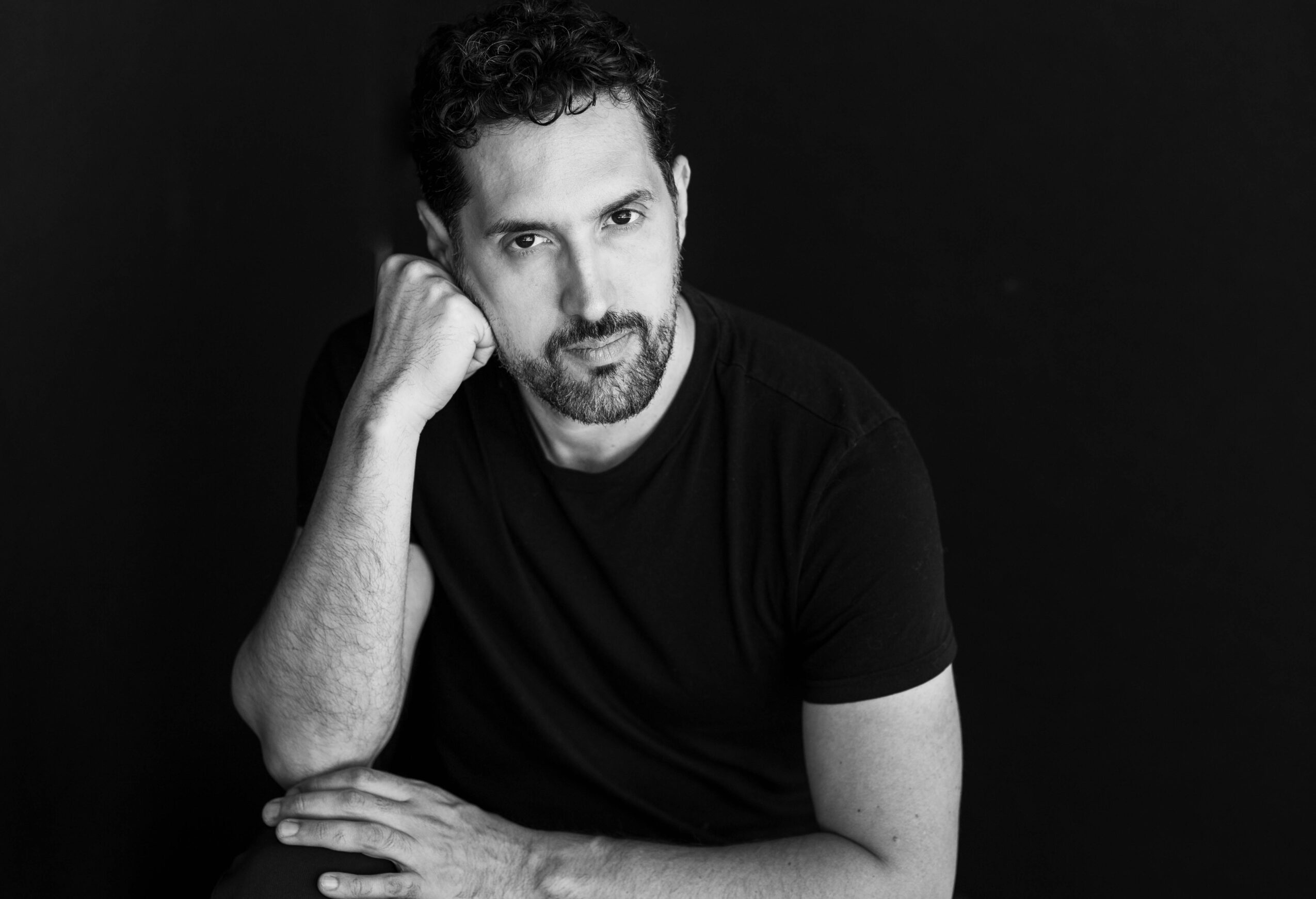





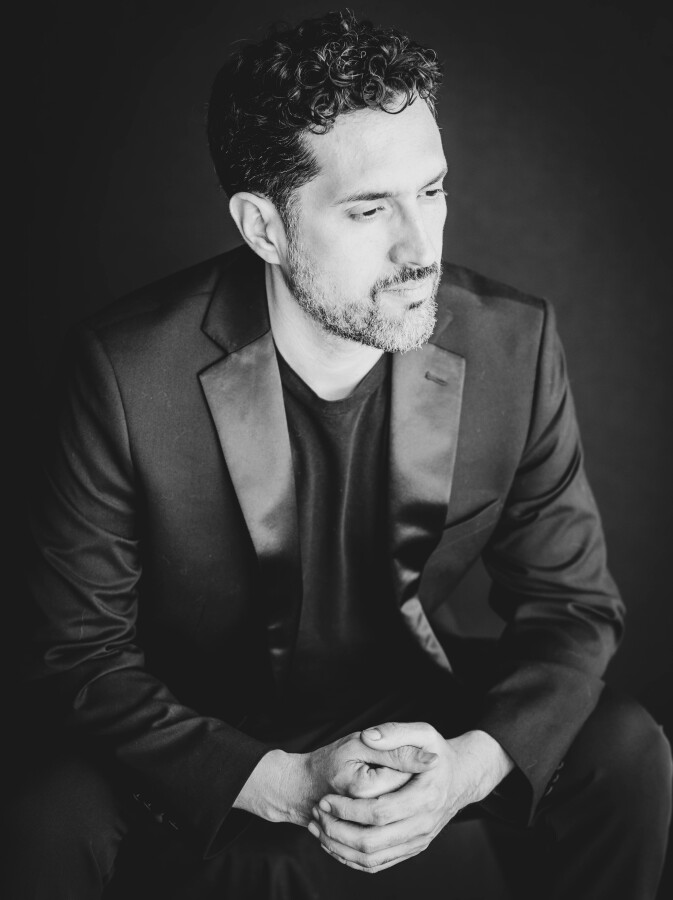
Today we’d like to introduce you to Andres Martin.
Hi Andres, so excited to have you on the platform. So before we get into questions about your work-life, maybe you can bring our readers up to speed on your story and how you got to where you are today?
I was born in Buenos Aires, Argentina, and music has been the center of my life for as long as I can remember. I began playing professionally at a very young age, and in my early twenties life brought me to Tijuana, where I joined the Orquesta de Baja California. What I initially imagined as one chapter of my career became more than two decades with the orchestra and, eventually, a completely new artistic and personal geography for me.
During those years, I developed simultaneously as a double bassist, performer, soloist, and composer. Composition gradually became the center of my creative life, and something happened that I could never have planned: my music began traveling. Today, my works are performed in more than twenty countries around the world, and they have connected me with musicians and institutions ranging from young students discovering my music for the first time to organizations such as the San Diego Symphony, San Bernardino Symphony and, more recently, the Los Angeles Philharmonic.
But while my career was becoming increasingly international, something else was happening much closer to home.
Living in Tijuana, just minutes away from San Diego, I naturally began developing relationships on both sides of the border. I never really thought of this as a formal mission. It was simply my life. I was an Argentine musician working in Mexico, collaborating with American musicians, with friends, colleagues, students, and audiences in all three countries. Eventually, I stopped thinking about these as completely separate musical worlds.
That has shaped not only my music but also the kind of projects I tend to create. For more than 15 years, I led Contrabajos de Baja California, an annual double bass festival in Tijuana that brought bassists from across the United States and other parts of the world to perform and teach in Baja California. At the same time, I became increasingly involved with San Diego’s musical community, collaborating with organizations and events including the La Jolla Symphony Orchestra, San Diego Bass Fest, San Diego Bass Summit, and eventually developing a strong creative relationship with The Hutchins Consort.
Over time, my compositions themselves began becoming a vehicle for these connections. I have had the opportunity to create projects that put musicians from San Diego and Tijuana on the same stage, and today I am working on several projects that continue to connect institutions and artists on both sides of the border.
I think that is probably the best way to describe how I got to where I am today. I am still a composer and a double bassist, but I have realized that I am also someone who loves creating things that didn’t exist before—not only a new piece of music, but a collaboration, a project, or an opportunity for people to work together.
I was born in Argentina, built an enormous part of my professional life in Tijuana, and San Diego gradually became another essential part of my artistic community. Meanwhile, my music has developed a life of its own around the world. Somehow, all of those places and experiences have become interconnected parts of who I am as an artist.
Can you talk to us a bit about the challenges and lessons you’ve learned along the way. Looking back would you say it’s been easy or smooth in retrospect?
Definitely not, although I am not sure I would have wanted it to be.
One of the biggest challenges has been that my career never followed a conventional path. I have always done several things at the same time: performing, composing, producing projects, organizing festivals, collaborating with different ensembles, and constantly moving between different musical worlds. For many years, I was a full-time orchestral musician while trying to develop my own voice as a composer and build a career around music that I was creating from scratch.
There is also a particular challenge in building an international career while living outside one of the traditional centers of the classical music industry. I built most of my career from Tijuana. Especially when I started, there was no obvious roadmap for how a composer living here could write a piece and somehow have that music find its way to musicians and orchestras around the world.
So much of my career has been built one relationship at a time. One musician plays a piece and introduces it to another. A performance leads to another performance. Someone discovers the music in another country. A collaboration creates another collaboration. It has been a very organic process, and that also means it has required a tremendous amount of patience.
As a composer, there is another kind of struggle that is much more private. Creating something that does not exist yet means spending a lot of time not knowing the answer. I can work for hours, days, or sometimes much longer searching for the musical idea that makes a piece come alive. That uncertainty never completely disappears, no matter how much experience you have. You learn to trust the process, but you never control it completely.
At the same time, many of the things that could have been perceived as disadvantages eventually became important parts of my identity. Living on the border, for example, could have felt like being far away from the center of things. Instead, it gave me access to two extraordinary cultural environments and eventually allowed me to build relationships in both.
I think I learned very early that if the opportunity or the project I imagined did not exist, sometimes I had to create it. That mentality led to festivals, commissions, recordings, collaborations, and relationships that I could not have anticipated when I started.
There have been plenty of difficult moments, uncertainty, and projects that took years to become reality. But looking back, the road makes sense to me precisely because it wasn’t straight. The things that initially seemed disconnected—Argentina, Tijuana, San Diego, performing, composing, tango, classical music, organizing projects—eventually became the ingredients of the artistic life I have today.
Thanks – so what else should our readers know about your work and what you’re currently focused on?
At the center of everything I do is composition. I am a composer and double bassist, and I write music for orchestras, soloists, and chamber ensembles. My background is very eclectic: I grew up in Argentina, spent more than two decades as an orchestral musician with the Orquesta de Baja California, have a deep relationship with tango and Latin American music, and at the same time have spent my life immersed in the classical tradition. All of those experiences have gradually become part of my musical language.
I am probably best known internationally for my music for the double bass. My Double Bass Concerto No. 1 has developed a life far beyond anything I imagined when I wrote it and is now performed by bassists in many different countries. More broadly, my works are currently performed in more than twenty countries around the world.
What has been especially meaningful to me is seeing the music become part of the professional and educational life of the instrument. My works can now be found in the libraries of some of the world’s leading music schools and universities—including Juilliard, Curtis, Indiana University, Rice University, and the Royal Schools of Music in London—and are regularly studied and taught by bassists and teachers around the world. My Double Bass Concerto No. 1 has also recently been used as required repertoire for double bass auditions by orchestras including the San Diego Symphony, Los Angeles Philharmonic, and San Francisco Symphony, among others in the United States.
Teaching has also been an important part of my life. Although I decided to stop teaching on a regular basis about eight years ago to concentrate more of my time on composition and performing, I still travel internationally as a guest teacher, giving masterclasses at universities and music institutions. I really enjoy that format because it allows me to remain connected with new generations of bassists and composers without maintaining a regular teaching schedule.
Here in Southern California, my music has been performed by the San Diego Symphony and San Bernardino Symphony, and more recently I had the opportunity to collaborate with the Los Angeles Philharmonic and Gustavo Dudamel. I have also worked with institutions including the La Jolla Symphony Orchestra and many individual musicians and ensembles throughout the region.
But some of the projects I am most proud of are those in which the music has accomplished something beyond the performance itself.
A very special example is Ilimitados, which I was commissioned to compose as the official anthem for World Design Capital San Diego Tijuana 2024. The project brought together the San Diego Youth Symphony and the Orquesta Juvenil de Tijuana for the first time in their histories. The young musicians performed the work together multiple times on both sides of the border, carrying a very simple message that was at the heart of the piece: “when we work together, we have no limits.”
That project encapsulates something that has become increasingly important to me. I love writing music, but I also love when the music becomes a reason for people to meet, collaborate, and create something that couldn’t have happened independently.
Another important part of my work in San Diego is my relationship with The Hutchins Consort. I had collaborated with the ensemble on different projects in the past, and in 2024 I officially joined the organization as Contrabass Violin player and composer-in-residence. We perform on the Hutchins violin octet, a remarkable family of eight violin-family instruments covering the complete range from very high to very low. Working closely with these instruments and musicians has opened a very unusual creative space for me as a composer.
Right now, one of my most important projects is New Beginnings, a 30-minute concerto I wrote for The Hutchins Consort and orchestra. I am producing a recording that brings together The Hutchins Consort and the Orquesta de Baja California. It represents a first for both organizations: neither had previously made a recording in collaboration with an ensemble from the other country. The project will also include concerts on both sides of the border and a world release.
That one is particularly personal. I spent more than twenty years with the Orquesta de Baja California, while The Hutchins Consort has become an important part of my creative life in San Diego. Seeing those two worlds come together through a piece I created is incredibly meaningful to me.
My Argentine background is another important part of my work. I perform with the San Diego-based Camarada Tango Quartet, and for several years we have traveled to Argentina to perform, record, collaborate with musicians there, and immerse ourselves in the contemporary tango culture and later we bring back that experience and share with local audiences here, in both sides of the border. Our latest album was recorded in Argentina, and we recently signed with an Argentine record label that has released it globally.
And now another circle is beginning to close. I am writing a new large-scale work that will bring together the Camarada Tango Quartet and the Orquesta de Baja California next year as part of the celebration of the 100th anniversary of the San Diego Museum of Art.
If there is something that sets my work apart, perhaps it is that I don’t see a clear separation between composing music and creating the circumstances in which music can bring people together. I can be very focused on the smallest details of a score, but at the same time I am always imagining the larger possibilities around it: Who could play this? What musicians could meet because of it? What institution might collaborate with another? What could happen that hasn’t happened before?
I am proud that my music has traveled around the world. That international recognition means a great deal to me. I am proud that bassists are studying my works in universities, encountering them in auditions, performing them with orchestras, and passing them on to their students. But I am equally proud that, here at home, the same music has increasingly become a vehicle for connecting San Diego, Tijuana, and the larger cultural world I come from.
For me, those aren’t different careers. They are increasingly becoming the same story.
Is there anything else you’d like to share with our readers?
I think one of the things I would most like to share is how grateful I am to have built my life in this particular part of the world.
My career has become increasingly international, and music has taken me to places and connected me with people I never could have imagined when I started. But strangely, the larger my musical world has become, the more I have come to appreciate what is possible right here.
San Diego and Tijuana are separated by an international border, but after living and working in this region for more than two decades, I experience them as parts of the same cultural ecosystem. There is extraordinary talent, creativity, and energy on both sides, and I think there is still enormous potential for collaboration between them.
Perhaps that is why I am so interested in creating connections. I don’t want my music simply to exist on a page or even just to be performed. I want it to have a life—to travel, to be taught, to be transformed by musicians, to reach audiences, and whenever possible, to create encounters that would not have happened otherwise.
I feel incredibly fortunate that my music is being performed around the world, but I am equally excited about what we can still create here. I hope to continue contributing to a musical culture in which crossing the border doesn’t feel like leaving one artistic world and entering another, but rather like moving within a larger community.
After all these years, I think I have realized that this border has not been the edge of my artistic world. In many ways, it has become its center.
Contact Info:
- Website: https://www.andresmartin.net
- Instagram: @andresmartinbass
- Facebook: @mgandres
- Youtube: https://www.youtube.com/@AndresMartin