




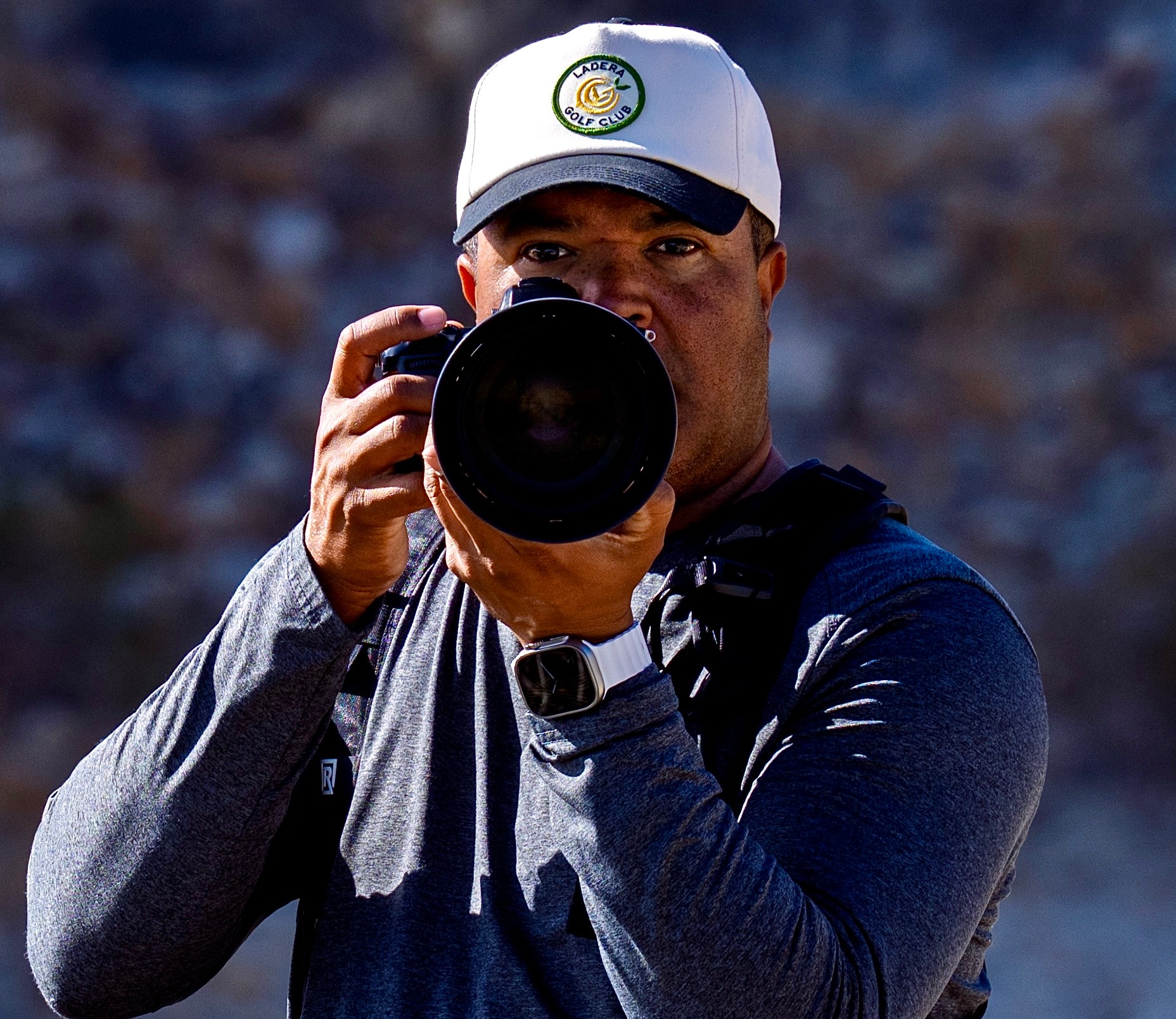
Today we’d like to introduce you to Channing Benjamin.
Hi Channing, thanks for sharing your story with us. To start, maybe you can tell our readers some of your backstory.
My career behind a camera really began in the mid-1990s at Light of the World Christian Church in Indianapolis, Indiana. My father, Bishop T. Garrott Benjamin Jr., was the pastor, and I grew up around a church that understood very early how powerful media could be. I became the church’s media director, and that was essentially my training ground. It was where I learned video production, directing, cameras, lighting and how to tell a story visually.
I didn’t know at the time where those skills would eventually take me, but they opened the door to the entertainment industry. I went on to work as an international concert video director, directing live concert video for major artists, including *NSYNC. It was an incredible education. Live production forces you to anticipate what’s going to happen rather than simply react to it. You’re constantly thinking about composition, lighting, timing, emotion and which camera needs to be where before the moment happens. A lot of the way I photograph today can be traced directly back to those years.
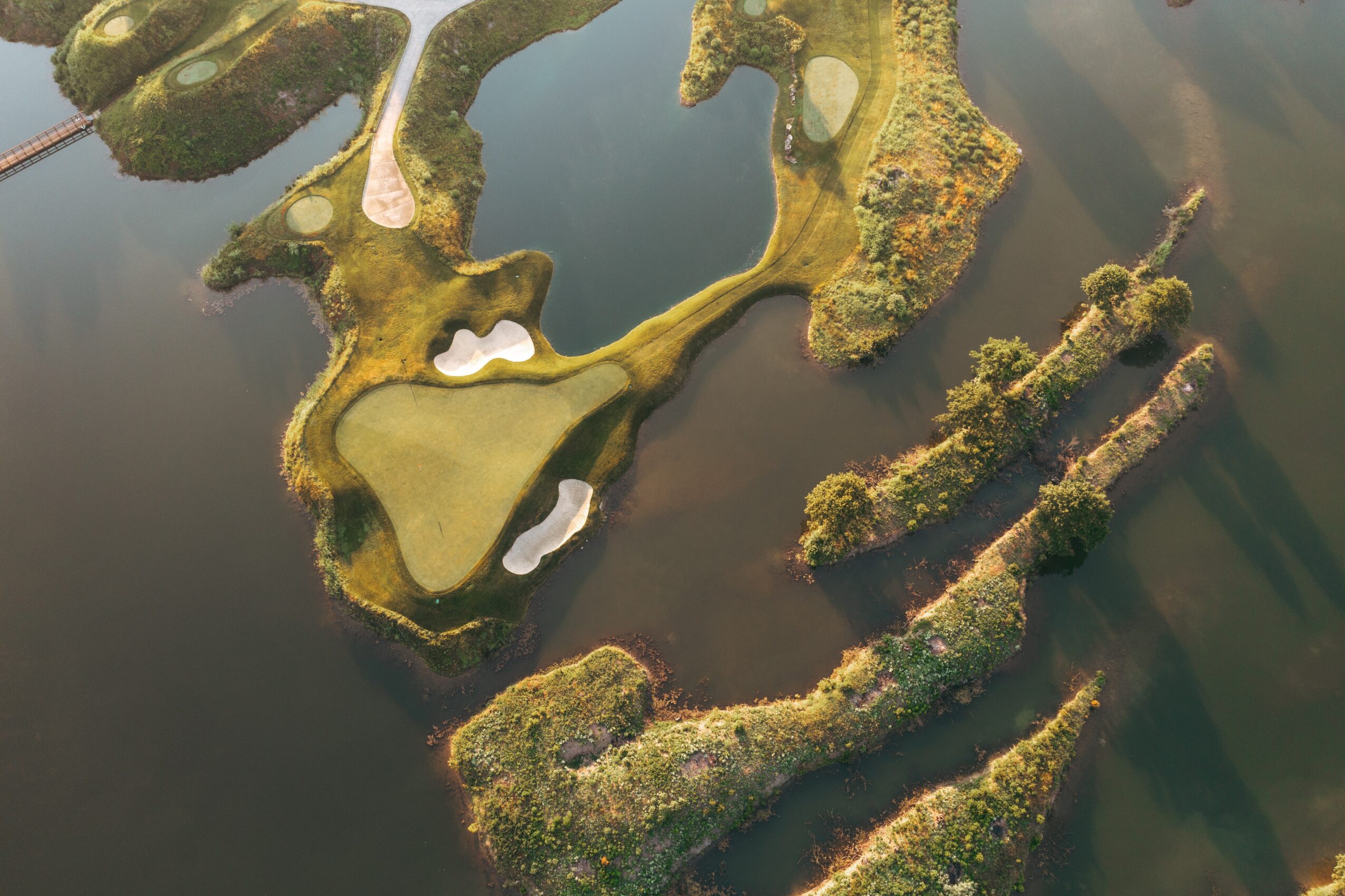
Eventually, still photography became the direction I wanted to pursue more seriously. I photographed a little bit of everything in the beginning, but when I started photographing golf courses and landscapes, something clicked. Golf gave me this incredible combination of landscape, architecture, light, weather and strategy, and I became somewhat obsessed with finding ways to photograph courses differently than people were accustomed to seeing them.
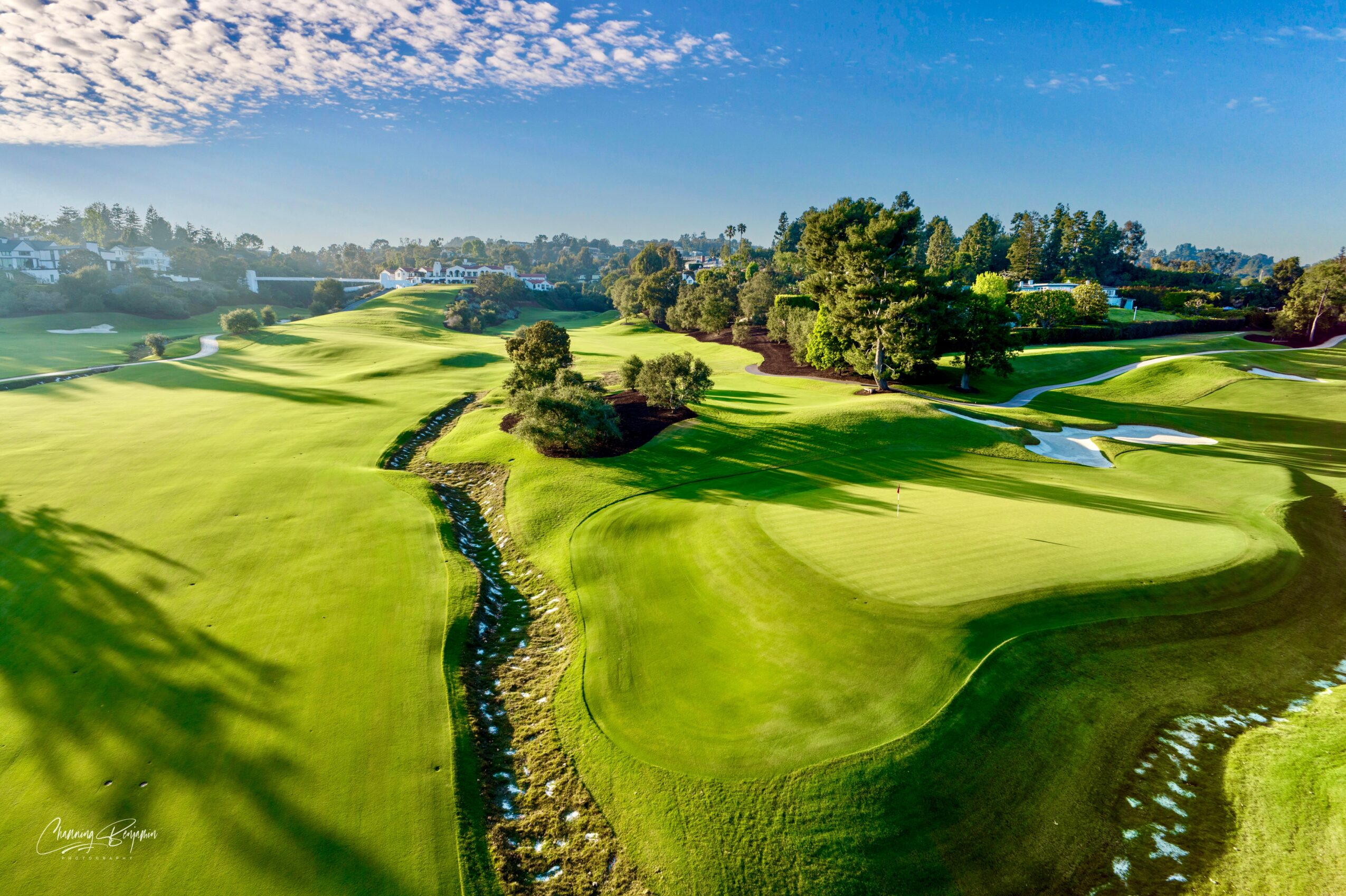
Over time, that became the focus of my career. For more than a decade now, I’ve worked with golf courses, private clubs, resorts, architects and brands around the country. I’ve been fortunate to photograph places including Los Angeles Country Club, The Country Club at Brookline, Castle Pines Golf Club, Ballyneal, Bel-Air Country Club, Ladera Golf Club and many others.
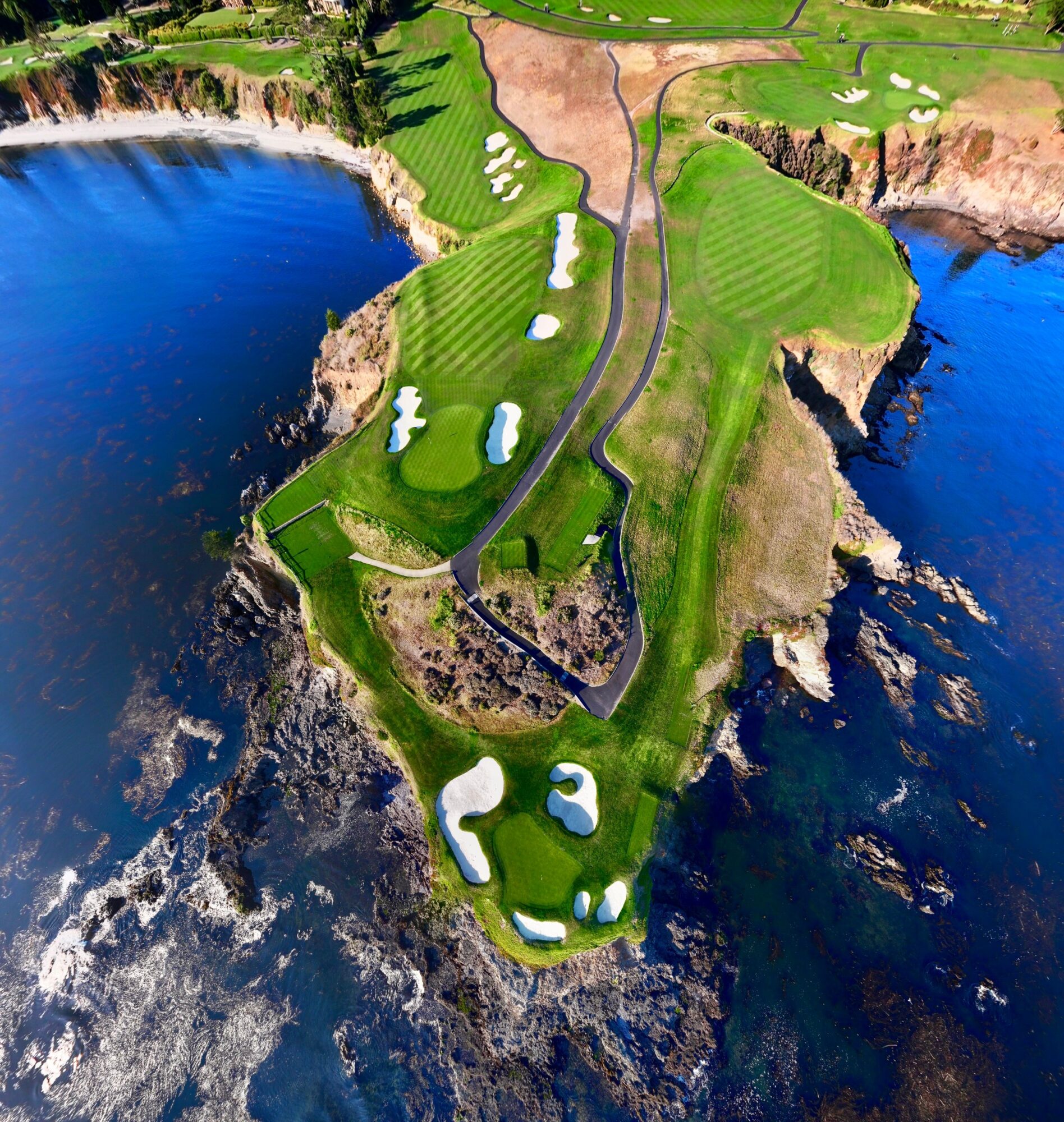
One of the accomplishments I’m particularly proud of is becoming a licensed golf course photographer for Pebble Beach Resorts, a relationship I’ve had for nearly a decade. Pebble Beach is obviously one of the most photographed golf destinations in the world, so being trusted to create imagery of those properties and having my work officially licensed by the resort has been a significant part of my career.
My work today extends well beyond traditional still photography. I photograph from the ground and the air, work extensively with drones, produce video and handle my own editing and post-production. Technology has changed tremendously since I first started directing video in that church in Indianapolis, but my approach really hasn’t changed that much. I’m still looking at light, composition and timing and trying to anticipate the moment rather than chase it.
I’ve also been able to turn the photography into other opportunities, including fine-art collections, commercial and editorial work, and projects that combine golf, photography and travel.
When I look back, it’s a pretty unconventional path—from learning video production at my father’s church in Indianapolis, to directing concert video around the world, to eventually building a career photographing some of the most recognized golf properties in the country.
But to me, there has always been one common thread. Whether I’m directing a concert with thousands of people in the audience or standing alone on a golf course before sunrise waiting for the light to hit exactly the right place, I’m still doing what I learned to do all those years ago: anticipating a moment and figuring out the best way to tell its story visually.
Alright, so let’s dig a little deeper into the story – has it been an easy path overall and if not, what were the challenges you’ve had to overcome?
It definitely hasn’t been a completely smooth road. One of the biggest challenges has been that there really wasn’t a roadmap for the career I wanted to build.
I didn’t come through a traditional photography background. I came from video production and live entertainment, and when I eventually became serious about photography, I had to figure out not only how to become a better photographer, but how to turn that into an actual business.
Golf photography in particular is a very small and specialized world. Early on, I had to convince people to give me access and opportunities before I had the body of work or reputation I have today. There were plenty of emails that went unanswered, projects I didn’t get and times when I had to create opportunities for myself rather than wait for someone to offer them.
Another challenge has been learning the business side. Being a successful photographer and running a successful photography business are two very different things. You have to understand relationships, licensing, contracts, pricing, marketing and how to communicate the value of what you create. I’ve learned a lot of that simply by doing it, making mistakes and adjusting along the way.
I’ve also had to learn not to chase what everyone else is doing. Photography is incredibly subjective, and it’s easy to start measuring yourself against other photographers. At some point I realized that developing a recognizable point of view was much more important than trying to fit into what I thought golf photography was supposed to look like.
There are still challenges all the time. That’s part of working for yourself and being in a creative business. But I’ve become much more comfortable trusting my instincts, knowing the value of my work and understanding that some of the things that didn’t work out along the way ultimately pushed me in a better direction.
Appreciate you sharing that. What else should we know about what you do?
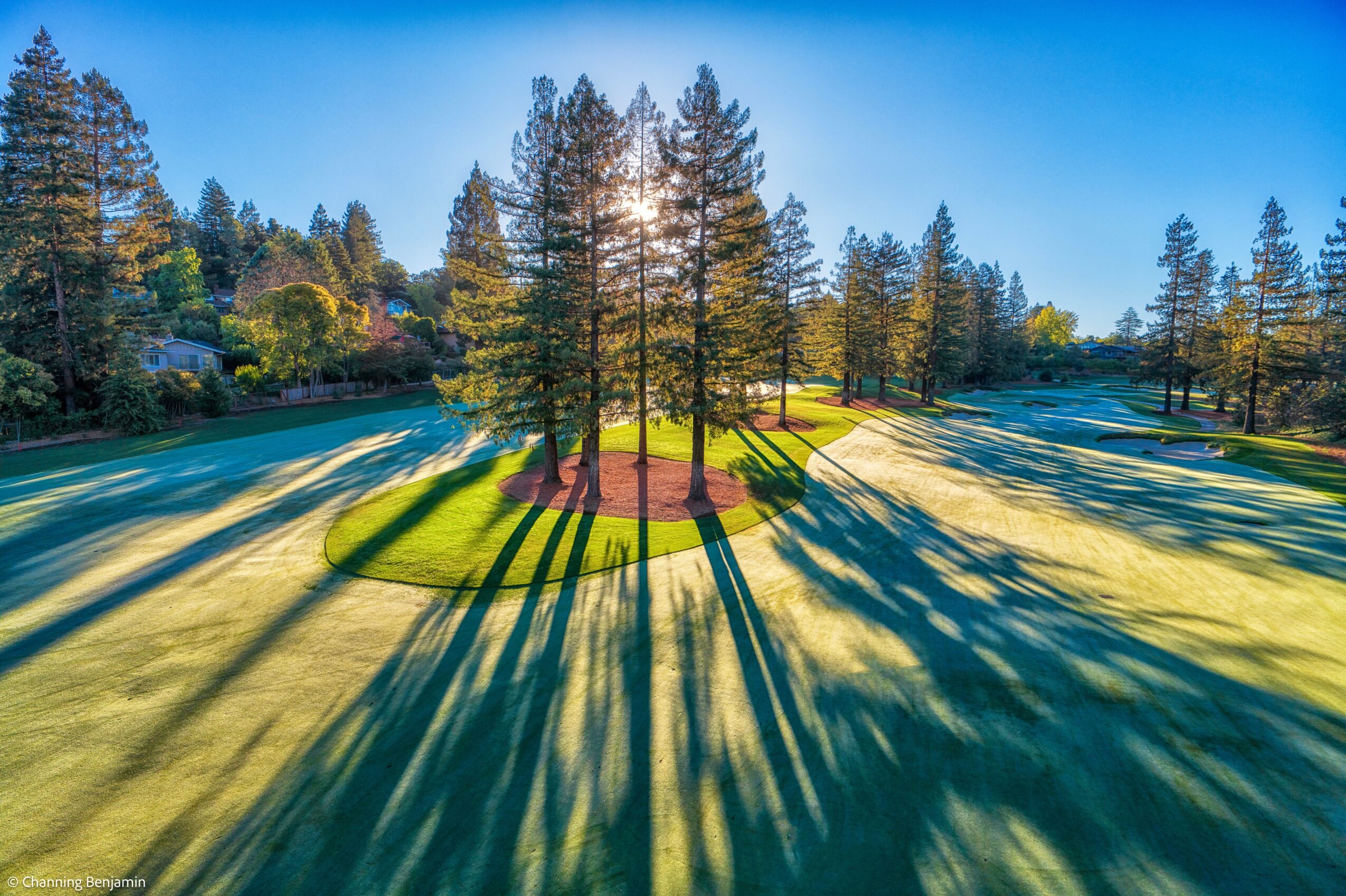
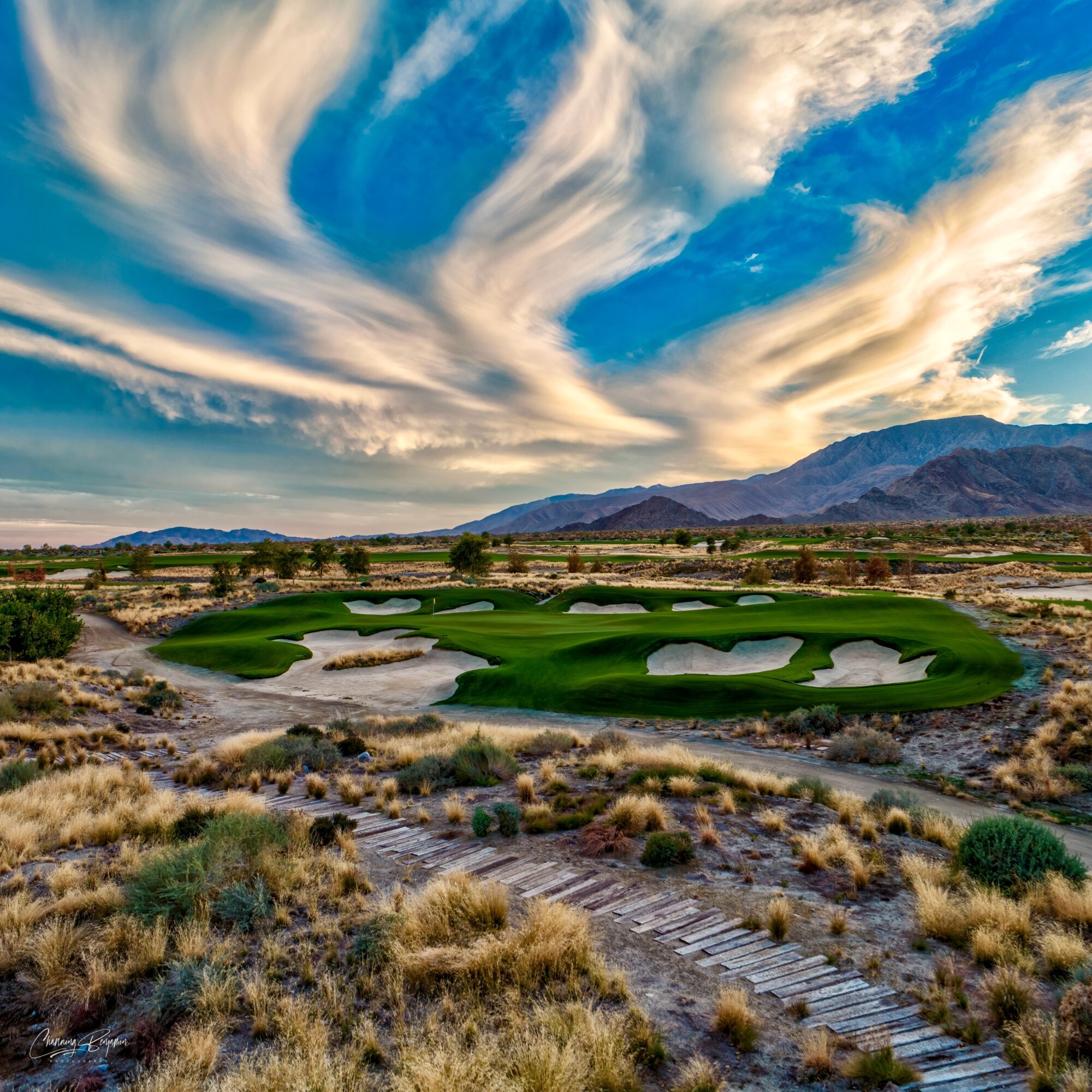
I specialize in golf course, landscape and architectural photography, but I’ve never really thought of myself as someone who simply documents golf courses. My goal is to create images that can stand on their own as art, whether they’re being used in a national campaign, a magazine, on a club’s website or printed six feet wide and hanging on someone’s wall.
A big part of my work is trying to show familiar places in ways people haven’t seen before. I’ll spend a tremendous amount of time studying light, weather, angles and how a golf course interacts with the landscape around it. I work extensively from both the ground and the air, and sometimes an image I’ve envisioned requires coming back multiple times until all the elements come together.
I’ve been fortunate that this approach has given me access to some extraordinary properties around the country, including Los Angeles Country Club, The Country Club at Brookline, Castle Pines Golf Club, Ballyneal, Bel-Air Country Club, Ladera Golf Club, The Bear’s Club and many others.
There are two things I’m particularly proud of professionally. One is being a licensed golf course photographer for Pebble Beach Resorts, a relationship I’ve maintained for nearly a decade. Pebble Beach is one of the most iconic and photographed golf destinations in the world, so having my work officially licensed by the resort and being trusted to create imagery of those properties means a great deal to me.
The other is creating The Golfography Experience, which brings together two things I love—golf and photography. I created it as an opportunity for photographers and golfers to experience incredible golf destinations from a perspective they normally wouldn’t have access to, while learning how I approach photographing a golf course. It has grown into something much bigger than simply a photography workshop. It’s about photography, golf, travel, access and bringing people together around those shared experiences. Building something of my own that allows me to share what I’ve learned over the years has been extremely rewarding.
What probably sets my work apart most is perspective. My background isn’t exclusively in still photography. I spent years directing live concert video, so I learned very early to anticipate moments, work quickly with changing light and conditions, and think cinematically. I bring a lot of that same thinking into my photography today.
I’m also a golfer, which matters more than people might think. I understand the architecture and strategy of the course and what makes a particular hole interesting. But I also try to forget about golf sometimes and simply look at the property as a landscape artist would.
Ultimately, I want someone to recognize one of my photographs before they ever see my name attached to it. Developing that kind of visual identity has probably been the most important goal of my career.
If we knew you growing up, how would we have described you?
I had a pretty unusual childhood in that I was involved in music and entertainment from a very young age. I was a child actor and singer, and I had opportunities to perform professionally while I was still a kid. I sang on several albums with the Gaithers and also sang the National Anthem at Indiana Pacers basketball games. Being in recording studios, performing in front of large audiences and being around professional productions at such a young age definitely shaped me.
I grew up in Indianapolis, and music was a big part of our family and our church. My father, Bishop T. Garrott Benjamin Jr., was the pastor of Light of the World Christian Church, so I was constantly surrounded by music, musicians, performances and creative people. Church was certainly part of that foundation, but my interests extended well beyond it.
I was outgoing and comfortable performing, but I was also extremely curious about what was happening behind the scenes. As I got older, I became just as fascinated with the cameras, lighting, sound and production as I was with being on stage. Eventually, I found myself much more interested in creating what people were watching than actually being the person they were watching.
Looking back, that transition makes a lot of sense. Performing taught me about audiences and emotion, while my curiosity pushed me toward production and eventually directing, photography and visual storytelling.
I’ve also always been very independent and a little obsessive when something captures my interest. I like figuring things out for myself, and I’ve never been particularly interested in following the conventional path. That’s probably been true of me since I was a kid, and it’s definitely followed me throughout my career.
Contact Info:
- Website: https://www.channingbenjamin.com
- Instagram: https://www.instagram.com/channingbenjaminphotography?igsh=NTc4MTIwNjQ2YQ%3D%3D&utm_source=qr
- Facebook: https://www.facebook.com/channingbenjaminphoto?mibextid=wwXIfr
- LinkedIn: https://www.linkedin.com/in/channing-benjamin-382905167?utm_source=share_via&utm_content=profile&utm_medium=member_ios
- Other: www.ChanningBenjamin.Photoshelter.com