



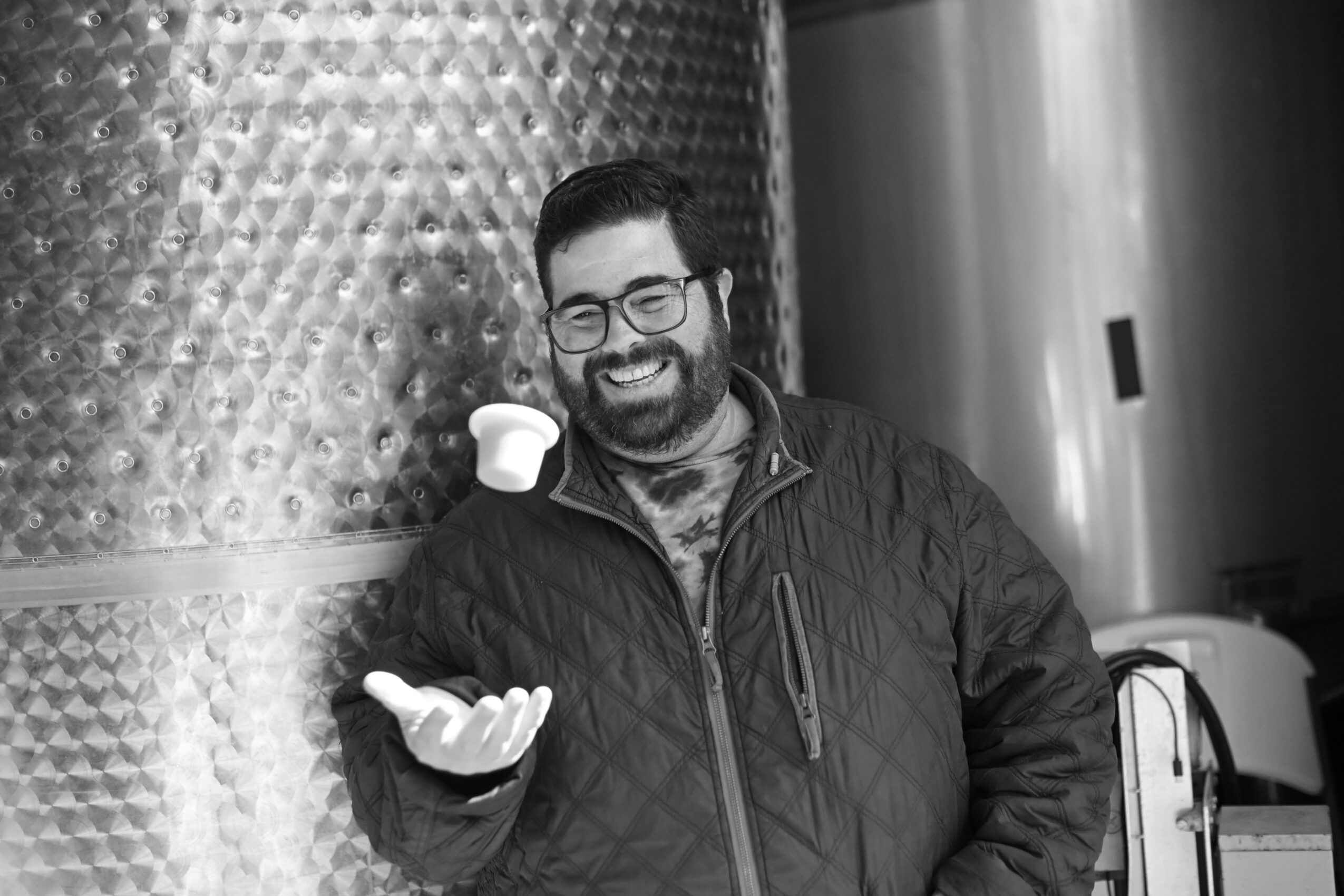
Today we’d like to introduce you to Sam Coturri.
Hi Sam, please kick things off for us with an introduction to yourself and your story.
I grew up in what is now referred to as the Moon Mountain District in Sonoma, where wine and farming were simply a way of life. My dad, Phil Coturri, has spent decades championing organic farming, so from an early age I learned that great wine starts in the vineyard. There’s a family story that as a little kid I wandered around one of my parents’ parties serving guests “turri wine” in Dixie cups, so I guess you could say I’ve been in hospitality my whole life.
That said, I didn’t initially plan on working in wine. I went to the University of Nevada, Reno, where I studied Journalism and Political Science, and after graduating, I worked in marketing, public affairs, and political campaigns. Those experiences taught me how to tell stories, build relationships, and connect with people. Skills that have turned out to be just as valuable in the wine business as they were outside of it.
In 2011, I came back home and joined my family’s winery, launching Winery Sixteen 600 alongside my parents and brother. It felt like the right time to bring together everything I’d learned with the values I grew up with. Today, we focus on making small-lot, single-vineyard wines from certified organic vineyards farmed by Enterprise Vineyards. Every wine is meant to reflect the place it comes from and the care that goes into farming it.
What I enjoy most is sharing those stories with people. Wine has always been about more than what’s in the glass; it’s about the land, the people, the music, the culture, and the memories that surround it. That’s something we’ve tried to capture in everything from our wines to our tasting experiences, even down to the Stanley Mouse artwork on our labels.
Looking back, my path wasn’t exactly linear, but every step from journalism and politics to coming home to Sonoma has shaped how I approach winemaking today. I still believe the vineyard does most of the talking; our job is simply to listen and let each site express itself as honestly as possible.
Can you talk to us a bit about the challenges and lessons you’ve learned along the way. Looking back would you say it’s been easy or smooth in retrospect?
Absolutely not, and honestly, I don’t know many people in agriculture who would say it has been.
Wine has a romantic image from the outside, but behind the scenes, it’s an incredibly capital-intensive, long-term business. You spend years farming a vineyard, making a wine, aging it, bottling it, and paying for every step along the way before you ever have the opportunity to sell a single bottle. You’re constantly making decisions today that you won’t know the outcome of for three or four years.
Then there are the things you simply can’t control. We’ve lived through devastating wildfires, smoke concerns, drought, extreme heat, and increasingly unpredictable weather. Climate change isn’t some abstract idea when you’re farming; it’s something you see every season, and every year seems to bring a new challenge.
Another reality is labor. Agriculture depends on skilled people who have often spent generations learning how to care for vineyards. Immigration policy and heightened ICE enforcement create uncertainty and fear for many of the people who make this industry possible. When the people who know these vineyards best are worried about whether they’ll be able to come to work or stay with their families, it affects everyone. It’s a human issue first, but it’s also one of the biggest challenges facing agriculture today.
Working with family adds another layer. Family businesses are incredibly rewarding, but they’re also full of strong opinions, different perspectives, and decades of history. We don’t always agree, but we all care deeply about the land and the work. I’ve learned that respectful disagreements often lead to better decisions, and that trusting each other’s strengths is part of what keeps a family business moving forward.
The biggest lesson has probably been patience. Farming teaches you that you can’t force anything. You adapt, you solve the problems in front of you, and you keep looking ahead. Every vintage asks something different of you, and every year you start over with the belief that this one might be your best yet.
That’s what keeps me doing this. It’s challenging, humbling, and sometimes frustrating, but there’s something incredibly rewarding about opening a bottle years later and tasting the result of thousands of decisions, countless people, and a season you’ll never get back.
Appreciate you sharing that. What should we know about Winery Sixteen 600?
Winery Sixteen 600 has always been a reflection of my family and the way we believe wine should be grown and made. We produce small-lot wines from organically farmed vineyards throughout Sonoma and Napa, all of which have been farmed by my father, Phil Coturri, and our team at Enterprise Vineyards for decades. That long-term relationship with the land gives us an intimate understanding of each site, and I think that’s what makes our wines unique.
We’re not trying to make a “house style.” Our goal is to let each vineyard express itself honestly. We work with incredible sites from Moon Mountain to Oakville and beyond. Our job is to preserve the character of those places rather than manipulate them. Every decision starts in the vineyard because that’s where great wine is made.
What also sets us apart is the experience. We don’t think of ourselves as just a tasting house; we think of ourselves as hosts. When people visit, we want them to feel like they’re hanging out in someone’s living room, listening to records, sharing stories, and drinking wine with friends. Wine can sometimes feel intimidating, and we’ve worked hard to create a place where curiosity is encouraged and everyone feels welcome, whether it’s their first tasting or they’ve been collecting wine for decades.
Our label tells that story, too. The artwork is by Stanley Mouse, whose work became iconic through the Grateful Dead and the San Francisco music scene. It reflects the culture and creativity that have always surrounded my family and reminds people that wine should be fun, expressive, and personal.
More than anything, I’m proud that we’ve stayed true to who we are. We’ve never chased trends or tried to be the biggest winery. We’ve focused on farming responsibly, making wines we’re excited to drink, and building genuine relationships with the people who support us. If someone leaves with a better understanding of where the wine came from, who grew it, and why that matters, then we’ve done our job.
Is there any advice you’d like to share with our readers who might just be starting out?
Honestly, don’t start a winery…unless you have a lot of money you’re comfortable not seeing again for a few years.
Seriously though, wine is one of the few businesses where you can spend years farming, making, aging, and bottling a product before you ever have the chance to sell it. It’s a long game, and it’s not for people looking for quick returns. If you’re getting into wine because you think it’s glamorous or an easy business, you’ll probably be disappointed.
The real advice is to make sure you love the process as much as the product. You have to enjoy farming, solving problems, working with people, and adapting because every vintage is going to throw something different at you. If your only goal is the finished bottle, you’re going to miss 99% of what this business actually is.
Most importantly, relationships are your greatest asset. Vineyards, growers, cellar workers, distributors, restaurant partners, club members…this industry runs on trust and community. The people around you are far more valuable than any piece of equipment you’ll ever buy.
Don’t spend too much time worrying about what everyone else is doing. There will always be someone with a bigger winery, a higher score, or a flashier marketing campaign. Focus on making honest wine, treating people well, and staying true to your beliefs. That’s what lasts.
Besides, if we were making decisions based purely on economics, none of us would be in the wine business. We do it because we love the land, we love the people, and every once in a while, we create a perfect time capsule of time and place that will live on for decades.
Contact Info:
- Website: https://winerysixteen600.com
- Instagram: @sixteen600
- Facebook: https://www.facebook.com/Sixteen600
- LinkedIn: https://www.linkedin.com/in/samcoturri/
- Twitter: @grapeswithaview
- Yelp: https://www.yelp.com/biz/winery-sixteen-600-sonoma?osq=Winery+Sixteen+600
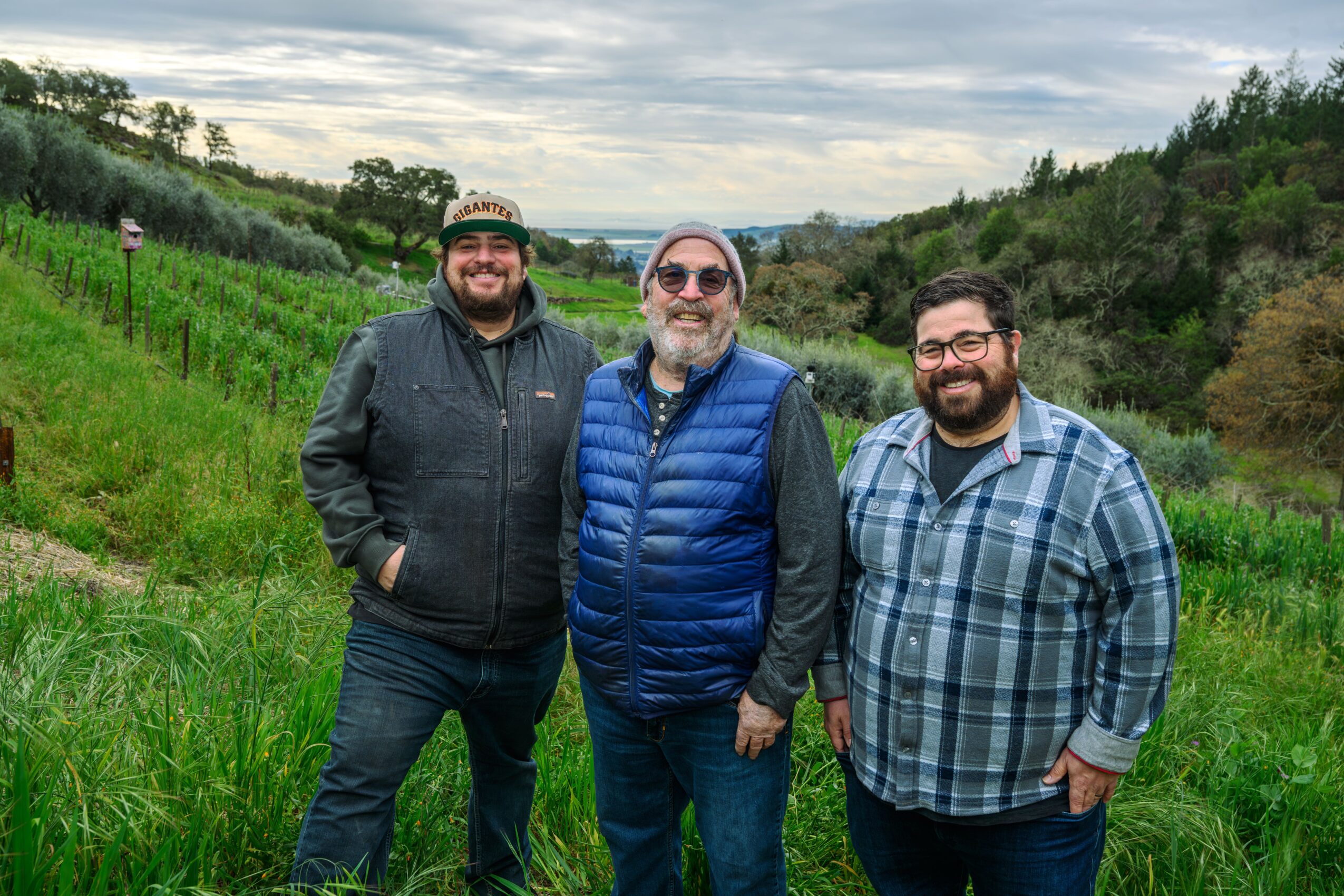
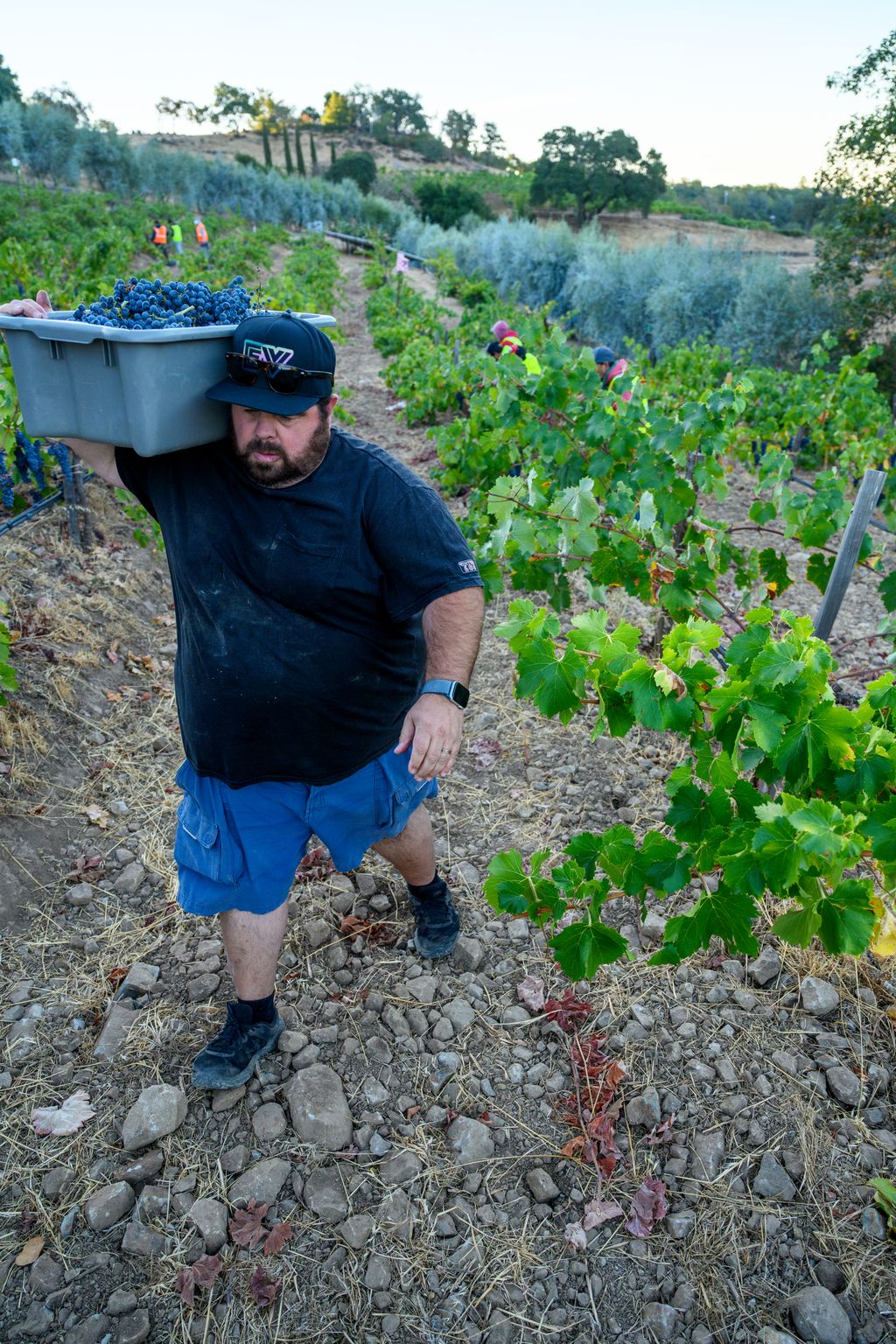
Image Credits
Erik Castro on the black and white and James Joiner on the color photos.