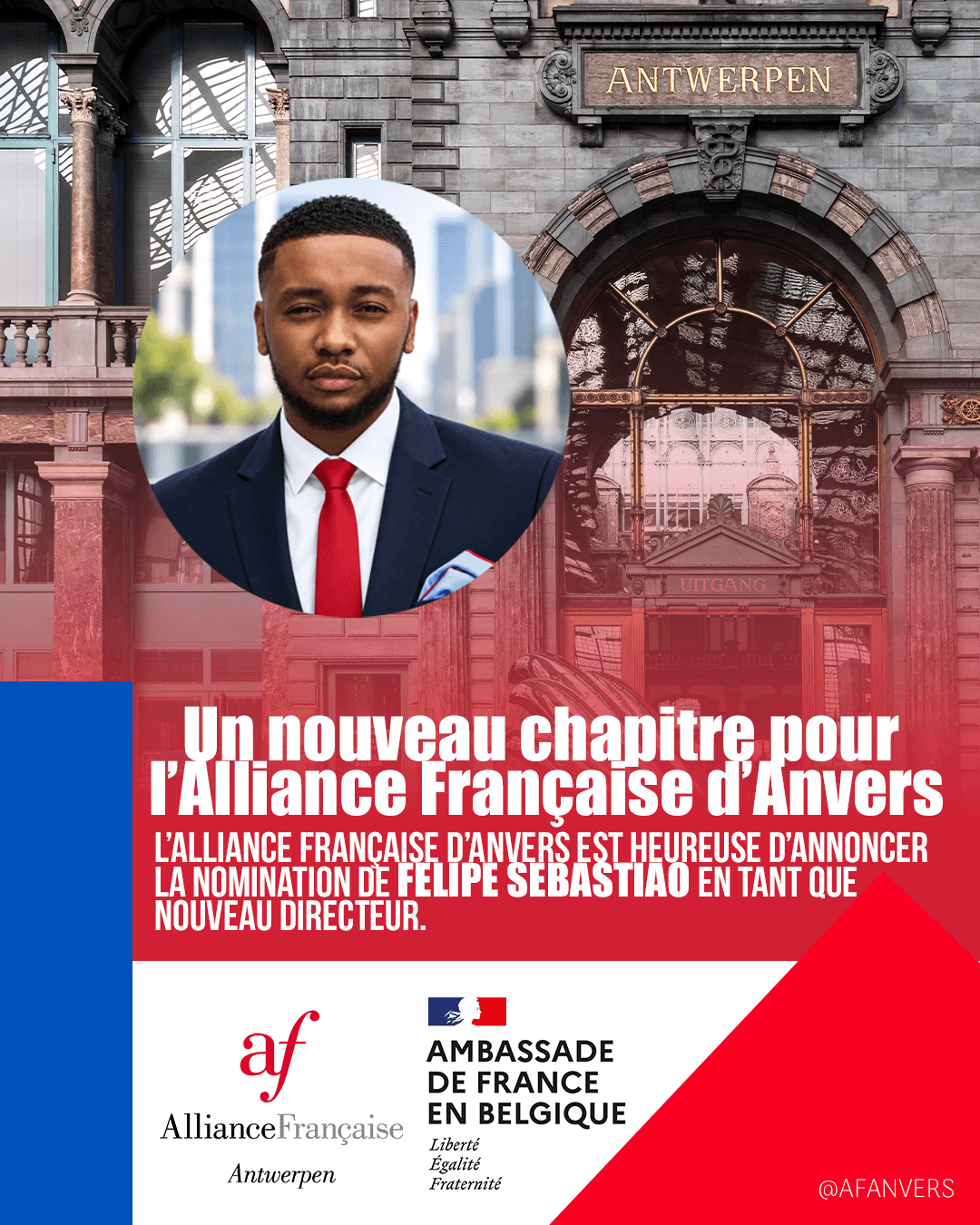





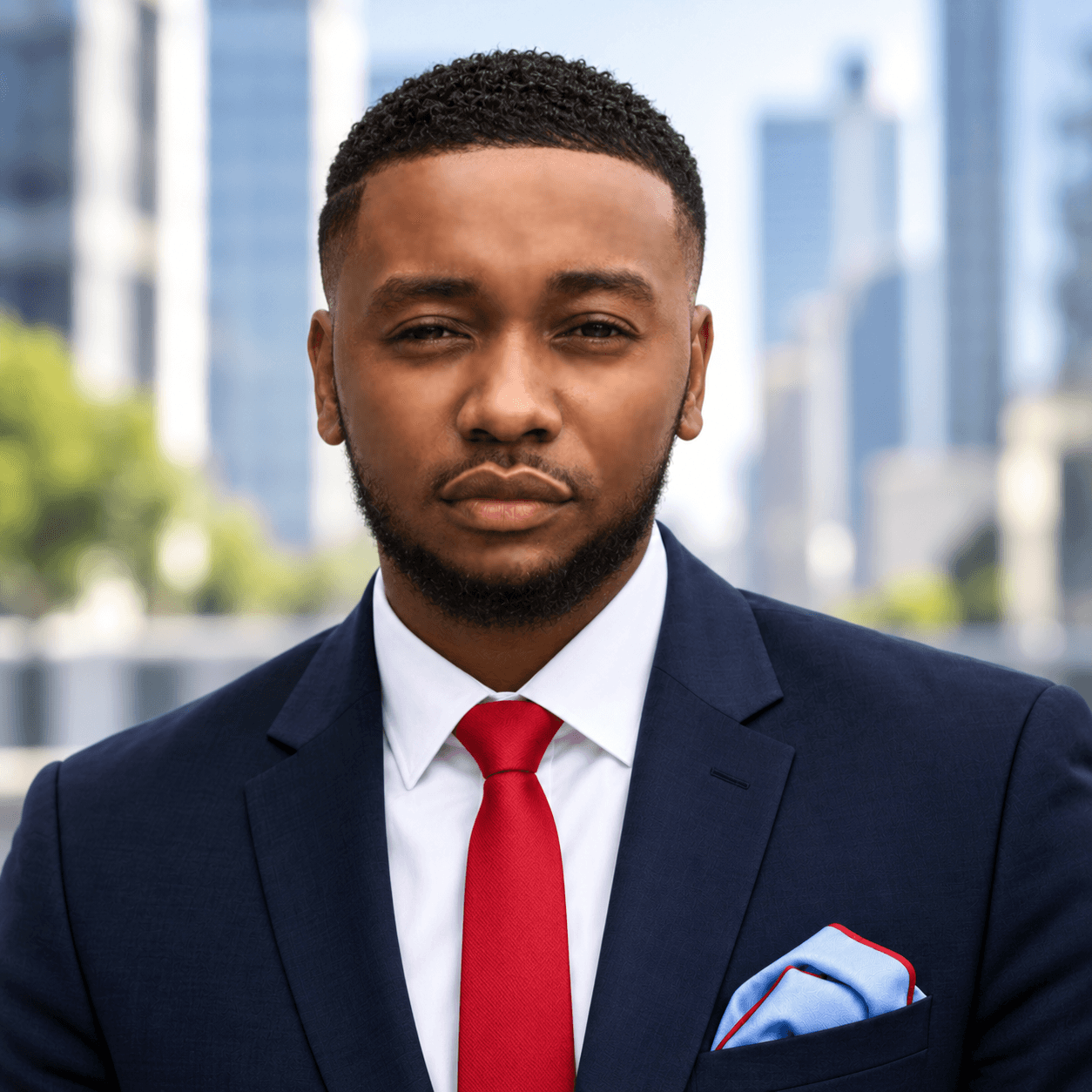
Today we’d like to introduce you to Felipe Sebastiao Calado.
Hi Felipe, so excited to have you on the platform. So before we get into questions about your work-life, maybe you can bring our readers up to speed on your story and how you got to where you are today?
TITLE FOR THE ARTICLE: Felipe Sebastiao Calado: An Executive Voice in International Education
My journey in education has been shaped by one constant belief: education has the power to transform not only students, but families, communities, and entire societies.
I grew up in Dijon before moving to Paris. I also spent a significant amount of time in Germany visiting family, and from around the age of six, I was already strongly exposed to American culture and the English language through books, travel, media, and personal experiences.
Very early on, I was exposed to different languages, cultures, and educational systems. That international perspective stayed with me and ultimately became one of the foundations of the educator and leader I am today.
One of the most important chapters of my professional journey began in Angola, where I founded and directed a school serving students from preschool through secondary education. Building a school from the ground up was an extraordinary leadership experience. I was involved in everything from academic strategy and curriculum to recruitment, teacher development, operations, family engagement, and the overall culture of the institution. At its height, the school served around 600 students and employed more than 50 staff members.
That experience taught me that educational leadership is not simply about managing an institution. It is about building a vision and creating the conditions in which students can succeed, teachers can grow, and families can trust the school.
I later continued my academic and professional development in France, earning graduate degrees in education and teacher training while deepening my understanding of pedagogy, language acquisition, educational systems, and school leadership.
Languages have always been central to my educational philosophy. That passion also led me to become an author. I wrote the Borrowed Elegance series, which explores the fascinating relationship between French and English and the way languages constantly influence one another. The books went on to be placed in more than 30 universities across the United States, which was particularly meaningful to me because it allowed something that began from my own experience with languages and cultures to become an educational resource within higher education.
My career then took me to the United States, where I taught French, public speaking, and speech and debate at the secondary level in Los Angeles.
Returning directly to the classroom after having led a school was extremely valuable. It reinforced something I strongly believe as a leader: every strategy, every policy, and every institutional decision ultimately has to make sense inside the classroom and improve the experience of students and teachers.
During that period, I was particularly proud to see my students achieve outstanding academic results, including several Gold Medals in the National French Contest. But beyond the awards, what mattered most to me was seeing students develop confidence, curiosity, communication skills, and a genuine connection with another language and culture.
Today, my work continues within international and Francophone education in Europe. I serve as Director of the Alliance Française d’Anvers, where my focus is on strengthening language education, developing programs, building institutional partnerships, and creating a dynamic learning community.
When I look at the different stages of my career—school founder, director, teacher, researcher, author, and institutional leader—they may initially appear very different. But for me, they are all connected.
They are about building.
Building schools. Building teams. Building programs. Building bridges between languages and cultures. And most importantly, building environments where people are given the opportunity to grow.
I believe strongly in combining academic excellence with human connection, high expectations with genuine support, and international-mindedness with a clear sense of identity and belonging.
That is the thread that has connected my entire journey, and it continues to guide the kind of education leader I want to be and the contribution I want to make to education globally.
We all face challenges, but looking back would you describe it as a relatively smooth road?
It has definitely not been a completely smooth road, and I think most meaningful leadership journeys rarely are.
One of the biggest challenges has been learning how to build and lead in very different educational environments. I have worked across Angola, France, the United States, and now Europe again, and each system has its own culture, expectations, regulations, and way of understanding education. What works in one context cannot simply be copied into another. I had to learn to listen first, understand the environment, and then adapt my leadership without losing my core values.
Building and directing a school in Angola was probably one of the most formative experiences of my career. When you build an institution from the ground up, there is no manual for every situation. You have to think simultaneously about pedagogy, staffing, finances, operations, families, student needs, and long-term sustainability. There were moments when resources were limited, when difficult decisions had to be made, and when the responsibility of leading hundreds of students and dozens of employees felt very real.
But those challenges taught me something essential: leadership is not about having every answer. It is about being able to make thoughtful decisions, remain calm under pressure, surround yourself with good people, and continue moving an organization forward.
Another challenge has been constantly having to prove myself again when entering a new educational environment. When you move from being a school founder and director to another country or another institution, people do not necessarily know what you have built before. You have to earn trust again. I actually came to appreciate that process because it kept me humble and reminded me that leadership is never simply a title—it is something you demonstrate through consistency, competence, and the way you treat people.
Returning to the classroom after years of school leadership was also an important adjustment. But it became one of the most valuable experiences of my career. It allowed me to reconnect directly with students and teachers and reinforced my belief that educational leadership must remain connected to what actually happens in the classroom.
There have also been personal sacrifices that come with an international career—moving countries, adapting to new cultures, rebuilding professional networks, and sometimes starting again from zero. But those experiences have strengthened my ability to navigate change and uncertainty.
Over time, I have learned not to see challenges simply as obstacles. They are often where the most important leadership development happens.
The difficult moments taught me resilience, but they also taught me empathy. When you have experienced uncertainty yourself, you become more conscious of what teachers, students, and families may be experiencing. You listen differently. You lead differently.
So no, the road has not always been smooth. But looking back, many of the challenges that seemed difficult at the time became some of the experiences that prepared me best for the responsibilities I have today.
Appreciate you sharing that. What else should we know about what you do?
My work sits at the intersection of educational leadership, school development, multilingual education, and international education.
I would say that my strongest area of specialization is building and developing educational environments where academic excellence, strong leadership, cultural intelligence, and human connection can coexist.
Throughout my career, I have worked as a school founder, director, teacher, researcher, author, and institutional leader. That combination has given me a very broad understanding of education. I understand what happens at the strategic level, but I also understand what happens inside the classroom. For me, that connection is essential.
I am particularly interested in school culture, language education, teacher development, student achievement, and the way educational institutions can evolve without losing their identity.
I am also deeply connected to multilingual and international education. Having worked across different countries and educational systems, I have seen firsthand how language can either become a barrier or an extraordinary opportunity. Much of my academic work has focused on language learning, particularly the role that a student’s first language can play in learning another language.
I think one of the things I am known for is building. I enjoy taking an idea, a school, a program, or an institution and asking: how can we make this stronger, more ambitious, more structured, and more meaningful for the people we serve?
That was true when I founded and directed a school in Angola serving hundreds of students. It was true when I returned to the classroom in Los Angeles and worked directly with students in French, public speaking, and speech and debate. And it continues to be true today in my leadership work within Francophone and international education in Europe.
I am particularly proud of the tangible results that have come from that work. Seeing a school grow to serve around 600 students and more than 50 employees was significant because it represented years of institution-building and trust from families and staff.
I am also very proud of my students’ achievements in the United States, including multiple Gold Medals in the National French Contest. Those results mattered to me because they demonstrated that high expectations, strong relationships, and the right learning environment can produce extraordinary outcomes.
Another achievement that means a great deal to me is my work as an author. Through my *Borrowed Elegance* books, I explored the relationship between French and English and the influence these two languages have had on one another. Seeing those books reach more than 30 universities across the United States was incredibly rewarding because it connected my passion for languages, research, and education with students beyond my own classrooms.
What probably sets me apart most is the combination of perspectives I bring to leadership.
I have been the person creating the vision for a school, but I have also been the teacher standing in front of students. I have managed teams, recruited educators, worked with families, studied education academically, written educational resources, and operated across very different cultural environments.
That means when I make a leadership decision, I naturally look at it from several perspectives: What does this mean for the student? What does it mean for the teacher? What does it mean for the family? And what does it mean for the long-term sustainability and identity of the institution?
Ultimately, what I am most proud of is not one title or one achievement. It is the fact that throughout every stage of my career, I have continued to create opportunities for people to learn, grow, and succeed.
That is what I believe educational leadership should ultimately be about.
Is there a quality that you most attribute to your success?
I would say adaptability has been one of the most important qualities behind my success, but adaptability with a clear sense of purpose.
My journey has taken me through different countries, cultures, institutions, and educational systems. Each environment required me to adjust the way I communicated, led, taught, and made decisions. Over time, I learned that effective leadership is not about entering every environment with the same formula. It is about understanding people, reading the context, listening carefully, and knowing when to adapt.
At the same time, I have always believed that adaptability should never mean compromising your core values.
For me, certain things remain non-negotiable: academic excellence, integrity, respect, high expectations, and creating meaningful opportunities for people to grow.
I think this quality has also helped me move between very different roles throughout my career. I have been a school founder and director, but I have also returned to the classroom as a teacher. I have worked at the strategic level while remaining close to students, teachers, and families. That has taught me to see education from multiple perspectives and to never lose sight of the people behind the policies and decisions.
Curiosity is also a major part of that adaptability. I am always learning. I observe other educational systems, study what works, challenge my own assumptions, and remain open to changing my approach when I believe there is a better way.
If I had to summarize it in one sentence, I would say this: I have learned to remain flexible in my methods, but firm in my purpose.
That balance has allowed me to evolve without losing my identity. And I believe that is one of the most important qualities any leader can develop—the ability to grow, adjust, and reinvent yourself while remaining very clear about what you stand for.
I would like to end by simply saying thank you.
Thank you to every person I have met throughout this journey, to every colleague, educator, leader, partner, and friend I have had the privilege of working with—and to those I continue to work alongside today. Every conversation, every challenge, and every collaboration has contributed in some way to the person and the leader I have become.
I also want to thank every student across America who has read, received, or discovered my Borrowed Elegance books. Knowing that something I created has reached students and educational institutions across the country is something I will always be deeply grateful for.
And, above all, I want to thank my family.
My wife has been beside me through the different chapters, countries, challenges, and ambitions that have shaped this journey. And to my children—Priceless, Richness, and my son Goodness—you are my strength, my motivation, and one of the greatest reasons I continue to dream bigger and work smarter.
And as for what comes next, I am especially excited about a new chapter taking shape in Nevada: the International School of Las Vegas, French Excellence Lycée International (FELI), a bilingual French-English international school designed to bring together French academic excellence, international-mindedness, and an innovative educational vision.
None of us builds a meaningful journey alone. I am grateful for everyone who has believed in me, challenged me, supported me, and walked part of this road with me.
Thank you.
Contact Info:
- LinkedIn: https://www.linkedin.com/in/felipesc/