



Today we’d like to introduce you to Rebecca (REBL) Risty.
Alright, so thank you so much for sharing your story and insight with our readers. To kick things off, can you tell us a bit about how you got started?
Oh my gosh, where to start? It’s crazy to think I’ve had 20+ years in my career now. Like a lot of young graduates, I didn’t know what I really wanted to do after university. I graduated from Virginia Tech, got into my Mercury Capri Convertible, and drove across the country to California with my fiancé. My mother really wanted me to be a doctor, and although I loved and excelled at the hands-on portion of biology, I wasn’t as strong on the theoretical side, so I probably saved a lot of lives by not becoming one.
I started university as a cadet in the Air Force ROTC during my first semester at South Dakota State University. I admired the communications officer and what he was doing, and that inspired me to get into communications and start down the PR path. I switched majors, got into marketing, and never looked back. I just had a knack for crafting messages that highlighted what an individual or a business did.
Then I met my husband, who was a nuclear engineer in the Navy. I decided to leave Air Force ROTC, even though I had qualified for a navigator position. If you’re wondering what that means, I would have been Goose to Maverick. Sometimes I still wonder what that would have been like if I’d gone in that direction.
I transferred to Virginia Tech, got my degree there, and moved to San Diego when my then-fiancé was transferred to the West Coast. I originally thought I’d be a lobbyist and work in DC, but that changed. I ended up working at SeaWorld for a hot minute, then got a position at San Diego State’s graduate school of business. With encouragement from the Dean at the time, I enrolled in the part-time program and took classes at night while working full-time. The crazy thing is that SDSU paid for me to go to school, and then when I graduated, they didn’t even consider me for a promotion. So, I went to a headhunter and ended up at Qualcomm on a year-long contract.
That was an interesting experience, because I learned that just because an organization is large doesn’t mean it’s a great fit. Qualcomm is heavily engineering-focused. I was on a marketing team of 24, and I did one thing, and I was so bored that I ended up going with one of the agencies they’d hired to do branding and messaging. I really enjoyed working with one of the larger agencies in San Diego. Their clients were the airport and the Port of San Diego, and that’s where I really learned marketing: how to write a creative brief, how to build out creative boards, all of it hands-on. Social media was just starting to become a thing.
Then, in 2008, I was downsized and didn’t know what to do, so, like any smart person, I started a consulting agency and called it REBL Marketing while I looked for a “real job.” Eight months later, I took a position at the World Trade Center San Diego as the Marketing Director. I also ran the internship program, with about 50 interns every semester, and it was a real learning experience. I had a lot of autonomy since the organization was a nonprofit that relied heavily on volunteers. I learned to really respect the younger generation. They were hard-working, creative, and hungry, and I honestly wasn’t much older than they were, so I loved working with them.
Then I was recruited by a member company, Vintalk, and that move got me into technology. I ended up at an avionics engineering firm where I worked for five and a half years. Around that time, my good girlfriend started her outsourced finance and accounting firm and kept asking me to help her. She really encouraged me to start my own thing, so I broke off and took REBL consulting full-time, and the engineering firm became my client for 2.5 years. I grew my business from there. My first year, I made about $60,000, then $250,000, and it just kept going up from there.
Fast-forward to today, where I have a full-service agency and a team of five. Last year, we launched REBL Labs, our AI and automation service. My curiosity, and honestly my foresight to see that this is the future, drove that. This pivot is about ultimately focusing fully on this service line.
I’m sure it wasn’t obstacle-free, but would you say the journey has been fairly smooth so far?
There are always ups and downs, and for me, the biggest ones involve people. When you’re scaling a small business, so much of the work rests on you, and your team is only as strong as who you can find and afford. Good team members aren’t a given, and that’s the obstacle that shaped how I run things today.
I’ll admit I’m not the best interviewer. I’m a super positive person, so I always see the best in everybody, and I’ve learned the hard way that most people oversell themselves.
It’s taken years, but through that process we’ve built a strong, solid team, and this is exactly why I’ve leaned so hard into AI. For a small business, it changes what’s possible. A solopreneur can do the work of a much larger operation without going into debt or getting stuck for lack of resources to hire. We use AI and automate the repetitive admin tasks, so my team stays high-level, strategic, and creative instead of getting bogged down in the mundane.
As you know, we’re big fans of you and your work. For our readers who might not be as familiar what can you tell them about what you do?
I’m skilled at helping clients describe what they do in language that is clear and concise. I love revising a website headline and seeing the client say, “Oh my gosh, why didn’t we see that? It makes so much more sense.” I can often do that in a few minutes, and there are very few headlines I can’t improve. The biggest challenge is when a client wants to say everything at once and doesn’t understand that effective messaging means speaking to one audience at a time.
What’s next?
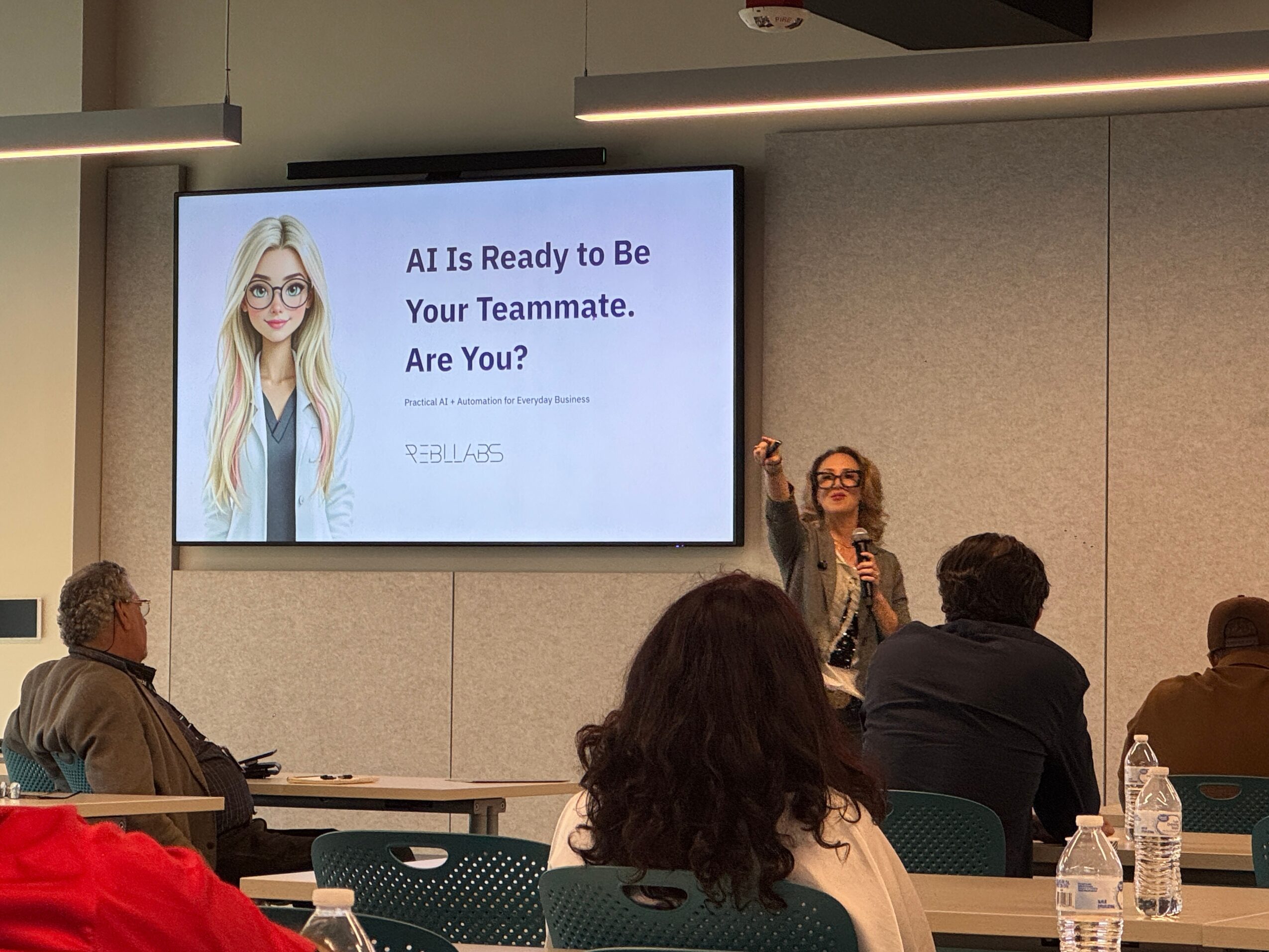
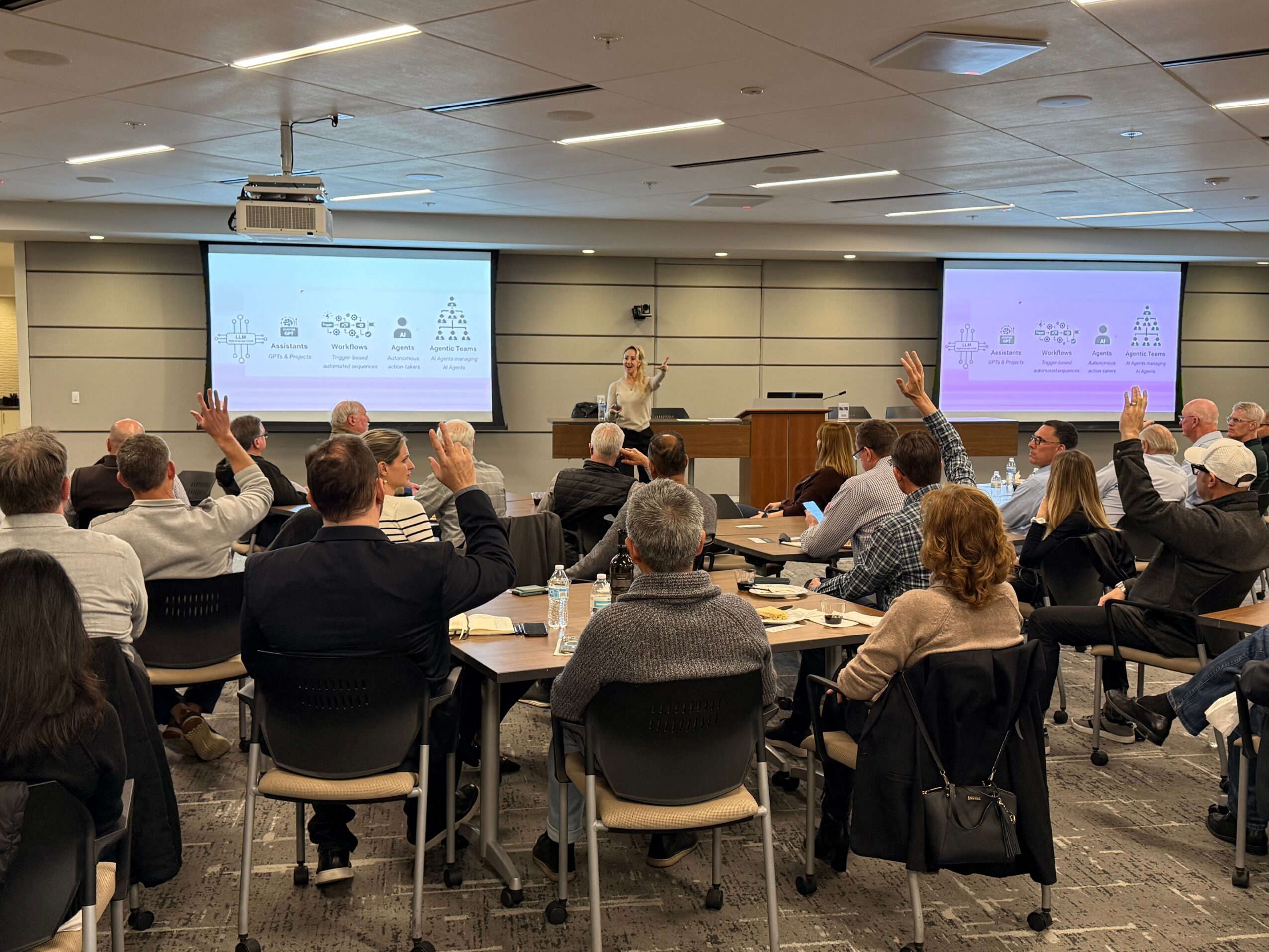
What’s next for me is speaking and workshops. I want to focus on sharing what I’m learning and helping other business owners understand AI, strategize around it, and then actually implement it in a practical way. Most businesses don’t have an AI problem, they have an adoption problem, and that’s the part I love teaching.
Here’s what I’ve heard about working with even some of the best AI firms out there. The technology isn’t usually the hard part. The hard part is that the company itself still has to understand who they are, have their documents in place, and have their processes written down. If that foundation isn’t there, the smartest tool in the world can’t fix it, and that’s exactly where I want to help people start.
Pricing:
Please contact us for pricing for workshops and AI Teammate services.
Contact Info:
- Website: https://rebllab.ai
- Instagram: https://www.instagram.com/themarketingrebl/
- Facebook: https://www.facebook.com/rebllabs?mibextid=wwXIfr&mibextid=wwXIfr
- LinkedIn: https://www.linkedin.com/company/rebl-labs/
- Youtube: https://youtube.com/@themarketingrebl?si=_RPUsEHIlinwMuej
- Other: Info@rebllabs.ai