




Today we’d like to introduce you to Leah Taylor.
Hi Leah, it’s an honor to have you on the platform. Thanks for taking the time to share your story with us – to start maybe you can share some of your backstory with our readers?
It all started on the dance floor at a Rusted Root concert at the House of Blues in North Myrtle Beach. I was 19 years old, and for the entirety of that show, something happened that I had never experienced before.
For the first time in my life, I wasn’t caught up in my thoughts. I was completely present. I felt connected to myself, to the music, and to the people around me all at the same time. It was joyful, expansive, and deeply alive.
Looking back, I would describe it as my first true spiritual experience.
That night changed the trajectory of my life because it left me with one question that I’ve been following ever since: What helps people feel more alive?
That question led me into graduate school, where I earned a master’s degree in Somatic Psychology, a PhD in Mind-Body Medicine, and became a Licensed Marriage and Family Therapist. I was fascinated by how our bodies, emotions, relationships, and nervous systems work together to shape our experience of being human.
As meaningful as therapy can be, I noticed something important over years of clinical practice. Insight often begins in the therapy room, but transformation happens in the moments in between. It happens in how we live, how we connect with others, how we move through difficult times, and how we return to ourselves (or don’t) in everyday life.
Throughout that journey, my mind kept returning to live music. I still hadn’t found anything close to how I felt on the dance floor at a live show.
Like many people, I stepped away from concerts while raising a young son. Then, while conducting my doctoral research on the relationship between live music and wellbeing, I found myself immersed in that world again. The more shows I attended, the more I realized I wasn’t alone. I met countless people who described concerts the way others describe meditation, church, or therapy. They weren’t just there to be entertained. They came because it helped them feel more like themselves and fostered a sense of belonging to something larger than themselves.
At the same time, I was becoming more intentional in my own life through mindfulness, embodiment practices, and other Mind-Body Medicine practices I adopted into my routine through my PhD program.
I became curious about what would happen if we brought the same level of awareness to live music experiences that we bring to meditation, therapy, or yoga.
What if we understood more about why these experiences affect us so deeply? What if we intentionally designed them to help people reconnect with themselves and with one another?
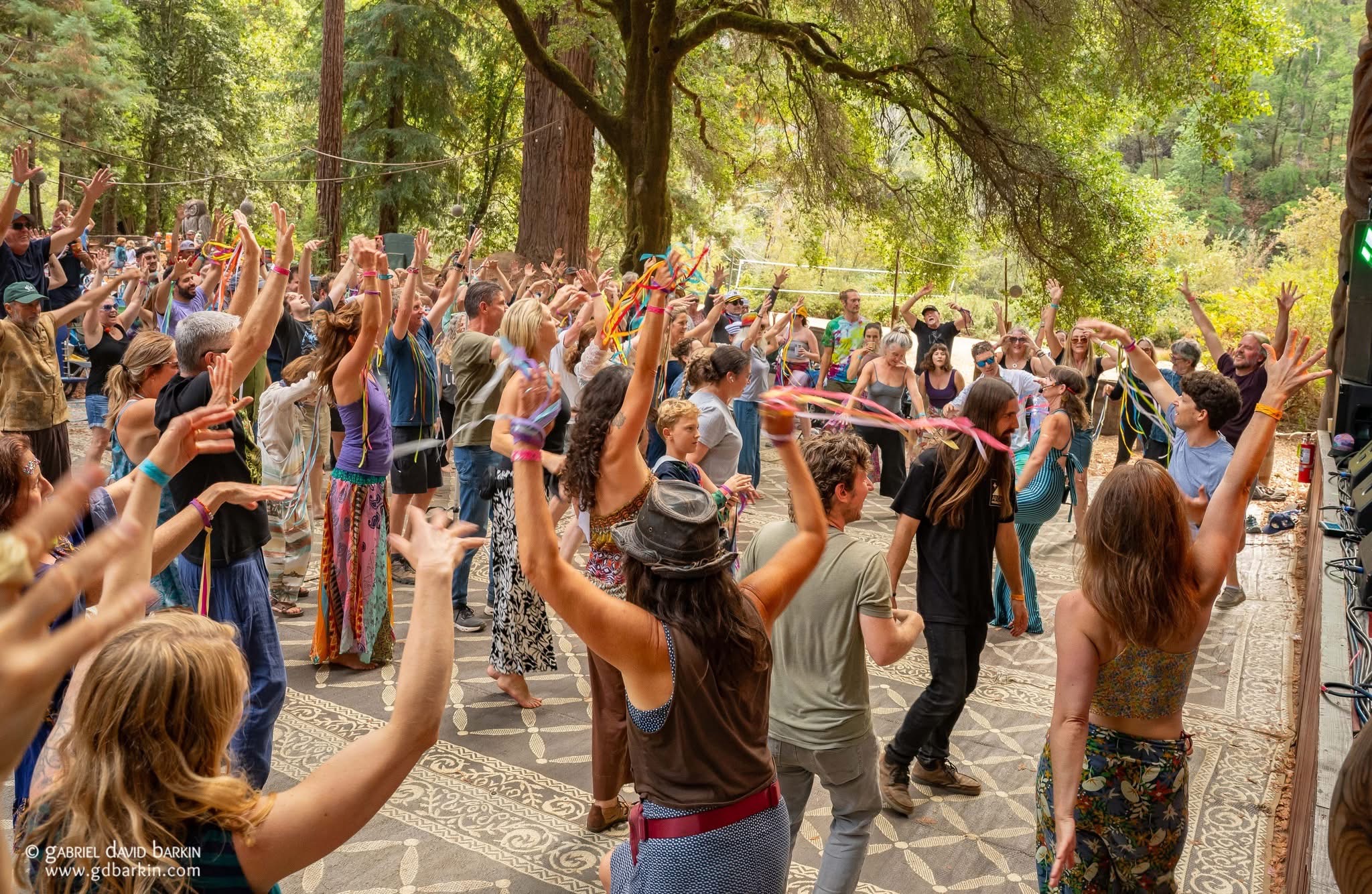
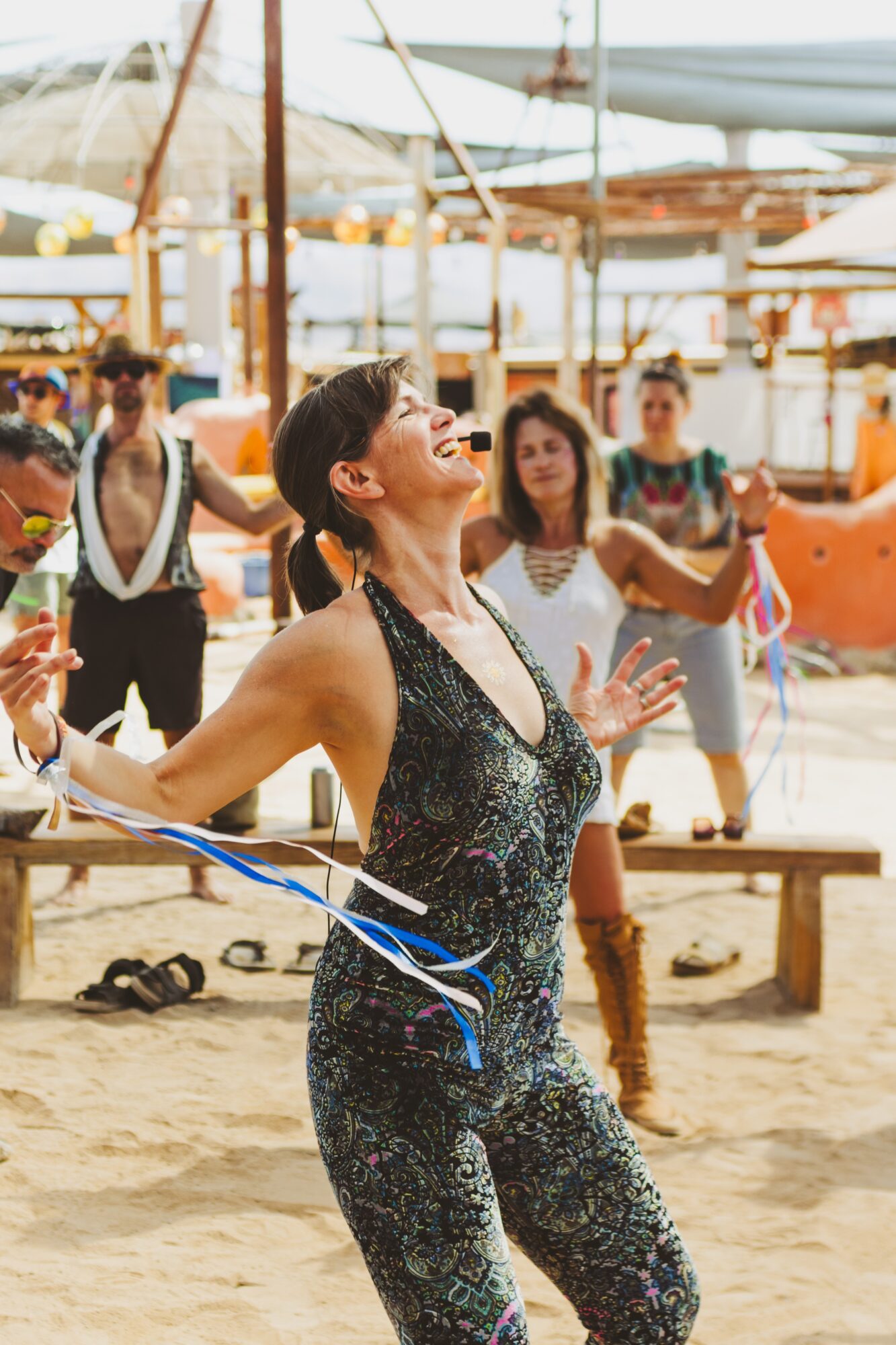
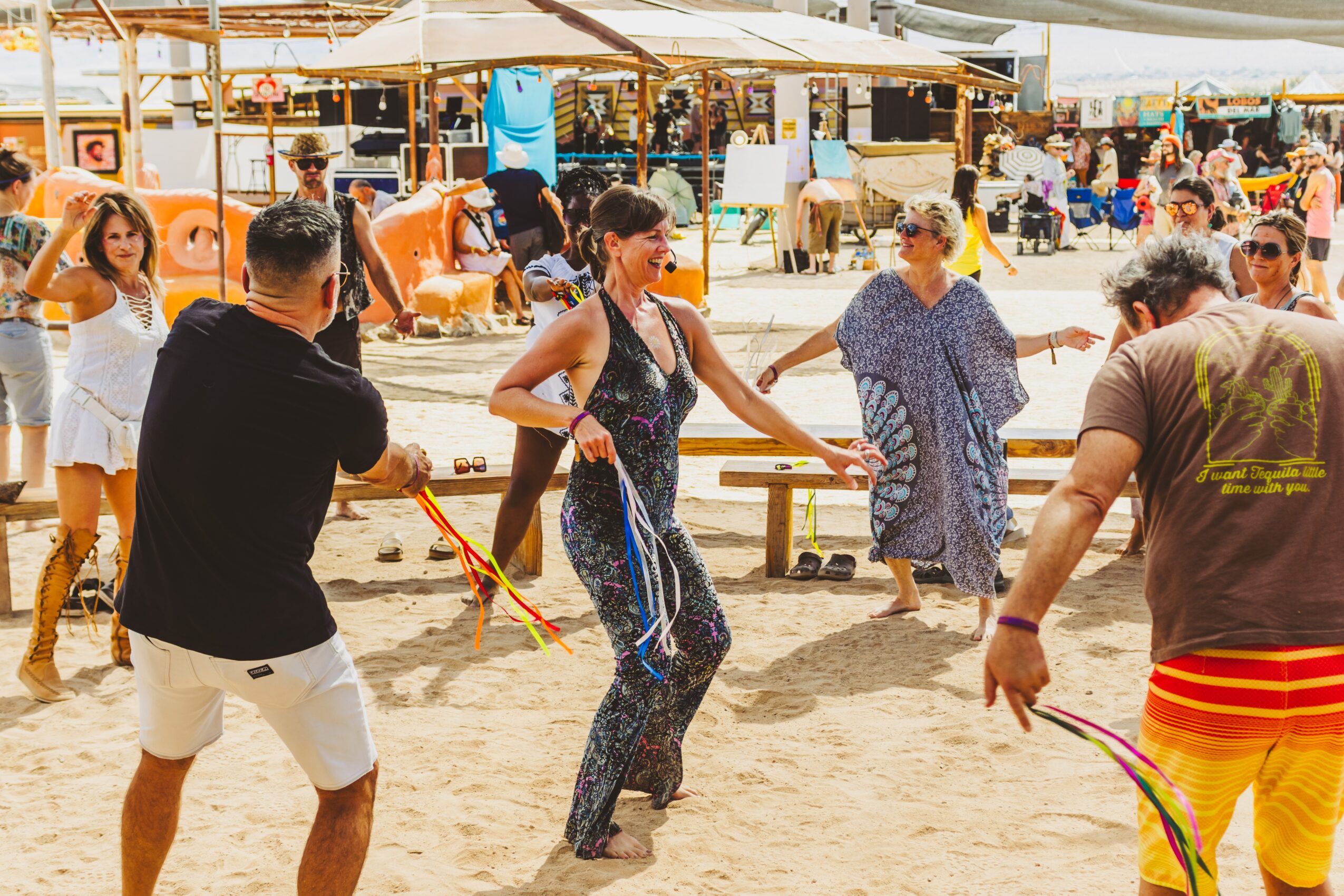
In 2017, after teaching the movement practice Nia for nearly a decade, I had the intuitive idea to combine everything I loved – music, free expressive movement, embodiment, psychology, collective effervescence, flow, and mindfulness. That became Embodied Groove®, a guided experience that uses music and movement to help people reconnect with themselves, each other, and the joy of being fully alive.
Over the years, I’ve watched people leave saying things like, “I feel more like myself than I have in years,” or “I didn’t even know how much I needed that.” Those moments continue to remind me why this work matters.
More recently, I realized I wasn’t simply creating a movement method. I was trying to give language to and create space for something much larger.
Throughout human history, music, movement, rhythm, ritual, and collective experience have helped people heal, celebrate, grieve, connect, and remember who they are. But somewhere along the way, these experiences became framed as entertainment rather than recognizing their profound capacity to support wellbeing and human connection.
That realization led me to begin developing Groove Medicine™ – an emerging field dedicated to understanding how music, movement, and collective experience inherently fosters connection, wellbeing, and community resilience and how it can can be intentionally designed to do so for community health and wellbeing. Embodied Groove is just one application of this larger field.
Looking back, what began as one unforgettable night on a dance floor has become a lifelong inquiry. I’m still asking the same question I asked at 19, “What helps people feel more alive?” only now I’m fortunate enough to live it everyday through clinical and community work, play, and research.
Can you talk to us a bit about the challenges and lessons you’ve learned along the way. Looking back would you say it’s been easy or smooth in retrospect?
I think the biggest challenge hasn’t been learning how to build a business. It’s been finding language for something people have felt for centuries but haven’t necessarily had words for.
Most people understand the value of a dance class, a concert, or even therapy because those are familiar concepts. But when you start talking about intentionally designing live music experiences to deepen connection, foster wellbeing, and help people feel more alive, you’re introducing something that doesn’t quite fit into an existing category. That has required a lot of patience, listening, and refining, not just the experience itself, but the language around it.
Embodied Groove has evolved quite a bit over the years. It began as a live music movement experience, and then, like so many others, I had to adapt during the pandemic. Without live musicians, I began teaching online using carefully curated playlists. While it wasn’t what I originally envisioned, it reminded me that the heart of the work was never about the venue or even the format. It was about creating an experience that helps people reconnect with themselves, their sense of aliveness, and each other.
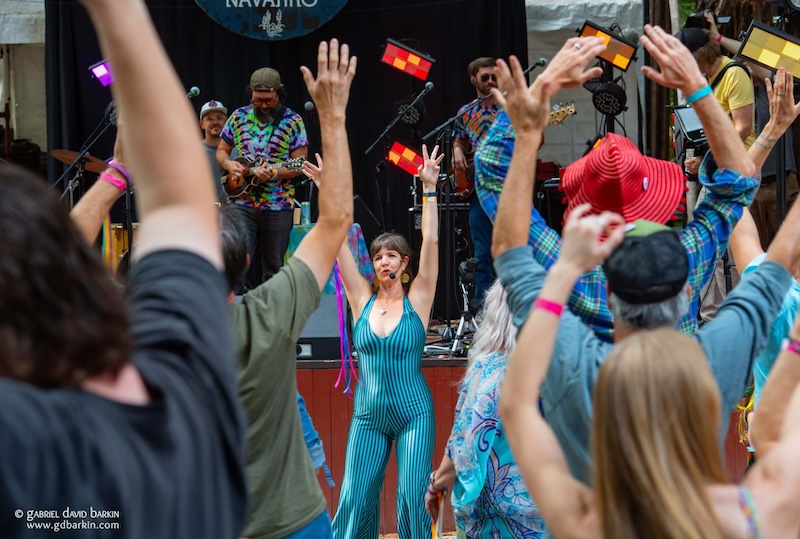
Since then, I’ve had the opportunity to facilitate Embodied Groove in community classes, retreats, concert venues, schools, festivals, and wellness settings. Every environment has taught me something new about what people are truly longing for. Whether someone is being led through a pre-concert activation, attending a retreat, or walking into a movement class for the first time, I keep seeing the same thing: people aren’t looking for perfect choreography… they’re looking for permission to be fully present and to feel free and at home in their bodies.
Another challenge has been learning that I don’t have to build this vision alone. For a long time, I thought I needed to carry every piece of it myself. Lately, one of my biggest areas of growth has been opening the door to more collaborations from non-profits, businesses, and organizations that share a similar vision. Groove Medicine is much bigger than me, and that’s exactly how I want it to be.
In many ways, the challenges have clarified the vision. What started as a movement class has become a much larger inquiry into how music, movement, and collective experience can contribute to healthier, more connected individuals and communities. Looking back, every twist in the road has helped shape that bigger picture.
Thanks – so what else should our readers know about Embodied Groove®?
Embodied Groove® is a guided experience that uses music and movement to help people reconnect with themselves, each other, and the joy of being fully alive.
While it often looks like people dancing together, it’s intentionally designed to be much more than a dance class. Every experience is thoughtfully crafted to help people arrive in the present moment, move beyond self-consciousness, express themselves authentically, and experience the unique connection that happens when a group of people move together.
Over the years, Embodied Groove has expanded into community classes, retreats, festival experiences, concert activations, children’s programs, and a facilitator certification. Whether someone joins an intimate class or hundreds gather at a festival or before a concert, my intention is always the same: to create the conditions where people naturally reconnect with themselves, one another, and with the music.
What makes this work different is that I don’t believe we’ve fully recognized the role music, movement, and collective experience play in human wellbeing. I think we’ve underestimated their power to shape not only our individual wellbeing, but also our relationships and the vibrancy of our communities.
To me, concerts are not simply entertainment. They’re one modern expression of something much larger: our innate human capacity to use music, movement, and collective participation to reconnect with ourselves, each other, and the joy of being fully alive.
Long before we had modern healthcare, humans gathered around rhythm, song, dance, and ritual to celebrate, grieve, heal, strengthen community, and make meaning together. While science is beginning to explain why these experiences are so powerful, many of us have simply forgotten that they were always part of how humans stayed connected… to ourselves and to each other.
That realization inspired me to begin developing Groove Medicine™, an emerging field dedicated to understanding how music, movement, and collective experience can be intentionally designed to foster wellbeing, connection, and community resilience. Embodied Groove is one application of that larger vision.
One of the things I’m most proud of is creating language for something that so many people have experienced but haven’t always known how to describe. Most of us have had moments at a concert, on a dance floor, or singing with others where we felt more open, more present, more connected, or more like ourselves. Rather than dismissing those moments as fleeting, I’m interested in understanding them, intentionally designing them, and helping others experience them more consciously.
At its heart, this work is about helping people remember something they already know, that music and movement have the power to bring us back home to ourselves. My hope is that Embodied Groove continues to grow as a meaningful experience for individuals and communities, while Groove Medicine helps create a broader conversation among researchers, musicians, facilitators, healthcare professionals, educators, and community leaders about how we can intentionally use these experiences to help people, and communities, flourish.
Is there anyone you’d like to thank or give credit to?
One of the beautiful things about this work is that it has always been created in relationship. Embodied Groove and Groove Medicine exist because so many people were willing to say “yes” to an idea long before they knew exactly what it would become, or even fully meant.
I’m especially grateful to the first musician, Jeff Mogalian, who said yes to exploring this vision. Embodied Groove was just an idea in my head until we began experimenting together in his living room. Without his trust and willingness to create alongside me, this work wouldn’t exist in the way it does today.
I’m deeply grateful to my own dance and embodiment teacher, Heather Munro Pierce, who spent nearly a decade helping me understand what it means move with intention and embodied presence rather than simply lead choreography. That foundation continues to influence everything I create.
My time as a Nia teacher certainly informed my ability to keep count of the music, teach choreography, and be in tuned with a room of people. As well as teaching me the importance of a full-body warmup, the flow of a conscious dance class, and how to give permission to move in big and small ways. It gave me confidence in leading groups and the wisdom of the body’s way.
My doctoral research participants generously shared deeply personal stories about the role live music plays in their lives. Their experiences and interviews helped me recognize patterns that became the findings of my research and inspired the foundation for both Embodied Groove and Groove Medicine. I’m also thankful for my dissertation committee, who encouraged me to pursue an unconventional line of inquiry because they recognized how meaningful it was, even when the destination wasn’t entirely clear.
I’m grateful to every client, every festival participant, every class attendee, every retreat guest, and every person who has walked into an Embodied Groove experience with openness and curiosity. They continue to teach me as much as I hope I offer them.
Finally, I’m excited about the growing community of musicians, facilitators, researchers, healthcare professionals, educators, and organizers who are beginning to explore these ideas together. Groove Medicine isn’t meant to be built by one person. My hope is that it becomes a collaborative field where many voices contribute their own perspectives, research, and lived experience. That’s how meaningful movements grow.
Contact Info:
- Website: https://www.drleahtaylor.com/
- Instagram: https://www.instagram.com/drleahtaylor/