


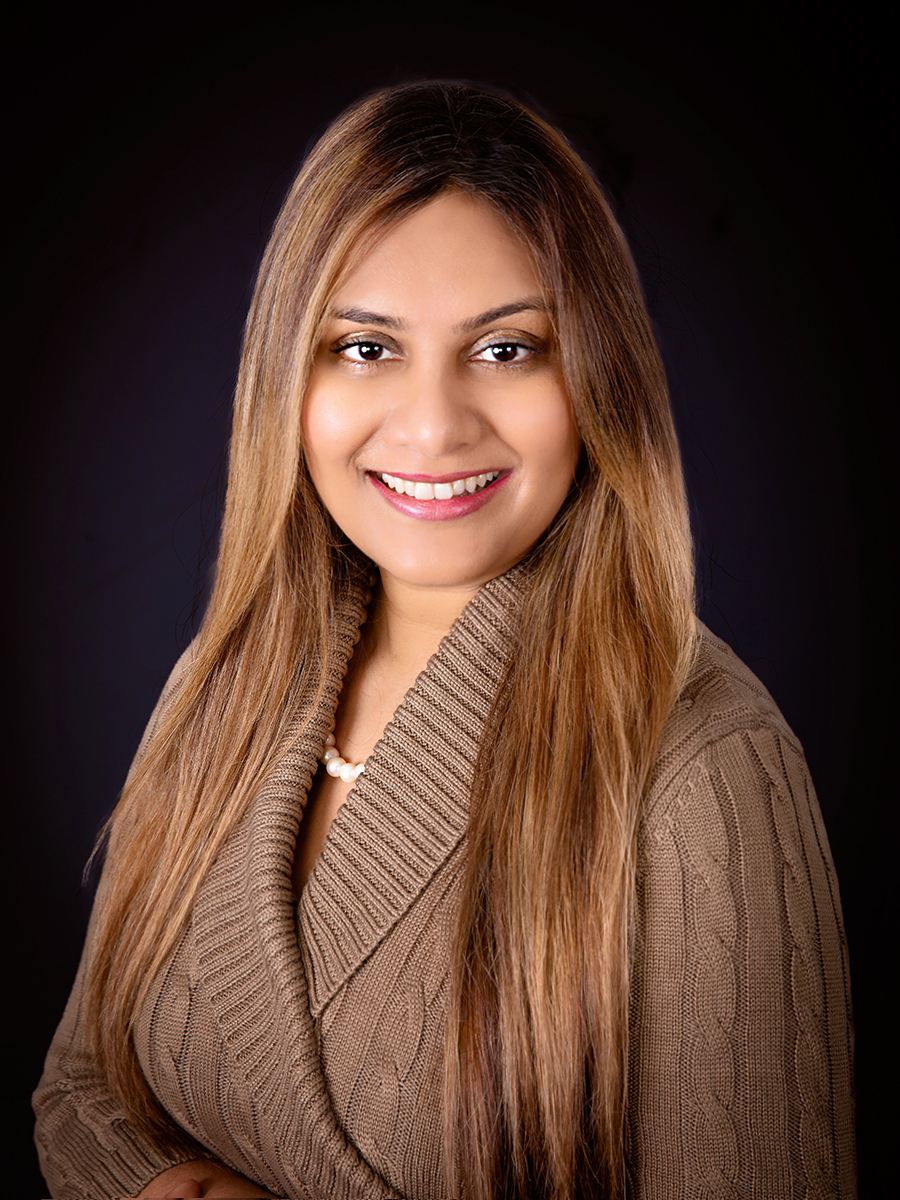
Today we’d like to introduce you to Queenita.
Hi Queenita, please kick things off for us with an introduction to yourself and your story.
My journey into homeopathy began on a very personal level, long before I ever imagined it would become my profession.
Growing up in India, my younger sister struggled with asthma. Watching someone so close to me deal with a chronic health condition had a profound impact on me. My family explored homeopathy as part of her care, and seeing her journey sparked my curiosity about this very different approach to health. I wanted to understand it better, not simply as a patient or family member, but from a scientific and clinical perspective. That early experience ultimately influenced my decision to study homeopathy professionally.
I went on to complete a five and a half year Bachelor of Homeopathic Medicine and Surgery program in India, followed by my clinical internship at Mumbadevi Homeopathic Hospital in Mumbai. I began practicing in 2004, and those early years shaped the way I continue to approach care today. Homeopathy taught me the importance of listening carefully and looking beyond an isolated symptom to understand the person as a whole, including their health history, lifestyle, environment, and individual experiences.
Life eventually brought me to the United States, where my professional journey expanded in a very different direction. I built a career in the healthcare and medical device industry, working in areas including patient safety, medical affairs, clinical, quality, and regulatory functions. I continued my education along the way, including earning an MBA and becoming a Certified Classical Homeopath in the United States.
My corporate healthcare career and my homeopathic practice may appear to be two very different worlds, but for me they have always shared something fundamental, a focus on patients and better health outcomes. Working within the broader healthcare system also gave me a greater appreciation for patient safety, evidence, responsible healthcare practices, and the importance of people being informed participants in decisions about their health.
Through all of this, I never lost my connection to homeopathy or the fulfillment that came from working directly with people. That connection eventually became Homeopathy Health Hub.
I founded Homeopathy Health Hub with a vision of creating a modern and accessible platform for individualized holistic care. What began as a homeopathic practice has gradually evolved into something much broader. Today, we provide individualized consultations for adults, children, families, and pets, while also developing new ways for people to access homeopathic care.
That vision has led to services such as HomeoNow, which expands access to homeopathic practitioners through online consultations, SnapRemedy, which provides convenient access to commonly used homeopathic remedies, holistic annual care options, and access to laboratory testing.
At the heart of Homeopathy Health Hub is a philosophy that has become very important to me throughout my journey, people should be informed and empowered participants in their own healthcare. That is why our message is, “Healthcare is a Choice. Your Health. Your Choice.”
When I look back, there is an interesting full circle to my story. It began with a little girl in India watching her younger sister struggle with asthma and wanting to understand whether there were other ways to help. More than two decades later, that curiosity has grown into a profession, a career spanning different areas of healthcare, and now a business with a much larger vision.
For me, Homeopathy Health Hub is not simply about building a practice. It is about taking the principles that first inspired me many years ago and finding modern, responsible, and accessible ways to bring individualized holistic care to people wherever they are.
For those who would like to learn more about my personal journey, what led me to homeopathy, and the experiences that shaped Homeopathy Health Hub, you can read more of my story here: https://homeopathyhealthhub.com/about/
I’m sure it wasn’t obstacle-free, but would you say the journey has been fairly smooth so far?
It definitely has not been a completely smooth road, but I think some of the most meaningful journeys rarely are.
One of the biggest transitions for me was moving from India to the United States. I had completed extensive formal education in homeopathy, finished my clinical internship, and had already begun practicing, but moving to a new country meant learning how to navigate an entirely different healthcare system and finding a new professional path for myself.
That journey eventually led me into the medical device and healthcare industry, where I built a career in patient safety, medical affairs, clinical, quality, and regulatory work. I am incredibly grateful for that experience because it broadened my understanding of healthcare, but there was always a part of me that missed working directly with people and practicing the discipline that originally brought me into healthcare.
One of the challenges I did not fully appreciate until living here was how much homeopathy had faded from public awareness in America. Many people are surprised to learn that homeopathy actually has a long history in the United States. It arrived here in the early 1800s and eventually became sufficiently established that America had homeopathic medical schools, hospitals, and thousands of practitioners. Over time, as American medicine evolved, homeopathy moved away from the mainstream and much of that history faded from public awareness.
For anyone interested in this lesser known chapter of American healthcare history, I share more about it here: Homeopathy in America, https://homeopathyhealthhub.com/homeopathy-in-america/
That history has created both a challenge and a sense of purpose for me. Part of what I hope to accomplish through Homeopathy Health Hub is to bring greater awareness to homeopathy, help people understand what it is and what it is not, and make qualified homeopathic care more accessible to people who choose to explore it as part of their healthcare.
The challenge, however, is that education and awareness require a significant investment of time and resources, and there is often very little immediate financial return. In many ways, this is a mission before it is a business opportunity.
Affordability is another major challenge. I want people to be able to access care without cost becoming the reason they cannot explore it. At the same time, most traditional health insurance plans do not provide a straightforward reimbursement pathway for the type of homeopathic consultations I provide. There are some circumstances, such as certain approved workers’ compensation cases, where reimbursement may be possible, but for many patients the cost is out of pocket. To make our services more accessible, we have intentionally kept our fees substantially lower than what the time involved in these consultations might otherwise justify. From a traditional business perspective, that makes profitability and scalability difficult.
There is also an interesting structural challenge within the American healthcare system. Insurance reimbursement is generally built around recognized provider categories and covered services, rather than around the depth of a practitioner’s education in a particular complementary discipline. As a result, some licensed healthcare professionals may be permitted within their professional scope to incorporate homeopathic products or approaches and may have access to insurance billing pathways through their primary professional credentials, even when homeopathy was only a small component of their overall training.
Conversely, someone whose education included years of dedicated study and clinical training in homeopathy may have far fewer pathways for insurance reimbursement. I do not see this as a criticism of any individual profession or practitioner. It is simply a reflection of how the current system is structured. I hope that, over time, greater awareness can also lead to thoughtful conversations about education, qualifications, access, and appropriate recognition of practitioners with substantial formal training in homeopathy.
There is another challenge inherent in the way I practice classical homeopathy, it is extremely difficult to scale without compromising the individualized attention at the heart of the process.
When I see a new patient, I cannot simply spend fifteen minutes reviewing a diagnosis and select a remedy. A comprehensive initial case can require several hours. I need to understand the person’s medical history and diagnoses, but I also spend considerable time understanding their physical symptoms, emotional experiences, individual characteristics, patterns, and how they uniquely experience their health concerns. I then need time to study and analyze the case before selecting an individualized homeopathic remedy.
For me, those details are not an optional part of the consultation, they are central to how I was trained to practice homeopathy.
That means giving each new patient my undivided attention, often for several hours, and consequently I can accept only a limited number of new patients in a day. Financially, that is not an efficient business model. I could shorten consultations and see considerably more people, but I would then be compromising the very individualized approach that I believe is fundamental to classical homeopathic practice.
This creates an ongoing balancing act between affordability, accessibility, quality, and sustainability. If I charge what several hours of professional time would ordinarily command, homeopathy becomes inaccessible to many of the people I want to serve. If I significantly reduce the price to make it affordable, the financial return may not cover the true amount of time invested. Finding a sustainable middle ground is one of the biggest challenges I continue to work through as an entrepreneur.
Interestingly, that challenge has also become a source of innovation. It has pushed me to think about how technology and different models of care can expand access without losing the individualized nature of homeopathy. That thinking has contributed to services we are developing through Homeopathy Health Hub, including HomeoNow and other ways of connecting people with homeopathic care.
There is also skepticism surrounding homeopathy in the United States. I have learned that my role is not to convince everyone. My responsibility is to be transparent about what I do, practice responsibly, encourage people to remain engaged with their conventional healthcare providers, and give those who are interested in homeopathy the opportunity to make an informed choice.
And then there is the challenge familiar to almost every entrepreneur, time. Building Homeopathy Health Hub while maintaining a demanding healthcare career and being present for my family requires discipline, persistence, and sacrifice. On any given day, I may move between being a practitioner, healthcare professional, business owner, strategist, marketer, technology problem solver, wife, and mother.
I have learned that growth does not always happen in a straight line. Some ideas work, some need to evolve, and occasionally you have to go back to the drawing board. I try not to see those moments as failures, but as information that helps shape what comes next.
Ultimately, these challenges have made the journey more meaningful. Reviving awareness of a healthcare tradition that once had a significant presence in America, while simultaneously trying to make individualized care affordable and building a sustainable business around it, is not something that happens overnight.
For me, the purpose is bigger than the immediate return on investment. If Homeopathy Health Hub can help people better understand their healthcare choices, make qualified homeopathic care easier to access, and preserve the individualized nature of classical homeopathy while adapting it for the modern world, then I believe the effort is worthwhile.
Great, so let’s talk business. Can you tell our readers more about what you do and what you think sets you apart from others?
Homeopathy Health Hub is much more than a traditional homeopathy practice. My vision is to create a comprehensive, modern, and accessible homeopathy platform where individuals and families can explore homeopathy as one of their healthcare choices, while still receiving the individualized attention that is at the heart of classical homeopathy.
Our philosophy is captured in a very simple message, “Healthcare is a Choice. Your Health. Your Choice.”
At the core of what we do are comprehensive, individualized homeopathic consultations. Classical homeopathy is highly personalized. Two people may come to me with the same diagnosis, yet the remedy I select may be completely different because I am not looking only at the name of the condition. I spend time understanding the person’s medical history, physical symptoms, emotional experiences, lifestyle, individual characteristics, and the unique way in which they experience their health concerns. That comprehensive understanding guides the selection of an individualized homeopathic remedy.
I think one of the things that sets Homeopathy Health Hub apart is the depth of training and experience behind the practice. My own education included a five and a half year Bachelor of Homeopathic Medicine and Surgery program in India, followed by clinical internship and years of practice. I am also a Certified Classical Homeopath in the United States. In parallel, I have spent many years working within the broader healthcare and medical device industry in areas including patient safety, medical affairs, clinical, quality, and regulatory functions.
Those two worlds have shaped how I approach Homeopathy Health Hub. I deeply value the individualized principles of classical homeopathy, while my broader healthcare career has reinforced the importance of patient safety, responsible practice, transparency, and respecting the role of conventional healthcare. We encourage our clients to remain engaged with their physicians and other healthcare professionals, and we view homeopathy as complementary to, rather than a replacement for, appropriate conventional medical care.
Another thing that sets us apart is that I do not want geography to determine whether someone can access qualified homeopathic care. That is the idea behind our vision of “Homeopathy Without Borders, Online. On Call. Always.”
One of the ways we are working toward that vision is HomeoNow, our online consultation service. HomeoNow is designed to connect people with qualified homeopathic practitioners remotely, particularly when they are looking for timely homeopathic support. My goal is to use technology to remove some of the traditional barriers of geography and availability and make homeopathic care easier to access.
We also recognize that not every situation requires the same type of service. Someone looking for a comprehensive approach to a longstanding concern may need an in depth classical homeopathic consultation, while another person may simply be looking for guidance regarding a minor, acute concern. Building different pathways for different needs is an important part of what we are creating.
That thinking also led to SnapRemedy. SnapRemedy is designed around convenient access to commonly used homeopathic remedies for minor, acute, first aid type situations. Rather than positioning it as a substitute for professional consultation, we see it as another way to help people become more familiar with homeopathy while having access to appropriate guidance and encouraging a full consultation when individualized care is needed.
We also offer a Holistic Annual Care Package for people who want an ongoing relationship with the practice rather than seeking help only when something arises. It incorporates ongoing check ins, access for acute concerns, individualized remedies, and other benefits throughout the year.
Another service I am particularly excited about is our laboratory testing access. I believe people should be active participants in understanding their own health. Through Homeopathy Health Hub, individuals can access certain laboratory testing directly rather than always having to navigate traditional barriers simply to obtain information about their own health. It fits naturally with our broader philosophy of helping people become informed participants in their healthcare decisions.
Homeopathy Health Hub also extends beyond human care. We offer individualized homeopathic services for pets, taking into consideration their physical symptoms, behavior, environment, diet, and emotional wellbeing. Importantly, we are very clear that this is complementary to veterinary care. We do not replace veterinary diagnosis, prescriptions, surgery, or emergency services.
Affordability is another part of the brand that matters deeply to me. Homeopathic consultations, particularly comprehensive classical consultations, can require a significant amount of professional time. At the same time, insurance coverage for homeopathic services in the United States is limited, which means many people are paying out of pocket. I never want someone to assume they cannot even approach us because of their financial circumstances. We have tried to maintain transparent pricing and, in certain circumstances, work with individuals facing financial limitations. One of the philosophies that has guided Homeopathy Health Hub from the beginning is that health should come before wealth.
What I am perhaps most proud of, brand wise, is that Homeopathy Health Hub is evolving rather than simply replicating the traditional model of a homeopathy office.
I respect the traditional principles of classical homeopathy and do not want to lose the depth and individualization that make the practice what it is. At the same time, I recognize that the way people access healthcare has changed dramatically. They expect telehealth, convenience, transparency, online access, and greater participation in decisions about their own health.
Homeopathy Health Hub is my attempt to bring those two worlds together.
That is why the brand continues to expand beyond the traditional consultation model through HomeoNow, SnapRemedy, annual holistic care, direct access to laboratory testing, pet homeopathy, remedy access, and educational resources. I want someone visiting Homeopathy Health Hub to feel that there are multiple ways to begin exploring homeopathy depending upon where they are in their journey.
Education is also a major part of our mission. Homeopathy has a fascinating history, including a significant but often forgotten history in the United States. I want Homeopathy Health Hub to be a place where people can not only access services, but also learn what homeopathy is, understand its history and principles, ask questions, and then decide for themselves whether it has a place in their healthcare journey.
Ultimately, what I want readers to know is that Homeopathy Health Hub is being built around choice, access, individualization, and education. I am not interested in telling people that there is only one way to approach their health. I believe people should have access to information, qualified practitioners, and different healthcare options so they can make informed decisions that are right for them.
We are still growing, and many of the ideas I have for Homeopathy Health Hub are still evolving. But the larger vision is clear, to preserve the individualized principles of classical homeopathy while using modern technology, innovation, and education to make qualified homeopathic care more accessible.
That is what “Healthcare is a Choice. Your Health. Your Choice.” means to me, and it is what I want Homeopathy Health Hub to represent.
Do you have any advice for those looking to network or find a mentor?
I have learned over the years that mentorship and networking are less about collecting contacts and much more about building genuine relationships, recognizing opportunities to learn, and remaining a student throughout your career.
I also do not believe that everyone needs to find one person and formally ask, “Will you be my mentor?” Some of the most influential mentors in my life became mentors organically. Sometimes it happened because I worked alongside them, sometimes through education or professional organizations, sometimes through conferences, and sometimes simply because I encountered someone whose knowledge, experience, or way of thinking challenged me to grow.
I was incredibly fortunate to experience this very early in my professional journey.
During my clinical training at Mumbadevi Homeopathic Hospital in Mumbai, I was selected based on merit for the opportunity to serve as an assistant for approximately six months of my externship. Looking back, that was one of the most formative experiences of my early career because it gave me the extraordinary privilege of directly assisting and learning from some of the pioneers and most respected physicians in homeopathy.
Among them were Dr. Rajan Sankaran, an internationally recognized homeopathic physician, researcher, teacher and author, and the late Dr. Prafull Vijayakar, who pioneered and founded the approach known as Predictive Homeopathy.
As a young physician in training, having the opportunity to work alongside physicians of that caliber was invaluable. I was not simply reading their work in textbooks or listening to them lecture. I was assisting them in the hospital, observing how they approached patients and complex cases, listening to their clinical reasoning and case discussions, seeing the questions they asked, and learning to recognize details that an inexperienced practitioner might easily overlook.
You can learn more about Dr. Rajan Sankaran and his work here: https://rajansankaran.com/about/
You can learn more about the late Dr. Prafull Vijayakar and Predictive Homeopathy here: https://homeopathyusa.org/presenters-predictive-homeopathy-team/
Those six months taught me lessons that could never have come entirely from a classroom.
When you have the privilege of assisting someone with decades of experience, you begin to learn not only what they know, but how they think. You observe how carefully they listen, how they approach a difficult case, why they ask a particular question, what seemingly small details capture their attention, and how they connect pieces of information that may initially appear unrelated.
Some of the pearls of wisdom they shared with me during those months have stayed with me for more than two decades. Even today, there are moments when I am thinking through something and a lesson or conversation from those years comes back to me. I think that is one of the most extraordinary things about a great teacher or mentor, they can influence the way you think long after the actual interaction has ended.
My relationship with the late Dr. Vijayakar became particularly meaningful to me because it extended beyond the hospital and became personal as well. I was deeply touched that he attended my wedding celebrations. To have someone I respected so much professionally also share such an important personal milestone in my life is a memory I continue to treasure.
Life eventually took me to the United States and our paths went in different directions, and unfortunately I was not able to remain in touch with him over the years. After his passing, those memories became even more precious to me. I remain grateful not only for what he taught me professionally, but also for the generosity, encouragement and kindness he showed me as a young physician.
Experiences like these shaped my understanding of mentorship.
Mentorship does not always begin with formally asking someone to be your mentor. Sometimes it begins by working hard enough to earn an opportunity and then being wise enough to recognize the value of the opportunity when it arrives. Once that door opens, you have to show up prepared, listen, ask thoughtful questions, remain humble, and absorb as much as you possibly can.
That philosophy has followed me throughout my career.
As my professional journey expanded beyond homeopathy and into the broader healthcare and medical device industry, I continued to seek opportunities to learn. I have attended conferences, participated in professional organizations, pursued continuing education, remained engaged with scientific and peer reviewed literature, and deliberately placed myself in environments where I could interact with people whose knowledge and experience were different from my own.
I have found conferences particularly valuable. Of course, there is tremendous value in the formal presentations and scientific sessions, but sometimes the most meaningful learning happens in the conversations around them. A discussion after a presentation, a question asked during a break, or a conversation with someone working on a completely different problem can change the way you think about your own work.
I also believe strongly in staying engaged with professional and peer reviewed literature. Mentorship does not always have to come directly from someone sitting across the table from you. We can learn enormously from the work, experiences, research and thinking that other professionals choose to share. Reading broadly has allowed me to continue learning from people I may never have the opportunity to meet personally.
My career has taken me through several very different professional worlds, from practicing homeopathy in India, to establishing myself professionally in the United States, to working in patient safety, medical affairs, clinical, quality and regulatory functions within the healthcare and medical device industry, and eventually to entrepreneurship and building Homeopathy Health Hub.
Every one of those transitions required me to become a student again.
There were always things I did not know, and there were always people around me who knew something I didn’t. One of the most valuable lessons I learned early in my career was that being willing to say, “I don’t know this, can you teach me?” is a strength, not a weakness.
In fact, I think one of the dangers of becoming more senior in your career is beginning to believe that you are supposed to know everything. You are not. The more experienced I have become, the more comfortable I have become acknowledging what I do not know and finding the person who does.
That is also why I do not believe in searching for one perfect mentor.
Different people have played different mentoring roles throughout my life. Someone who can guide you through a complex clinical question may not be the person who can help you navigate corporate leadership. Someone with tremendous business experience may not understand the scientific or regulatory challenges you are facing. Another person may simply know you well enough to challenge your thinking when you are making an important life decision.
I think of it almost as developing a personal board of advisors. You learn from different people for different reasons and at different stages of your life.
My advice about networking is similar. I do not think you should approach every new relationship by asking, “What can this person do for me?”
Be genuinely curious about people.
Ask about their journey. Listen to their experiences. Ask thoughtful questions. Attend conferences and professional events. Participate rather than simply being present. Volunteer when there is an opportunity. Read beyond what is required of you. Introduce yourself to someone whose work you genuinely respect. Most importantly, when someone gives you their time or advice, respect it.
Networking also needs to be reciprocal. You may not always be able to give someone something equivalent to what they have given you, particularly when that person is much further along in their career, but you can always be appreciative, thoughtful, and willing to help someone else.
That idea of paying it forward has become increasingly important to me as my own career has progressed.
I benefited tremendously from people who were willing to teach me, answer my questions, allow me to work alongside them, challenge my thinking, make an introduction, recommend me for an opportunity, or simply take the time to listen. Today, when I have the opportunity to mentor or help someone else, I try to remember what those gestures meant to me when I was the person trying to find my way.
I would particularly encourage young professionals, immigrants, people changing careers, and anyone entering an environment where they initially feel like an outsider not to wait until they feel completely confident before participating.
Attend the conference. Ask the question. Introduce yourself. Volunteer for the opportunity. Read the paper. Join the discussion. Apply for the position. Find people whose work you respect and learn from them.
You may not feel completely ready, and that is okay. Sometimes an opportunity comes before the confidence does.
At the same time, mentorship should never mean blindly following someone’s advice. I listen carefully, ask questions, and value the perspectives of people I trust, but ultimately I still have to make the decision that is right for me. A great mentor does not necessarily tell you what to do. Sometimes their greatest contribution is asking the question that makes you look at the situation differently.
For me, networking has never been about how many people I know. It is about the quality of the relationships I have built, what I have learned from those relationships, and, increasingly, what I can give back to others.
Some of my earliest and most enduring professional lessons came from an opportunity I earned as a young physician in training, spending six months assisting extraordinary physicians in a hospital in Mumbai. I could never have known then that more than two decades later, after moving across the world and building a career in entirely different areas of healthcare, some of those conversations and pearls of wisdom would still remain with me.
And perhaps that is my most important advice about mentorship and networking, work hard enough to earn opportunities, be humble enough to learn when they arrive, build relationships rather than simply contacts, give back when you are in a position to do so, and never stop being a student, no matter how experienced you become.
Contact Info:
- Website: https://homeopathyhealthhub.com/
- Instagram: https://www.instagram.com/homeohealthhub/
- Facebook: https://www.facebook.com/profile.php?id=61580243900412&sk=mentions
- LinkedIn: https://www.linkedin.com/company/homeopathy-health-hub/?utm_source
- Twitter: https://twitter.com/homeopathyhub
- Youtube: https://studio.youtube.com/channel/UC-Ih1Q7CokZAUa3VsWWsY9Q
- Yelp: https://www.yelp.com/biz/homeopathy-health-hub-morgan-hill
- Other: https://podcasts.apple.com/us/podcast/quick-5-homeopathy-health-hub/id1641586331?i=1000723745908