




Today we’d like to introduce you to Karina North.
karina, we appreciate you taking the time to share your story with us today. Where does your story begin?
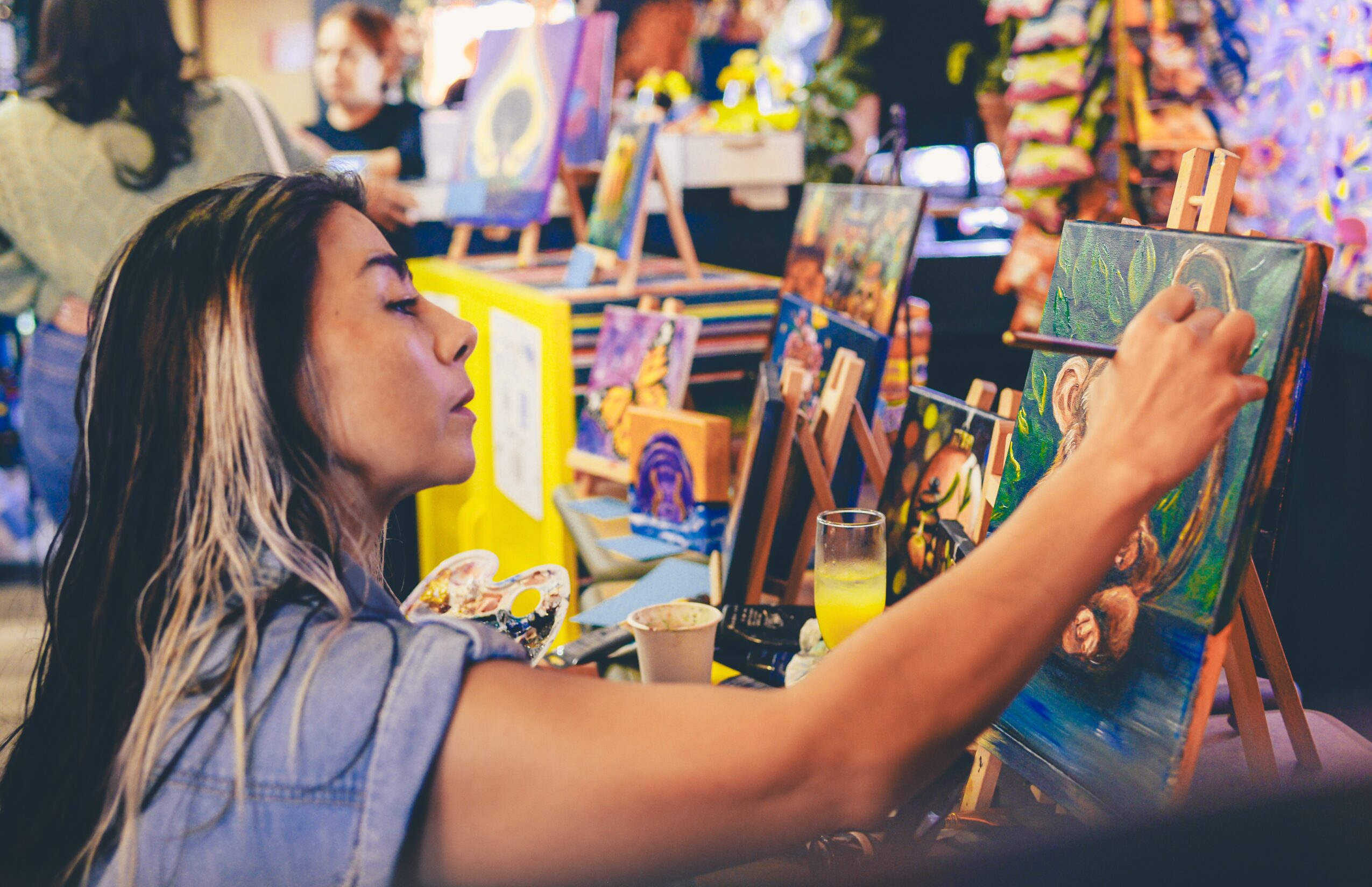
Like many immigrants, I have worn many hats since coming to the United States. Much of my professional life has been devoted to supporting others, particularly adults with developmental disabilities, including autism, and seniors. I worked as a caregiver, case manager, and eventually a program director. Through those experiences, I discovered that art could be much more than an activity. It could be a form of relief, communication, courage, memory, and connection.
My own relationship with art began during a very uncertain period of my life. In 2014, I was newly married and waiting for my immigration status to be resolved. Although I had followed the process and done everything by the book, political circumstances delayed my residency for nearly two years. During that time, I could not work, volunteer, or contribute to my new community in the ways I wanted. I felt isolated, afraid, and stuck.
Drawing and coloring had always been an emotional outlet during my childhood and youth in Mexico, but painting was completely unfamiliar to me. I could not afford lessons, so I taught myself through books, tutorials, and any affordable online resources I could find. Picking up a paintbrush helped me feel unstuck. When I could not find the words to explain what I was experiencing, colors, lines, shapes, and images gave those feelings somewhere to go.
When I was finally able to work, I carried art with me. I shared it with the adults with disabilities and the seniors I supported, initially as the same tool I used to cope with stress and life’s challenges. In return, they opened my eyes to how transformative art can be. An image can sometimes communicate more than an entire conversation. For one person, art may bring relief; for another, it may be a voice. It can express joy, sadness, courage, frustration, or something we do not yet know how to name.
My beginnings as an artist were very quiet, almost like a whisper. I was shy about showing my paintings and hesitant to call myself an artist. But I discovered that I genuinely loved teaching and creating community around art. My focus became encouraging people to express rather than stress. I want them to experience art without the fear of doing it “wrong.”
That is also why offering free and accessible classes through grants from the Arts Council Santa Cruz County is so meaningful to me. I remember what it felt like to want to learn and not be able to afford lessons. I never want cost or lack of experience to make someone believe that art is not for them.
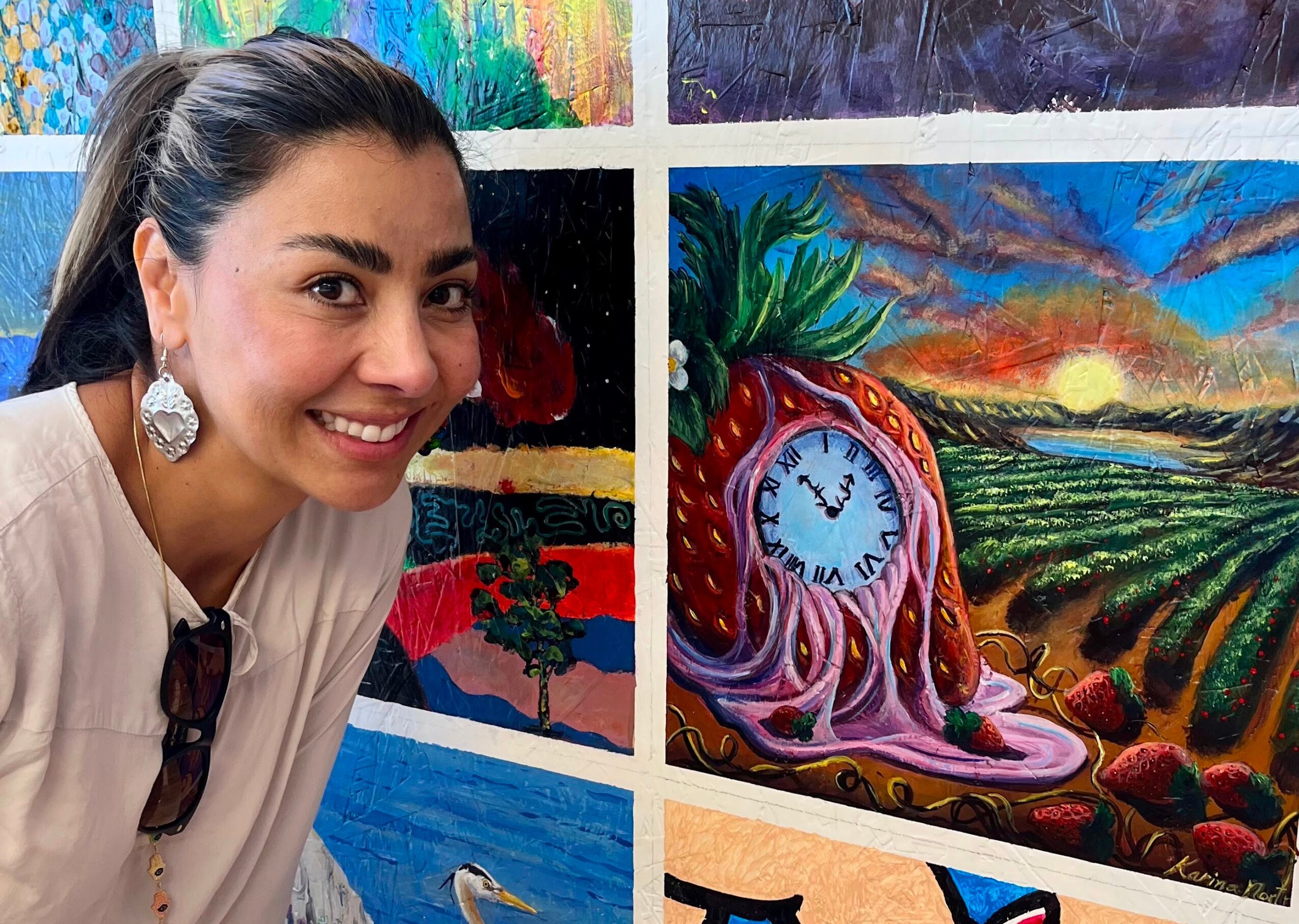
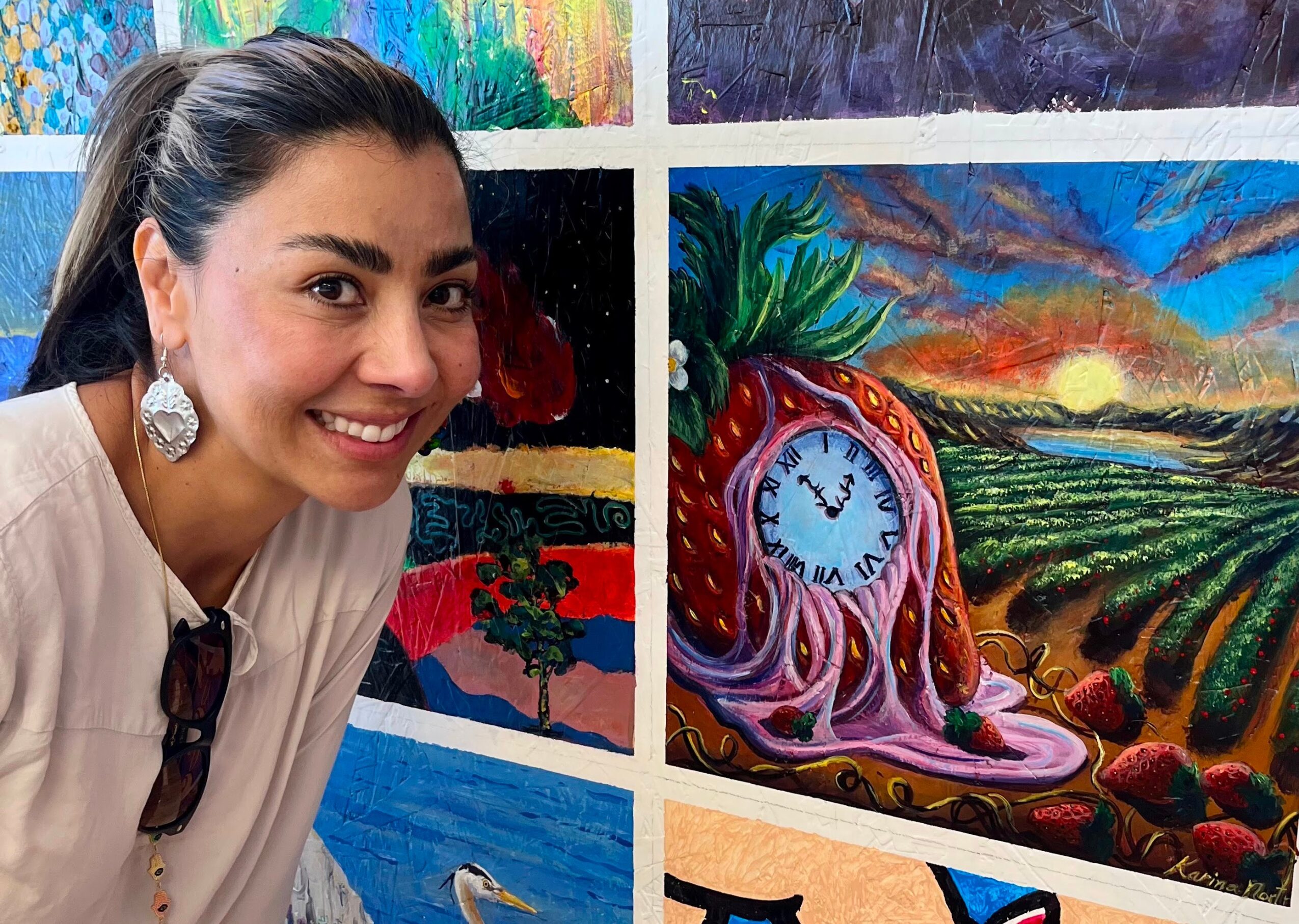
Today, I teach art to children, adults, and seniors while continuing to develop my own work as a painter. I paint mostly animals because my pets, and the beloved pets of others—have taught me so much about compassion, resilience, and unconditional love. Their beauty goes far beyond being cute or furry. They provide comfort, security, and companionship, and I try to communicate those qualities through my paintings. In many ways, what animals give to us is also what I hope to offer through my work: a feeling of safety, connection, and being seen.
Looking back, I believe my path toward becoming an artist was intentional, even if it unfolded slowly. Over time, I have been shedding the roles that no longer belong to me and holding on to the work that makes me feel fulfilled: painting, teaching, and bringing people together.
Watsonville has been an important part of that journey. It is a close and generous community where people genuinely care for one another and make an effort to lift each other up. As a Mexican immigrant, I feel at home here. I still miss Mexico, but I have found a place among people who understand that belonging can be more complicated, and more meaningful, than simply being connected to one piece of land.
For me, art is part of that belonging. It reminds us that we are connected to something greater than ourselves and that, sometimes, we communicate most honestly through colors, shapes, and lines.
Can you talk to us a bit about the challenges and lessons you’ve learned along the way. Looking back would you say it’s been easy or smooth in retrospect?
It has and it hasn’t been a smooth road. For a long time, I did not realize how deeply art was already woven into every part of my professional and personal life.
By 2023, I was working as a program director, and when I really examined my life, I noticed that nearly every project I cared about had art integrated into it. I organized creative activities for our day program, trained staff to facilitate art-related projects, and found opportunities to paint murals. At the same time, I was experiencing a great deal of stress. My position had become increasingly administrative, leaving very little time or energy for my own artistic development.
I was reluctant to leave because I cared deeply about the people I supported and the staff I worked with. That work had been a major part of my identity, so walking away from my nine-to-five job felt like stepping into the unknown. I did not yet know who I was without my title or what a career as an artist would actually look like. Leaving those relationships behind was painful, but I also knew it was time to create a community and a life of my own.
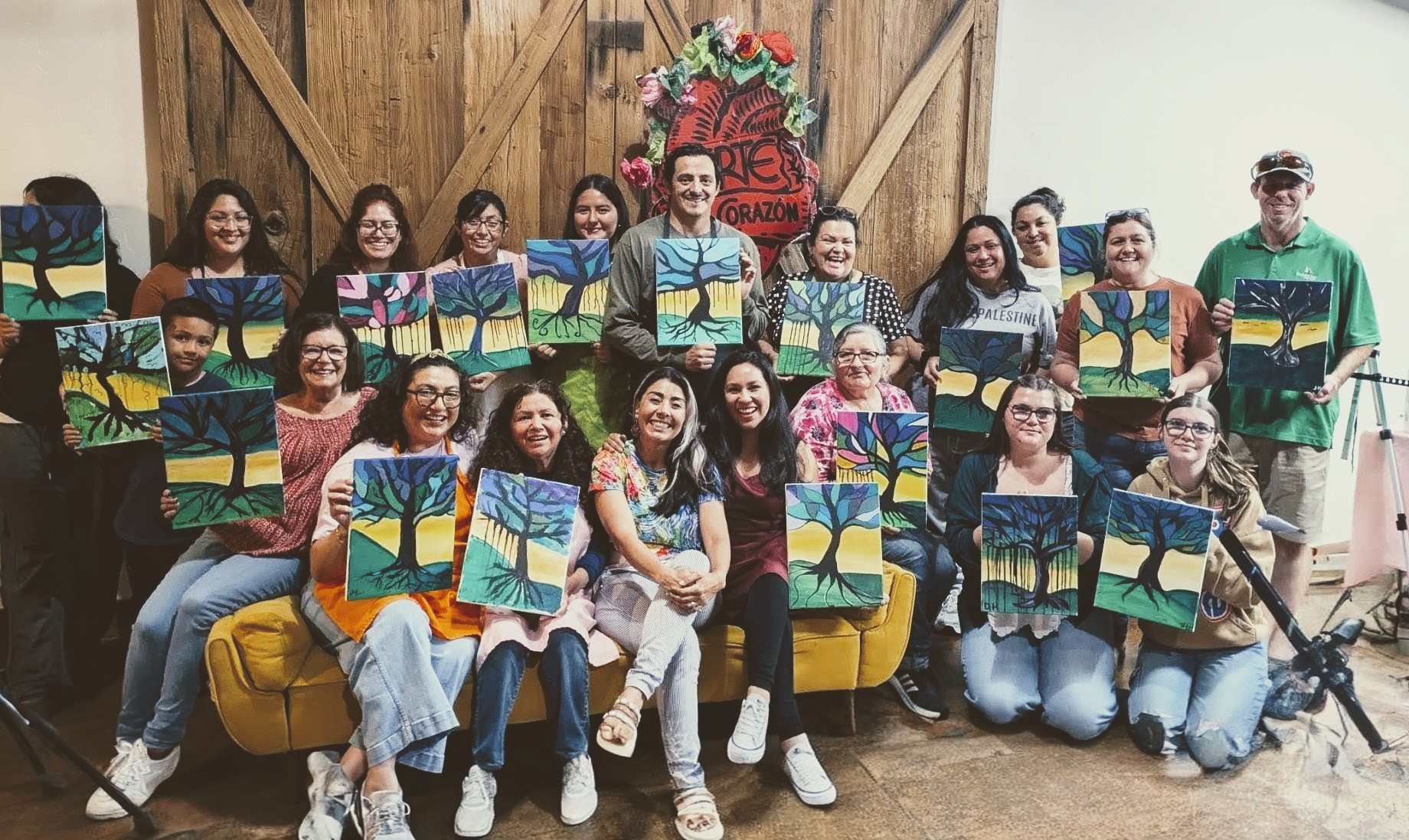
I began with a small, bilingual club where beginner painters could follow tutorials and learn together. It was open to anyone who wanted to paint, regardless of experience. From there, I started participating in local markets and became more involved with Watsonville’s creative community. Arte del Corazón was my first love in that world. As a nonprofit, they welcome, encourage, and guide artists at every level, and they helped me feel that there was a place for me.
New opportunities began appearing. Envision After School Program invited me to be part of its art program, where I now work with children from transitional kindergarten through sixth grade. I genuinely love every minute I spend creating with them. The senior program in Castroville also invited me to lead its art classes. That work has been interesting, joyful, sometimes surprising, and deeply satisfying.
So yes, the road has been bumpy, but not necessarily in a bad way. One of my greatest challenges has been learning to trust mysel, to release an identity that no longer fit and accept that I did not need to have every step planned before moving forward.
Somehow, life continues to place me where I need to be. I still do not completely understand how it works. It feels a little like learning to relax, notice where the current is moving, and decide when it is time to jump into the next boat. As long as I have a paintbrush with me, I trust that I will be fine.
Thanks – so what else should our readers know about Canvas Art by Karina North?
Canvas Art is the home of my work as a painter, teaching artist, and community art facilitator. I create original paintings, commissioned pet portraits, murals, and welcoming art experiences for children, adults, and seniors. I also collaborate with schools, nonprofits, senior programs, and community organizations throughout Santa Cruz County.
I am especially known for my animal paintings and pet portraits. My goal is not only to reproduce an animal’s appearance, but to capture its personality, spirit, and emotional connection with the person who loves it. Animals give us comfort, security, companionship, and unconditional love, and I want those qualities to be felt in my paintings.
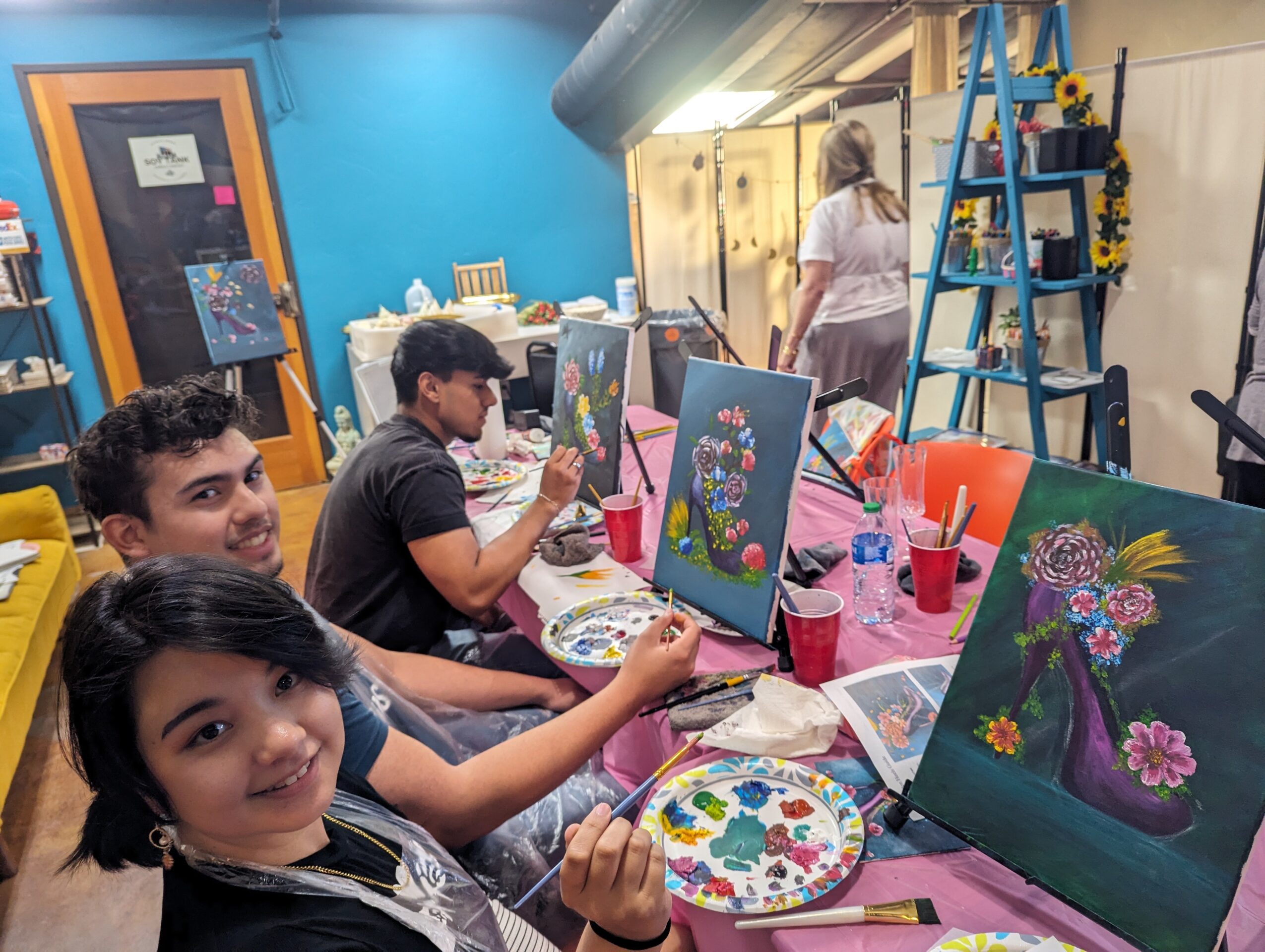
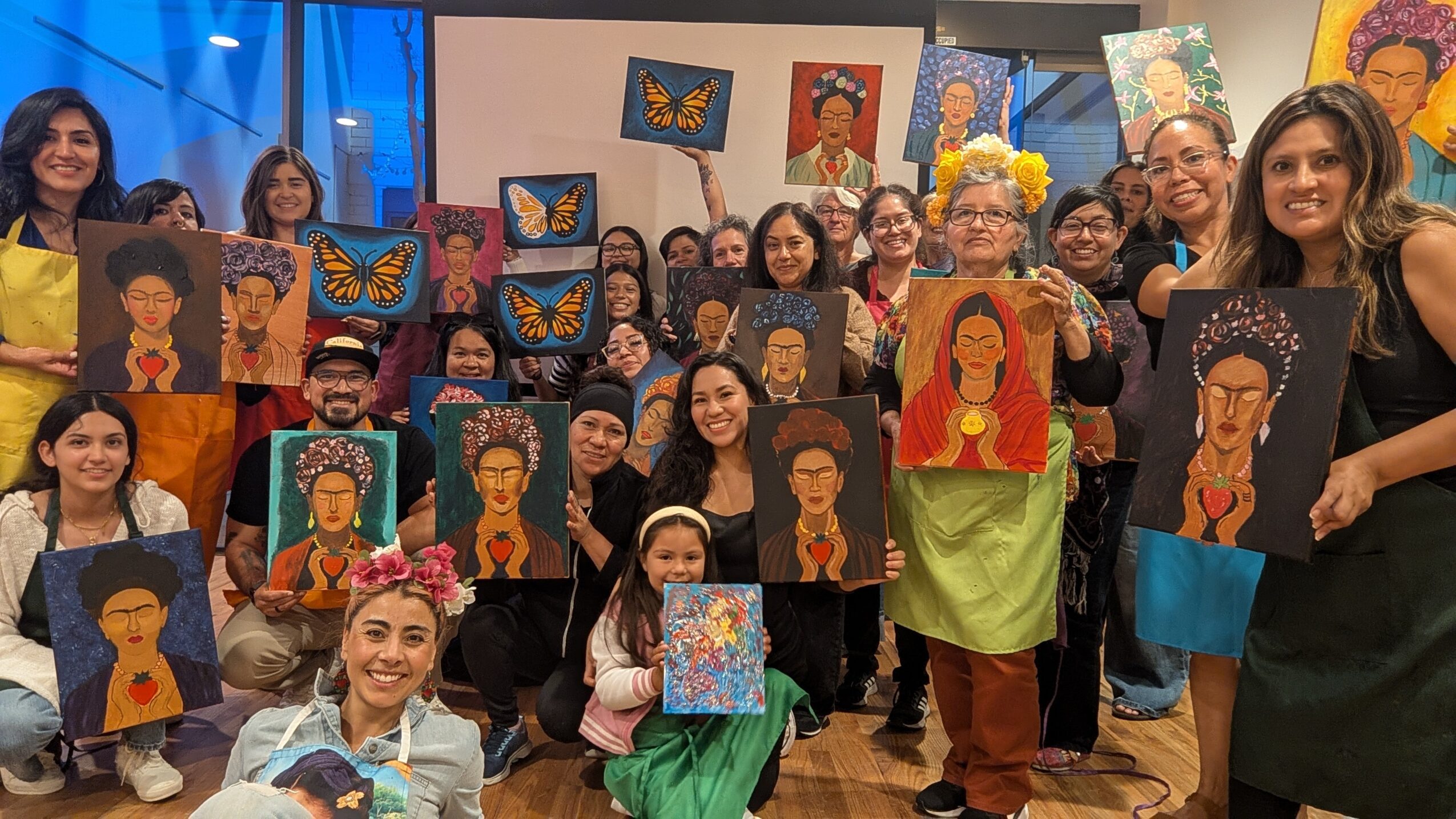
Teaching is another essential part of Canvas Art. My bilingual classes are playful, encouraging, and designed for people at every level, especially those who believe they are “not artistic.” I teach technique, but I also encourage participants to experiment, make mistakes, and discover their own creative voice. My philosophy is simple: express, don’t stress.
What sets Canvas Art apart is its focus on accessibility, emotional expression, and community. I want to create spaces where people feel welcome rather than intimidated or judged. As a Mexican immigrant, I am especially committed to making art more accessible to Spanish-speaking families and others who may not always feel represented in traditional art spaces.
I am most proud of Art Vibes Only, my free or donation-based community workshop series supported by Arts Council Santa Cruz County. I created it because I remember wanting to learn how to paint but not being able to afford classes. I believe art should not be treated as a luxury. Everyone deserves access to creativity and a place where they can feel seen, capable, and connected.
Can you talk to us about how you think about risk?
For you, the strongest answer is not “I love taking risks.” You are thoughtful and sometimes afraid—but you have learned that staying somewhere that no longer fits can be the greater risk.
I do not naturally think of myself as a risk-taker. I like to feel prepared, and I can overthink decisions, especially when they affect my financial stability or the people I care about. However, when I look back at my life, I realize that I have taken several major risks.
Moving from Mexico to the United States was one of them. I had to rebuild my life, find my place in a new community, and navigate years of uncertainty while my immigration status was being processed. Later, leaving a stable career as a program director to pursue art was another enormous risk. I walked away from a reliable paycheck, a professional title, and people I deeply cared about without knowing whether I could build a sustainable life as an artist.
Showing my work publicly was also a risk. My beginnings were very quiet, and calling myself an artist made me feel exposed. Participating in markets, offering classes, submitting work to exhibitions, and eventually creating my own programs required me to accept that not everything would succeed, and that being seen also meant being open to rejection.
My perspective now is that risk is not the absence of fear. It is deciding that something matters enough to move forward while fear is still present. I also ask myself what I might lose by not trying. Staying in a familiar situation can feel safe, but sometimes remaining where you are unhappy or unfulfilled is the greater risk.
I still try to be thoughtful rather than impulsive. I prepare as much as I can, begin on a manageable scale, and adjust as I learn. My first classes and community projects started small, but each step gave me enough confidence to take the next one.
Risk has taught me that I do not need to see the entire road before I begin. I only need enough courage for the next step.
Pricing:
- Custom pet portraits starting at $180
- Public painting classes typically $45 per person
- Private painting parties and group workshops: custom pricing
- Original artwork and murals: pricing varies by size and project
- Free or donation-based community classes offered on select dates
Contact Info:
- Website: https://karinakarinacabo.wixsite.com/northcanvas-gallery
- Instagram: https://www.instagram.com/paintingpartycanvasart/?hl=en
- Facebook: https://www.facebook.com/profile.php?id=61560004730983