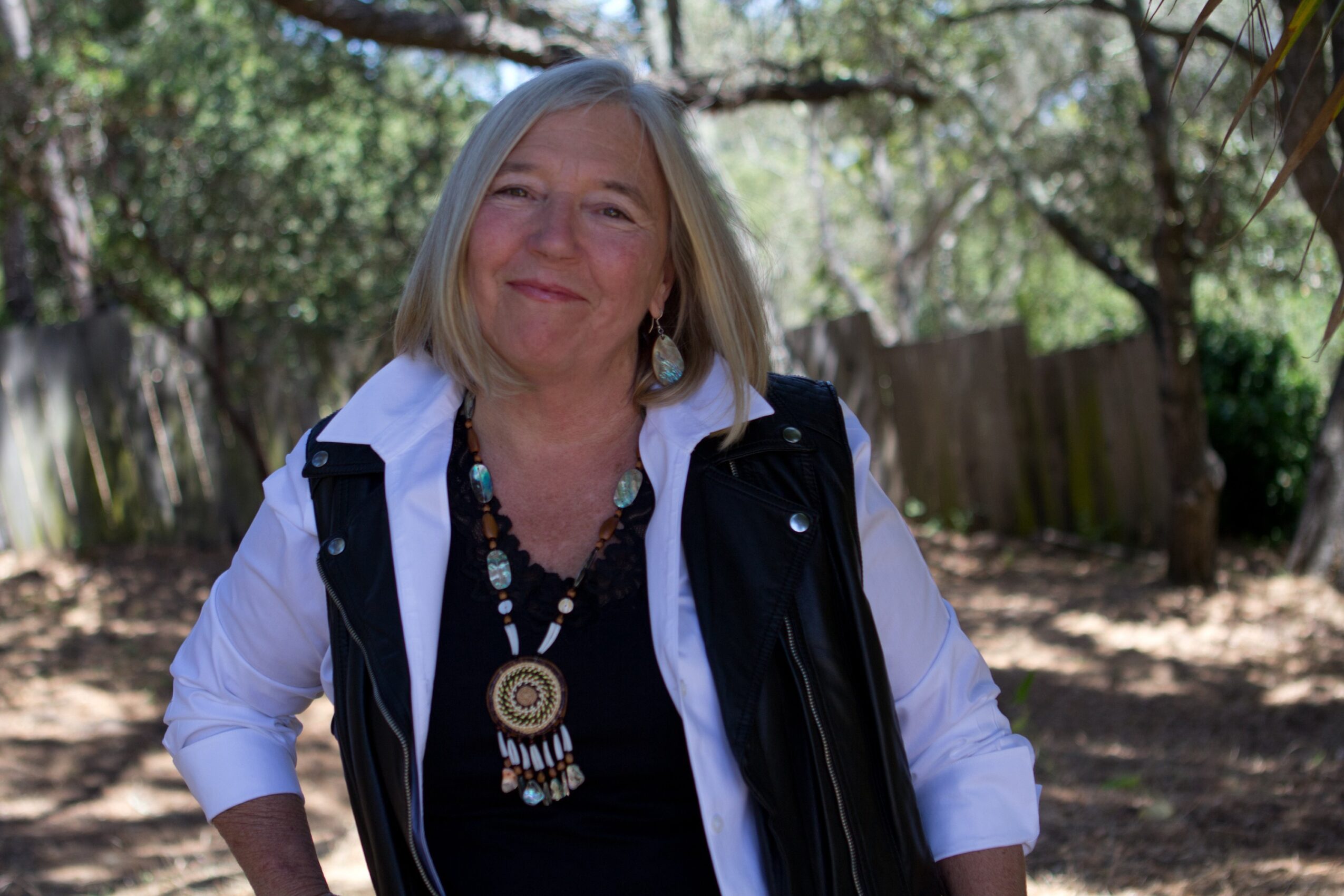





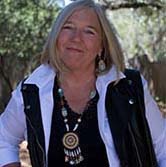
Today we’d like to introduce you to Mary Flodin.
Hi Mary, thanks for sharing your story with us. To start, maybe you can tell our readers some of your backstory.
From the moment I could hold a pencil and write my name, I knew that my prime directive for this trip to Planet Earth was to listen, observe, and write down the things that happen to people. At least that’s how I remember trying to explain it to my parents when I was very young. The felt necessity to be a writer has never left me. I’ve written poetry all my life – some of it published – and articles on ceramics, organic gardening, and education, which were printed in various journals. I started several novels, but was never able to actually finish one until, while teaching in a public school in Watsonville, California, surrounded by strawberry fields, my colleagues and I became unwitting environmental activists.
In the 1990’s, we followed our legal mandate as teachers to report and attempt to prevent any situation that harmed our students, when we discovered that at least thirteen acutely toxic gasses (some developed for warfare) were being injected into the soil next to our school, killing every living thing in the earth from worms to microorganisms. The pesticides were outgassing from the sterilized soil and were carried by coastal breezes right into our campus, targeting every system of the human body – lungs, reproductive organs, endocrine system, neurological functions, skin, immune system . . .
Our efforts to protect our students led to vicious pushback from the school administration and community leaders who were all making big money from the very lucrative California strawberry industry. Our bosses insisted, despite a growing body of scientific and medical literature to the contrary, that there was nothing harmful to humans about the pesticides. We needed to get the word out to the public about the damage being done in the schools and surrounding fields. So I was compelled to write our story in a popular commercial genre – as a romantic murder mystery, hoping to reach a wide audience of caring readers.
Fruit of the Devil, an eco-thriller, became my first published novel. It illustrates all the reasons – from poisoning communities, labor abuses, and ICE terrorism, to trafficking in the fields – why migrant farmworkers call non-organic strawberries Fruta del Diablo. My second and most recent novel, Incident at Cougar Creek, is also an eco-thriller that focuses on themes of social and environmental justice.
Can you talk to us a bit about the challenges and lessons you’ve learned along the way. Looking back would you say it’s been easy or smooth in retrospect?
For most of my life, my need to “be a writer” was maddeningly stalled and frustrated by the necessity to earn a living and by time spent expressing my creativity through channels other than writing.
After finishing a B.A. in English at UC Irvine while the Viet Nam war was raging, I married a Mexican American Navy corpsman and moved to the East Coast. During that time, my lifelong commitment to anti-war peace activism, feminism, honoring diversity, and labor politics was firmly cemented. After the war, I returned to the University of California Santa Cruz to pursue a B.A. in Fine Art. I worked for ten years as an independent studio potter before returning to school for a teaching credential. The distractions and drama of days rolling by like a “broken down dam” rushed by me, leaving no time to devote to writing a full-length novel. It wasn’t until I retired from a twenty-five year k-12 teaching career that I was finally able to sweep aside everything else and settle into giving my full focus to writing.
As I wrote, my life experiences informed and enriched the story I wanted to tell. Once I put blinders on and devoted myself one hudred percent to writing the story that became Fruit of the Devil, it still took nearly ten years of voracious reading of mysteries, starting with Tony Hillerman, then C.J. Box, Nevada Barr, and then many other new authors and classics. And yes, there was the relentless editing, countless revisions, and bloody killing of my darlings to required to complete the manuscript.
My dream was to be published by one of the few remaining great American publishing houses, all of which accept only agented manuscripts for consideration. I attended writers’ conferences, read books on writing (Stephen King’s On Writing was one of the best), had the great good fortune to work with an outstanding critique group, hired a very expensive content editor, and sent out over a hundred agent queries. Finally, losing hope of finding an agent, much less a publisher, I began researching self-publishing. It was then that a mystery writer friend of mine introduced me to her publisher, editor of an independent small press. Paper Angel Press accepted my work, and has since published two of my novels.
Thanks – so what else should our readers know about your work and what you’re currently focused on?
I write fiction about topics that matter to me. My goal is to not only entertain but also to inform readers about subjects and issues that may not be familiar to them, regarding both the wide world as well as humans’ interior struggles. My stories are deeply grounded in a sense of place, in the context of both human culture and local history, and the natural environment, but I also love to throw in fun things like cooking and local restaurants and destinations, pets, wine tasting, surfing, music, costume and interior décor, and plenty of steamy romance.
I have a strong affinity with plants, animals, and the natural world. Trained as a California naturalist and having spent two years working as an environmental studies teacher in outdoor science camps, I’m particularly devoted to conservation and restoration of watersheds and the ocean.
I’ve always been drawn to Native American people and their cultures. I had the honor to study with several Native mentors, including Pueblo potters Maria Martinez and Lucy Lewis. I participated in a project building a cob peace meditation medicine circle with Lakota teens at Wounded Knee, South Dakota, and I joined the encampment at Standing Rock, North Dakota to stop the Dakota Access Pipeline. There I was inducted into the Water Keepers. “Water is life” “Mní wičhóni.” Indigenous characters and issues find their way into my eco-thrillers.
My husband of the last almost forty years, an Oberlin grad and a physicist and amateur astronomer, earned his Masters’ degree at UC Santa Cruz, where we met, and worked until retirement at NASA-Ames in Mountain View, California in the Atmospheric and Planetary Science Division, on research on Global Warming. Starting in the early 1980’s, he has taken me with him to lectures, conferences and seminars on the topic, and has introduced me too some of the most highly respected scientists in the field. A need took root and grew in me to communicate, through fiction, what I was learning from the scientific community about the truth and urgency of global climate chaos. My work organically evolved into a genre that is becoming well-known as cli-fi. See more about the cli-fi genre and what that means to me here: https://maryflodin.com/
Reading widely in many genres throughout my life and watching movies has influenced my work. I love Fantasy, Science Fiction, Romance, and Speculative Fiction. Writing conferences and networking with other writers have been invaluable.
Can you tell us more about what you were like growing up?
Oy vey! This question broke open a Pandoras’ box! Made me realize I really should probably write a memoir. I’ve been working on this answer for days. It became a very interesting, compelling project. Maybe I’ll regret it , but I’m going to send you this whole thing, uncensored. Feel free to cut as you wish.
Growing up in the 1950’s, I was a very shy, introverted child, most comfortable in the company of my dog, dolls, and the Imaginary friends that populated my parents’ beautiful garden in our historic Spanish style white stucco, red-tile roofed home in San Marino, Southern California. A very large, old, and wise magnolia tree looked after me throughout my childhood, and a magical black mission fig tree growing over the white patio wall transported my few close friends and me to a land where snails could talk. In my parents’ back yard, we filled our tummies with the blackberries that we picked and ate until our fingers and lips turned black, and we made boats for the flower fairies to sail in the moats, which we filled to overflowing with the garden hose, around my father’s lemon trees and roses.
I had a only a few close human friends. Carol lived around the corner. Her elegant and mysterious mother spoke with an accent and had fled from Europe during the war, with her 18th century Bavarian Baccarat crystal, ornate and heavy antique sterling silver, Havilland porcelain, and jewels. Carol and I shared a love of Madame Alexander dolls, We would climb up into the generous fig tree with our dolls and be blasted away, as if on a rocket ship, and then would climb back down with our dolls, which had magically come alive, and we would tiptoe in amazement into the enchanted alternate Wind in the Willows garden world the fig tree had carried us to.
My other best childhood friends were the twins across the street, whose retired actress mother provided us with big big boxes of wonderful dress-up clothes, which we donned to enact our made-up romantic fantasy stories, “I’m wishing, I’m wishing for my prince to come.”
We were close to the family next door. The Father had season tickets to the elegant Turf Club at the Hollywood Park Racetrack and occasionally, he lent them to my mother and me for a day’s outing. The track opened in 1938, in Inglewood, California, backed by movie moguls like Jack Warner and Walt Disney. The historic track permanently closed for live racing in December 2013. I loved the beautiful horses, and the goose girl, a young woman dressed in a traditional European shepherdess outfit who wandered the track’s landscaped infield. She tended to a flock of hundreds of geese, swans, and ducks living on the infield’s scenic lakes. My mother would always place two dollar bills in her wallet to tip the valet parking man, and two dollars for each of us to place a bet on each race, plus enough for luncheon at the exclusive Turf Club. We watched the races in box seats, mingling with famous movie stars.
Periodically, the orange man, the egg man, and the milkman would make deliveries of fresh produce from the vast orange groves and fertile farms of the area, which now only exist in memory.
When I was a little older, I rode my bike to my nearby elementary school and to beautiful Lacy Park, built a hundred years ago on top of a marshy wetland where abundant wildlife once roamed. The beautifully maintained park, located in the center of San Marino, is known for its extensive green lawns, mature trees, peaceful atmosphere and public safety – the perfect haven for a shy, bookish, dreamy little girl to retreat to. I’d also ride my bike to the nearby historic and iconic five-star Huntington Hotel. In 1911, one of the great industrialists, (often referred to as “Robber Barons”) of the 20th Century, the railroad tycoon and art collector Henry E. Huntington, opened the stately hotel, its bungalows, exquisite gardens, and California’s first outdoor olympic-size swimming pool, which was open to the public. I very much enjoyed swimming there. There were other magical pools I was taken to — one on a large estate with a pond on the grounds. We’d often find frogs from the pond in the swimming pool. We’d catch tadpoles in the pond, and take them home in jars to raise into frogs and return them to the pond.
Around the same time, he opened the hotel, Huntington founded nearby The Huntington Library, Art Museum, and Botanical Gardens, a world-class, 130-acre cultural oasis, with a massive research facility paired with legendary public art galleries and sprawling botanical gardens. The Huntington Library as well as our little public library were magnets to me. In 1989, after I grew up and moved away, the Ritz-Caarlton took over and renovated the hotel. In 2007, it was acquired and rebranded by the world-renowned Langham Hotels & Resorts. But when I was a little girl, it was to me a pretty and interesting place I could safely ride my bike to. I’d wonder across the historic redwood Picture Bridge (an elegant covered walkway featuring original landscape murals hand-painted by artist Frank Moore in 1933), wander through the mirrored halls of the elegant hotel admiring awe inspiring Asian antiquities, and fish for crawfish in the koi ponds with a string on a stick baited with bacon.
My father was a first generation American, the son of Swedish immigrants, born in 1902. He grew up in Spokane, Washington and worked his way through college as the night clerk in his parents’ hotel, to become an electrical engineer. He met and married my mother in New York City. They lived through the great stock market crash of 1929, and when I was a child, they told me stories about seeing businessmen jumping out of tall buildings and professionals selling pencils on the street corners in the snowy winter. My parents didn’t hide gritty realism from me, which must be why I developed a bit of a writerly taste for noir. Luckily for my parents, my mother had a teaching job and my father had a stable position as an electrical engineer with the Edison Company. They settled in Chicago in 1930, then migrated across the country, through Texas, and finally landed in Southern California during the rise of the middle class after WWII.
I was born in St. Lukes Hospital in Altadena in 1947. Built in 1933 by the Sisters of Saint Joseph of Orange, the landmark property has been completely abandoned since closing its doors in 2002. The iconic seven-story, Art Deco-style main building, along with its original convent and chapel, are registered city landmarks. They cannot be legally demolished.
Before I started kindergarten my mother bought our home in San Marino and moved us in while my father was away on a business trip. In the early days, the air quality in the LA basin was excellent. From the fooothills of Altadena, you could see the island of Catalina. But with the exploding population and growing number of gas fueled cars on the road, smog started to settle in under the inversion layer in the valley. Father morphed from an electrical to a chemical engineer, He quit his job with the Edison Company, reinvented himself as an expert independent air pollution control consultant, and invented a filter still used in industry to mitigate the L.A. smog. You can find him in Whose Who in Engineering. We lived close to CalTech, and my parents entertained many esteemed CalTech scientist friends at our home. By the time I graduated from high school and left for college, the LA smog was so choking thick you could hardly breathe. On his deathbed, father declared to me that they had pretty well solved industrial air pollution but it was the cars that needed to be dealt with. The theme of air quality has continued to interest me all my life.
My mother, descended from pilgrims, and was the daughter of a coal miner. Her Welsh and Irish ancestors had been scratching a poor living out of the hard cracked earth, farming and mining coal for generations, before they migrated to America, where they continued scratching and digging in the poor poor ground as they made figure eights around the midwest, generation after generation, searching for a better life.
Growing up, I heard stories about mama’s father, Grandpa Ed, president of the local coal miners’ union and close friend of famous labor organizer John L. Lewis, president of the National United Mine Workers. Grandpa Ed led his rural small town miners on a strike during a freezing cold Illinois winter. The mayor came to visit Grandpa’s home. They sat in the parlor and the mayor said, “Ed, the good people of this town are freezing to death without coal, and have asked me to request that you send your men back down into the mines.” And Ed, according to the story, replied, “Mr. Mayor, you can tell the good people of this town that they can go down in the mines and get their own f***in coal until you meet the Union’s demands.” I’m realizing, as I write this, that my path to be a social justice cli-fi writer was set here, in early childhood, touched by unionism, coal, smog, and a chemical engineer father who invented a filter to clean particulates from industrial stacks.
Mother and her sister, Mary, both brilliant and beautiful, left their dirt poor Illinois farmstead and that little coal mining town to enroll in Columbia Teachers College in New York City. Mother was among the first American women ever to earn a college degree. She used to tell me stories about teaching in Cicero, Chicago during the reign of Al Capone, dancing with the flappers, and going to speakeasys with her young and successful engineer husband.
She was generous, nurturing and loving to a fault, but also savvy with a high degree of emotional intelligence. She became a successful social climber, like most of the newly-monied who settled into San Marino at that time, just after WWII. Mamma was a philanthropist, and an ardent antique collector, as well as a lavish entertainer. She studied French cooking with Julia Child and frequently hosted formal dinner parties in our beautiful home, seating as many as twenty guests at her long ornately-carved antique mahogany table, set with Damask linen, Haviland china, sterling, and Baccarat crystal while Father barbecued steaks on the patio and the liquor flowed. I used to love placing flower bouquets and crystal and sterling bowls of nuts and candies throughout the house and setting the table before these parties with all the pretty things. Never imagining at the time, of course, that this golden age of what I didn’t understand at the time to be rare privilege would come to an end for me.
My father was a Swedish Lutheran and my mother generic protestant, but she signed us up to belong to the local high Episcopal church because that’s where all the well-connected people went. I was confirmed there, and enjoyed the ceremony and dressing up with men in suits and ladies in their nicest dresses, white gloves, pearls, and pill hats will veils. My mother, sister, and I eventually strayed away from the church, but Father faithfully put on his suit and ushered there once a moth until near the end of his life.
Throughout my childhood, Mama held court at the head of her magnificent antique mahogany table in the dining room, where she often had one or another neighbor child, if not me, on her lap, reading a book. It was rumored that she could teach a rock to read. I devoured books durng those years, always having a stack of currently reading books at had. I especially loved books about dragons and heroes.
We lived in the epicenter of the Valley of the Dolls, that famous novel and film about a group of women becoming dependent on prescription barbiturates nicknamed “dolls.” After her late in-life-pregnancy with me (she was over 40 when I was born) and terrible postpartum care, she no longer had a movie star figure. My mother struggled with her weight for the rest of her life. Others in the San Marino community also battled with the diet yo-yo that was so challenging in the midst of the opulent life style they led, consuming impossibly rich foods. A quack diet doctor came to town, and handed out combos of uppers (speed) and downers, like candy. Paired with widespread heavy social drinking, the formula caused one prominent attorney to axe murder his whole family and then kill himself. My mother shared her prescription for appetite suppressant amphetamines, plus barbiturates for masking the speed jitters, with my sister.
Most of the wealthy people in San Marino were nouveau riche – sons and daughters of coal miners and immigrants, and they had imposter syndrome, so they amassed oodles of status symbols — cars, clothes, fancy houses, non-white maids and gardeners. Their children sponged up that imposter, gotta-prove-my-worth-and-be-better-than-you mentality. I couldn’t handle the extreme mean girl social climbing of San Marino High, so my Catholic convert Aunt Mary pulled strings with a bishop she knew, and I was transferred to a small Catholic girl’s school in Pasadena. It was the perfect fit for me, a real lifesaver. We wore uniforms, so no one was obsessed over how expensive any one else’s clothes were. The school was located in Pasadena’s Orange Grove Boulevard “Millionaires’ Row” district, housed in one of the historic grand estates, a Beaux-Arts style villa designed by architect Frederick Roehrig and built aound 1919 for an oil banking magnate. Decorated with Batchelder tiles and Tiffany glass. it imbued me with a love of the Craftsman-Style esthetic of the early 20th Century. My classmates were Gettys, Rosevelts, and all the “old money,” as my mother called them, who didn’t need to impress and be “better than.” They just were. As one of the only non-Catholic students, I was a curiosity and became kind of a mascot and a rebel to the other girls, a role I enjoyed. The nuns instilled in all of us a deep ethical conscience, a permanent “moral compass” and lifelong dedication to social justice, charity, and helping others.
In my sophmore year, on November 22, 1963, during Mother Mary Giles’ history class, our Principal, Mother Elizabeth Mary, announced President Kennedy’s assasination over the intercom.
Five years later, home from college on June 5, 1968, I was watching a Perry Mason rerun in my parent’s bedroom over dinner on TV tables, when the program was interrupted. Jaws dropped, wide-eyed and teary, we watched the assassination of John F. Kennedy’s younger brother, Robert F. “Bobby” Kennedy live and in living color. The loop played over and over. Those two assassinations marked a turning point for my country, and for me.
During those years, I watched a lot of murder mystery series on TV with my parents. Columbo, Perry Mason, Rockford Files, Hawaii Five-O and the rest definitely influenced my affinity for writing mysteries.
In the 1960’s, the Civil Rights Movement was heating up. Pasadena schools at that time were in the midst of being integrated. The Watts Riots happened in L.A., a few minutes up the freeway from my home. One summer afternoon, just after I graduated from high school, my mother took me shopping at the exclusive I.Magnin department store on Colorado Boulevard in Pasadena. A group of lovely, well-dressed black women stepped up to the jewelry counter that gleamed and glittered with gold, emeralds, rubies, diamonds . . . The women were not there as sales clerks; they had come as customers, breaking an age-old taboo. I witnessed the event with great interest.
My parents were Eisenhower Republicans. San Marino was an extremely racist community. The John Birch Society, with big gold letters, was one of the first buildings you saw when you drove into town. I remember going to a teen dance at the Pasadena Civic Center. It was my first experience in a mixed race social setting. A nice, cute, shy black boy asked me to dance and I said yes. My mother, who was chaperoning, whisked me away. I was never allowed to attend another public teen dance.
Years later, I came to appreciate the brilliance of author Octavia Butler, and I discovered that she was my age and had attended Pasadena High School. She may have been at that teen dance in the Civic Center that night. In another reality, I believe we could have been soulmates. I’m deeply saddened that the racism of my natal community prevented me from ever meeting that wondrous soul.
I’ve always loved animals, including horses. I had riding lessons at the Flintridge Riding Academy in La Cañada. I also had piano lessons, learning classical pieces and chord theory jazz improv from a local church organist. My sister played piano brilliantly and my father played the clarinet. He had a binder full of music from the big band jazz era. We had wonderful family music nights, and evenings playing canasta. My parents were big Bridge players, but I never learned.
I learned to swim at an early age. My sister taught me to swim in the big surf at Laguna Beach, where my family often vacationed. She held my hand as we floated far out beyond the surf break and told me the story of Dumbo the elephant, whose bird friend gave him a magic feather that granted him the ability to fly. She plucked a feather floating on the water, gave it to me, told me it was my magic feather that would enable me to swim back to shore through the treacherous waves, then let me go.
We also vacationed in Palm Springs, where I grew to love desert ecology and brought home a desert tortoise.
My sister and her architect husband, whom I dearly loved, bought a house in Hermosa Beach in the early days when it was a run-down Jewish ghetto and filled with vagrants and drug dealers and artists. For several summers during my high school years, I stayed for long stretches with my sister and brother-in-law. The Beach Boys lived there in a second story apartment building on the Strand, and often played their songs out on their balcony. Walking along the Strand in our bikinis to the live music of the Beach Boys, my friend Bonnie and I got wolf whistles.
I started surfing in Hermosa Beach when I was 15. Our wetsuits at that time were made of raw, thick, single-layer foam rubber. For my sixteenth birthday, my parents bought me a longboard custom shaped by Jim and Chester Lyman of Redondo Beach, with hot pink runners.I also got as a princess telephone for my bedroom and a bejeweled 14k charm for my charm bracelet.
My mother, who was involved in several philanthropic organizations, signed me up to be a Ticktocker, a division of the National Charity League for teen girls. I was supposed to make a debut and attend their Debutante Ball, but I refused. I was also invited to join, but refused, the Daughters of the American Revolution – due to my mother’s ancestry, and Job’s Daughters, since my father was a Mason and a Shriner.
My only sibling, ten years my senior, was a genius and artistically gifted. Before I was born, when she was little, the family lived in Texas. She was raped by a gardener. That’s probably one reason my mother was always so protective of me.
The Feminist movement was heating up in the ‘60s. While I was in junior high and my sister was still in high school, she and my mother read the new feminist books coming out, like The Second Sex, The Feminine Mistique, The Diary of a Mad Housewife, Lolita, and the diaries of Anais Nin, and they let me read them too. My parents were very well-educated and forward-thinking and subscribed to not only the Book of the Month Club but also Eros, a high-end, quarterly, hardcover art periodical published in 1962 by provocateur Ralph Ginzburg and legendary art director Herb Lubalin .
I both worshiped and feared my sister. She alternately tormented me and lavished me with gifts and access to the world of the Artist. From the perspective of time, I now believe my sister was a fetal alcohol baby, conceived during the era when my parents, along with many of the other hip young professionals, were frequenting speakeasies and drinking bathtub gin with the gangsters in Chicago. When my sister graduated from USC with a BA in art, it was declared that she was the most gifted artist to come through USC in decades. She was offered a scholarship to Johns Hopkins for a graduate program in medical illustration, but my mother urged her to instead marry that cute young architect who drove a Thunderbird convertible who was courting her. After a few glorious married years, my sister gave birth to a wonderful daughter, to whom I’m still close and dearly love. They purchased one of the Green and Green craftsman masterpieces — the “cottage” across from the Gamble House. I stayed overnight with them frequently in that house, and grew to appreciate architecture under the influence of my brother-in law. He was a visionary and greatly admired Frank Lloyd Wright.
My sister fell into a life consorting with beatniks, artists, and Hollywood movie people enjoying free sex, cocaine, and psychedelics. She tried to pull me into it, but the little taste I had frightened me. When my parents died we became estranged. She sacked and looted my parents home, pawning most of the beautiful things at low end pawn shops, sold the million dollar estate and kept all the money, and squandered all of both of our inheritance. Her life ended in a slow motion train wreck of hard drugs and ghetto violence.
After graduating from my Catholic high school with about 20 other girls, all wearing white dresses and Virgin Mary flower halos, I threw away my years-long dream of going to Vassar or another Ivy League Women’s college to follow my first serious boyfriend to UCLA, where he was starting his sophomore year. While we were dating in high school, his family took me on my first camping trip in the mountains. His parents were from France and his mother didn’t shave under her arms. My mother disliked the because they were “too foreign.” He introduced me to folk music and we played guitars together. As I left my childhood home forever that summer and headed off for college, I heard in my unconscious an immersive sound that Joni Mitchell described perfectly as “the hissing of summer lawns.” I was warned that one can never go home again,
UCLA, in Westwood, next to Beverly Hills and Santa Monica, is enormous, multicultural and international. What a change from the segregated, cloistered environment of my childhood! And I eagerly embraced it all. I attended a lecture by The Most Venerable Thích Thiên Ân, pioneering Asian meditation teacher who traveled from Vietnam to Los Angeles to serve as a Visiting Professor of Languages and Philosophy at UCLA. I learned about meditation and embraced Zen Buddhism. I personally met and attended a lecture by Margaret Mead, who spoke inspiringly about her life and her field work as a cultural anthropologist, and also talked about LSD. The very first ever cadre of non-white, non-male professors were my teachers. I took not only brain stretching intro to sociology and psychology, but also brand new, radical classes like Chicano History, Critical Race Theory, Global Political Econony of the 20th Century, and Intro to Feminist Theory. It was wonderfully mind blowing. We went wild — dancing in the quad to the radical new music of Jimi Hendrix, The Doors, the Beatles, Janis Joplin and the Jefferson Airplane, and taking literally the lyrics, “Why don’t we do it in the road?” I enthusiastically gave away my virginity.
I grew close to my dorm roommate. Her family was Jewish (Jews were excluded from San Marino when I was growing up), and I was invited to be their guest in their Beverly Hills home for full formal traditional Passover Seder dinner. I loved the setting of a place at the table and the opening of the front door for Elijah, the food and all of the history and ritual and symbolism and texts read. At that period, I also read Diary of Ann Frank and randomly pulled off the shelf and read one of my parent’s Book of the Month Club books, Reaching for the Stars, by Nora Waln—a memoir by an American Quaker woman that describes going on sabbatical with her music scholar and composer husband to Switzerland as Hitler and the Nazis are taking over. The book is transformational.
By the end of my freshman year, my relationship with my boyfriend blew up in a tumultuous psychodrama. My parents enrolled me in Mills College, which my sister had also briefly attended. My sophomore year at Mills College coincided with the moment of the first psychedelic Human Be-In Gathering in San Francisco’s Golden Gate Park, and the birth of the hippies. I studied with Shunryu Suzuki, an ordained Zen master based out of the newly established San Francisco Zen Center, when he visited Mills. I read Alan Watts and was introduced to the music of John Cage. I dove deep into mysticism, read and wrote Beat poetry, tried psychedelics, pot, and — with the new freedom bestowed upon women with the advent of The Pill — I reveled promiscuously. Without a clue as to the danger I was putting myself in, I spent most of that year off campus, hitchhiking with a classmate from Oakland to the City Lights Bookstore and the Haight-Ashbury in San Francisco, sharing flowers and food with people on the street. I wanted to stay on campus for the summer, but my horrified mother pulled me home. I missed the Summer of Love.
Next stop UC Irvine. More amazing radical professors, including a sociology professor who took our whole class to camp out on a beach in Baja, where I was introduced to tequila and marine invertebrates, and to the Santa Cruz Mountains to visit Gia Fu Feng, one of the first Tai Chi masters to come to the US, We stayed at a nude macrobiotic zen retreat center in the mountains called Stillpoint, and read Stranger in a Strange Land by Heinlein and, everything by Huxley, Steppenwolf by Hermann Hesse, Doris Lessing, and lots of science fiction.
During my time at UC Irvine more pot and LSD expanded my consciousness and clouded my judgement. My fellow students and I fervently discussed whether or not one could ethically claim to be non-violent, in order to get a deferment from the draft even if he thought he would definitely kill an Indian attacking his theoretical wife and children in his cabin out on the prairie. Would that be cheating? Seriously idealistic youths, we talked passionately about things like that. A few friends dropped out of school and immigrated to Canada to avoid the draft. We dropped acid and watched Star Trek and witnessed the first Moon Landing on TV in the dorm rec room. I joined the SDS and met my future husband, a Mexican American boy who grew up in the Long Beach barrio and worked in a tortilla factory before he was ten. His parents owned the most famous Mexican restaurant in Long Beach. I only passed the qualifying exam for my BA in English, by the skin on my chinny chin chin, on the weight of my essay on Joseph Campbell’s Hero With a Thousand Faces.
Because he was from a barrio zip code and the war was hot, my future husband got drafted, despite being a physics student in good standing. He was shipped to boot camp in San Diego. Once he was gone, my mother quickly pushed me into a relationship with the heir to the Zellerbach fortune, the younger brother of one of my sister’s artist friends. He was cute, hot, very interesting. We moved in together in his flat in Beverly Hills. The sex was fantastic. He gave me beautiful gifts, including a 14k gold Saint Christopher medal on a heavy gold chain, blessed by the Pope when his family visited Rome. His family was Jewish. I still treasure that Saint Christopher.
Friends drove me to my corpsman’s bootcamp graduation in San Diego, and got us a motel room. I confessed to him that I had moved in with another guy. He was enraged. He raped me. ( My first, but not my only Me Too experience.) Later, back in Beverly Hills with my Zellerbach heir, I realized I was pregnant. I didn’t know for sure which one was the baby’s daddy,
I had been told that to be a writer, one must suffer, know hardship. I figured that a life with a millionaire heir would be too comfortable, too easy, so I hitchhiked to San Diego to be with my Mexican-American corpsman. That was during the time that the Manson Family was trolling the LA freeways looking for hot, privileged, clueless little blonde girls like me to join his murder cult. Blessedly, angels must have been watching over me. Charles Manson didn’t find me. I moved in with my corpsman. He was angry, Jealous. He beat me up. Blackened my eye. Hit me in the stomach until I agreed to have an abortion. I developed a case of trauma-induced cognitive dissonance. This abusive behavior was entirely foreign to me. My father was a lovely, gentle man. Never violent. Well, I figured, I was certainly gaining experience that was bound to forge me into a great writer. My corpsman was transferred to the Philadelphia Naval Hospital — the amputee and psych center of the Viet Nam War, now decommissioned. I followed him there, and we were married in the Naval chapel, without any friends or relatives present. Two wide-eyed California kids, we explored the East Coast together, and had some grand adventures. The culture at the naval hospital was like the TV show Mash, if you’re familiar. The prevailing mood of all the enlisted men was angry, ironic, betrayed, cynical, bitter that they had been forced to sacrifice the trajectory of their young lives to fight in a war to make the rich richer. “1,2,3, what are we fighting for? We’re going to Viet Nam. Whoopee! We’re all going to die.”
We lived in a cheap apartment complex in Media, Pennsylvania, at the time that the legendary anti-war raid was carried out against a local FBI field Office. They packed 1,000 classified documents into suitcases and quietly walked out of the front door. A victory for our side! I tried to give away copies of the Philadelphia Free Press, the city’s most radical, prominent left-wing underground newspaper, inside the Naval Base, and was booted off the base. I realize now I was lucky they didn’t throw me in jail. We smoked Vietnamese hash and watched Kung Fu on TV with our neighbors —new friends who had met each other in an American high school in Viet Nam. My friend Heidi’s father was a water resources engineer working for the State Department to assist Asian countries in the development of their water infrastructure. Heidi’s new husband’s father worked for Air America. That was a passenger and cargo airline covertly owned and operated by the Central Intelligence Agency (CIA) from 1950 to 1976. It served as a vital, deniable logistics network for American covert operations across Southeast Asia during the Cold War and the Vietnam War. Heidi’s husband, K., was a religious studies student at Swarthmore, where Einstein once visited. He described being at the Nha Trang Air Base in Viet Nam with his father, watching people load bales of marijuana and bundles of hashish onto Air America planes flying back and forth into the central highlands. My friends married because she got pregnant. I became their son’s godmother. Suffering from clinical depression, my godson died in the Camp fire in Paradise, California in 2018.
The war wound down. My husband was honorably discharged, and we made our way across the country in his VW bug back to Santa Cruz, California, where he enrolled in the University to finish his physics degree, tuition free under the GI bill. My mother lay dying while we took our time driving across the country back to California. She held on until I arrived home.
Our breakup and do-it-yourself divorce was rough. Before final papers were signed, one night while I was asleep in a flat near the Santa Cruz yacht harbor, with a childhood friend who had recently been released from the infamous Reclusorio Preventivo Varonil Norte detention center in Mexico City for trying to smuggle cocaine into the US, My corpsman was-band, wearing a black sombrero, black shirt and pants, and a black cape broke into my bedroom and demanded to be given all the letters we had written to each other while he was in the Navy back east, before I joined him. He was not lacking in a flair for the dramatic. I wrapped myself in a robe, dug into an old steamer trunk of my father’s, and gave him all of the letters, his and mine ~ in envelopes emblematic of the era, decorated with art nouveau and psychedelic designs and filled with outpourings of lovesick, oversexed young adults troubled by the politics and culture of the times. Those letters could have been the basis for the possibly best novel of my life, and he knew it when he took them. Maybe I’ll try to recreate it all in a Colleen Hoover-esgue period romance novel someday. But right now, if I write more, I’m hearing the call of a time travel cli-fi environmental and social justice eco-thriller family saga from Wales and Ireland to the US about coal mining, and after that, maybe that memoir.
Pricing:
- Find Fruit of the Devil and Incident at Cougar Creek at https://www.amazon.com/Incident-Cougar-Creek-Mary-Flodin/dp/1969655461 or order through your favorite local bookshop
Contact Info:
- Website: https://maryflodin.com/
- Instagram: https://www.instagram.com/maryflodin
- Facebook: https://www.facebook.com/maryflo/
- LinkedIn: https://www.linkedin.com/in/maryflodin
- Twitter: https://x.com/bluebirdcreek
- Youtube: https://www.youtube.com/c/MaryFlodin
- Other: https://linktr.ee/maryfloiam