




Today we’d like to introduce you to Adam.
Adam, we appreciate you taking the time to share your story with us today. Where does your story begin?
My path to becoming a physical therapist was not exactly linear. Before entering healthcare, I was working in the corporate world and began contemplating a career change. I had always been interested in movement, health, and fitness, but wasn’t sure whether physical therapy was the right direction for me.
That changed when I began working out at Cabrillo College and had the opportunity to observe Dr. Chris Christensen of Precision Physical Therapy. Watching him work with patients gave me my first real glimpse into the profession. I was struck by the combination of science, problem-solving, human connection, and tangible impact on people’s lives. I left that experience knowing I wanted to take my life in a different direction.
I left the corporate world and began my Doctor of Physical Therapy program at Fresno State, where I served as class president for all three years. My previous career continued to shape how I approached physical therapy. Before becoming a clinician, I had already developed significant experience in management, leadership, and business operations—skills that would become unusually valuable early in my PT career.
After graduating, I returned to my hometown of Lodi, California, for my first position as a physical therapist. Ironically, I quickly found myself thrust back into the corporate healthcare environment I had worked so hard to leave. After five months, I realized the traditional corporate model wasn’t where I wanted to build my future and decided to move on.
I had always felt a pull toward the Central Coast, so I began looking for opportunities in the Monterey area. I applied to Balance Physical Therapy expecting a traditional staff position. Instead, I was surprised when CEO John Farahmand offered me the opportunity to become clinic director of a brand-new location in Prunedale.
Becoming a clinic director only five months after graduating from physical therapy school was highly uncommon. Most physical therapists spend years developing clinical and leadership experience before taking on responsibility for an entire clinic. My previous career in management and operations, however, gave me a foundation that I could immediately apply to healthcare.
I was able to build the clinic essentially from the ground up. We grew quickly, and the clinic became much more than a place to receive physical therapy—it became a cultural and therapeutic hub for the surrounding community. That experience taught me that one of the most meaningful aspects of physical therapy is the relationships you build and the role you can play in someone’s life and community.
Eventually, I decided it was time to take another leap. I left Balance on excellent terms and remain close friends with John today. In 2023, I founded Santa Cruz Concierge Health in Santa Cruz, creating the kind of practice I had envisioned throughout my career.
Building my own practice has given me the autonomy and flexibility I had been searching for. Today, I provide physical therapy through a combination of in-person, telehealth, and home visits throughout the Santa Cruz area.
More recently, my work has taken me somewhere I didn’t necessarily expect: the Santa Cruz County Jail, where I provide physical therapy services to incarcerated individuals through telehealth. I have found this work incredibly gratifying. There is an enormous need for rehabilitation among incarcerated populations, yet access can be limited by geography, staffing, security, and other logistical barriers. Telehealth offers an opportunity to change that.
It has also reinforced my belief that the traditional model of a patient driving to a clinic for an hour of treatment is only one way to deliver care. Technology allows us to reach people where they are—whether that’s their home, a rural community, or a correctional facility.
Looking ahead, I plan to expand the telehealth component of my practice so I can reach more people throughout California. I also hope to expand my work with the Santa Cruz County Jail and eventually bring telehealth physical therapy to other correctional facilities within the California Department of Corrections and Rehabilitation system.
Ultimately, my career has been shaped by a desire to get closer to the people I’m serving. I left the corporate world for autonomy, built a clinic to create community around healthcare, and founded Santa Cruz Concierge Health to practice physical therapy on my own terms.
Now, I’m increasingly interested in removing the barriers that keep people from accessing high-quality rehabilitation in the first place.
That’s what makes the next chapter of my career so exciting: using physical therapy, technology, and a community-centered approach to make high-quality rehabilitation accessible to more people, regardless of where they live or the circumstances they are in.
Alright, so let’s dig a little deeper into the story – has it been an easy path overall and if not, what were the challenges you’ve had to overcome?
The decision to become a physical therapist meant starting over academically. My bachelor’s degree was a BA in Communications, which meant I had completed virtually none of the prerequisite coursework required for a Doctor of Physical Therapy program. Before I could even apply, I had to complete approximately **two and a half years of prerequisite courses**—while still unsure whether I would ultimately be accepted into PT school.
Admission itself was highly competitive. The year I applied, my Fresno State cohort had approximately 1,100 applicants, 120 students were interviewed, and only 32 were ultimately admitted. My undergraduate cumulative GPA was not particularly strong, so I knew I had to demonstrate that I had fundamentally changed as a student. I immersed myself in the demanding science prerequisites and earned a dramatically stronger GPA, showing that I was capable of succeeding academically in a rigorous doctoral program.
Once I was accepted, the challenges didn’t stop. I served as class president for all three years, adding another significant responsibility to an already demanding doctorate. One of my biggest personal challenges was learning to lead my classmates differently than I had led employees in the corporate world. I had been trained to manage people, but my classmates were my peers. I had to learn when to lead, when to collaborate, and when to simply listen.
After graduation, I was immediately faced with another steep learning curve. Within five months of becoming a physical therapist, I became a clinic director responsible for building a brand-new clinic from the ground up. I was simultaneously learning how to become a clinician, managing a staff, developing operations, building a patient base, and navigating all of the inevitable growing pains of a new business.
Then, in 2023, I took on perhaps my biggest professional challenge yet: starting my own practice in Santa Cruz. Building Santa Cruz Concierge Health required me to learn an entirely new set of skills—from business operations and marketing to insurance, technology, compliance, and developing a sustainable practice model.
Perhaps the most consistent challenge throughout my career has been learning how to change the way I show up depending on the role I’m in. I’ve had to move between being a student, class president, clinician, colleague, manager, business owner, and community leader. The communication style that works with an employee doesn’t necessarily work with a peer; the leadership style that works in a corporate environment isn’t necessarily appropriate for a small private practice; and the way I interact with a patient is fundamentally different from how I interact with a business partner.
Learning to adapt without losing the core of who I am has probably been one of the most important lessons of my career. Each transition has forced me to become more flexible, more self-aware, and ultimately more effective—not just as a physical therapist, but as a leader and member of my community.
Thanks for sharing that. So, maybe next you can tell us a bit more about your work?
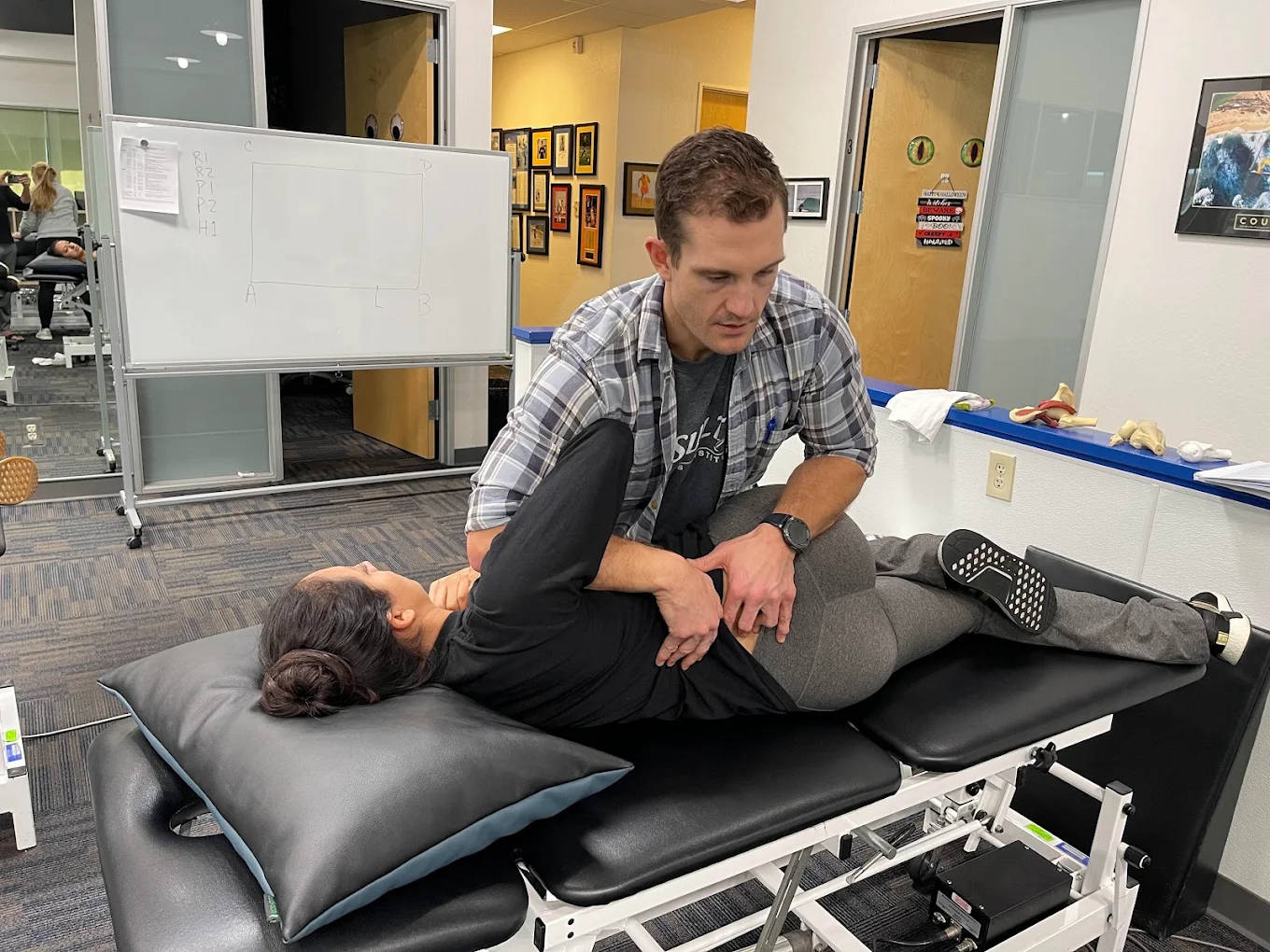
What sets me apart from other physical therapists is the amount of emotional connection and trust I foster with my patients. I believe the body can only heal and adapt as much as the brain and nervous system will allow, so I take a very intentional approach to building rapport, establishing trust, and understanding what is happening in a patient’s life beyond their physical symptoms.
My goal is to understand who my patients are, what motivates them, what they’re struggling with, and—most importantly—what they want to get back to doing. I have a strong background in mental health and psychology, along with my own experience in personal therapy, and I frequently apply those principles to my daily interactions with patients.
My first priority is building trust. From there, I want to make rehabilitation fun, engaging, and rewarding. Many of my patients have never experienced what their bodies are capable of after overcoming an injury or limitation, and I love being able to help them discover that.
I genuinely love connecting with people, learning about their lives, and learning from them. That curiosity and connection are central to how I practice. I don’t want my patients to simply leave with less pain or better range of motion. I want them to leave feeling more capable, more confident, and more connected to the activities and people that make their lives meaningful.
Ultimately, I believe that trust is one of the most powerful tools in rehabilitation. Building that trust allows me to address not just the physical problem in front of me, but the whole person—and that is what I believe sets my practice apart.
What matters most to you? Why?
What matters most to me is changing the way people perceive physical therapy.
Many patients don’t realize the depth of education and clinical training that modern physical therapists receive. Doctoral-level physical therapists undergo extensive education in anatomy, physiology, pathology, neuroscience, biomechanics, and clinical reasoning—including dissecting human cadavers as part of their anatomy training. Yet many people still think of physical therapy primarily as stretching, massage, or a handful of exercises.
I want to help change that perception. Physical therapists are highly trained clinicians who can serve as an important point of entry into the healthcare system. We can evaluate movement and function, recognize when something requires a higher level of medical care, determine when a patient should return to their physician or pursue imaging, and help guide patients toward appropriate complementary care when indicated.
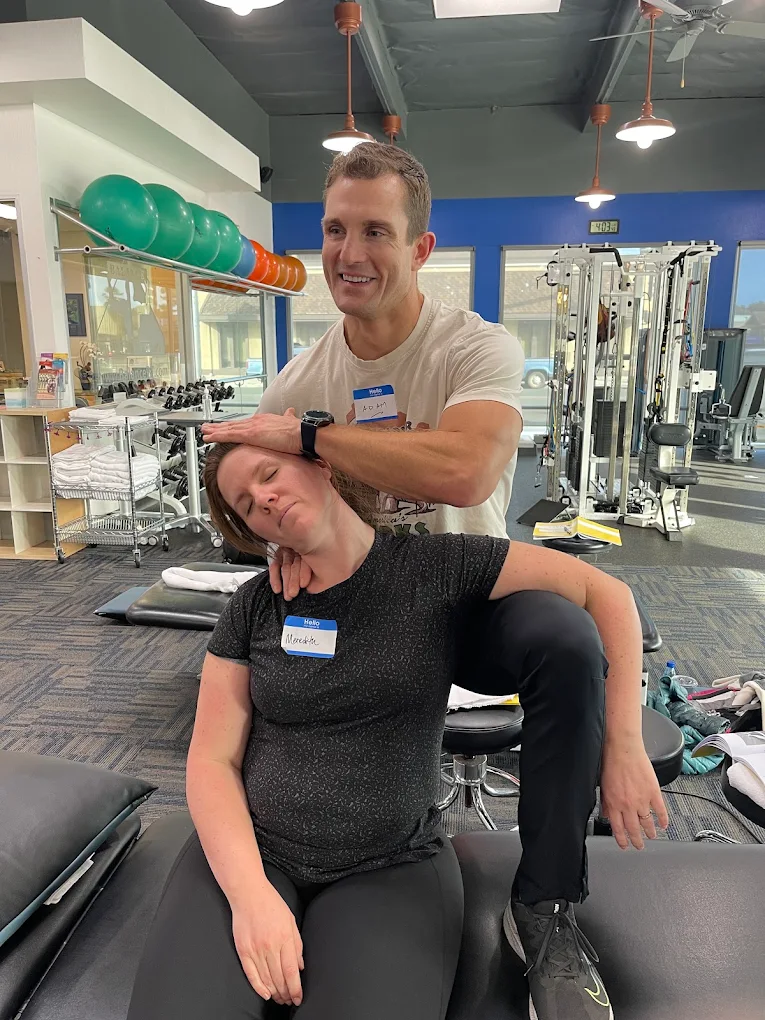
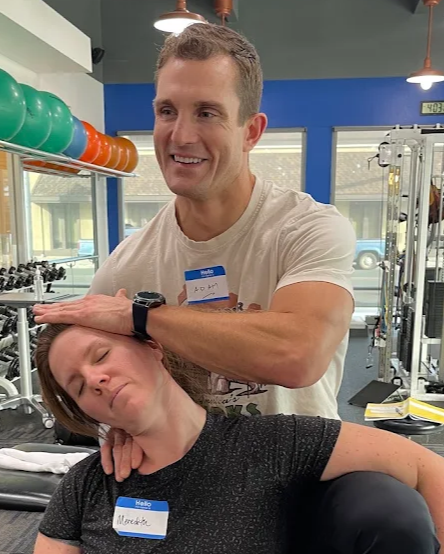
Our scope has also evolved significantly as the profession has moved toward doctoral-level education. We are trained in therapeutic exercise, manual therapy and joint mobilization, but equally importantly, we are trained to educate patients about their own bodies—including the musculoskeletal and neurologic systems that influence how they move, feel, and recover.
That educational component is particularly important to me. I don’t want patients to become dependent on a clinician for their health. I want them to understand what is happening in their bodies, develop the tools to manage their symptoms, and ultimately become more confident in taking care of themselves.
At its best, physical therapy doesn’t simply help someone recover from an injury. It gives people a better understanding of their bodies and the knowledge and confidence to take greater ownership of their health. That is the perception of physical therapy I want to help create.
Pricing:
- Medicare Accepted
- Private Pay Accepted
- Personal Training Available
Contact Info: