




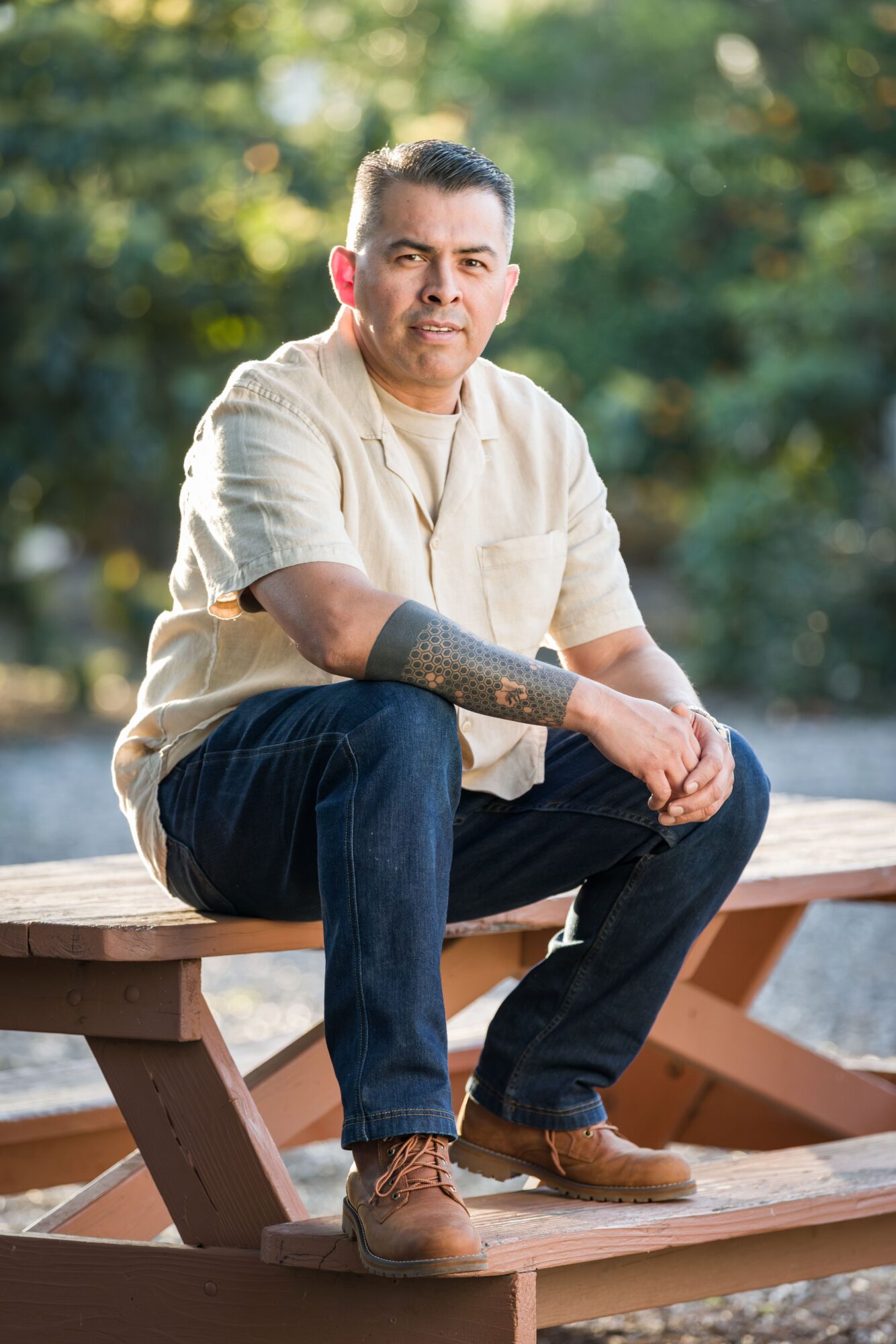
Today we’d like to introduce you to IVAN ORTIZ.
Hi IVAN, we’d love for you to start by introducing yourself.
The Story of Rolling Pin Donuts in Camarillo, 1994–Present
There are businesses that belong to a city because their address happens to be there, and then there are businesses that become part of the city’s memory.
Rolling Pin Donuts belongs to the second category.
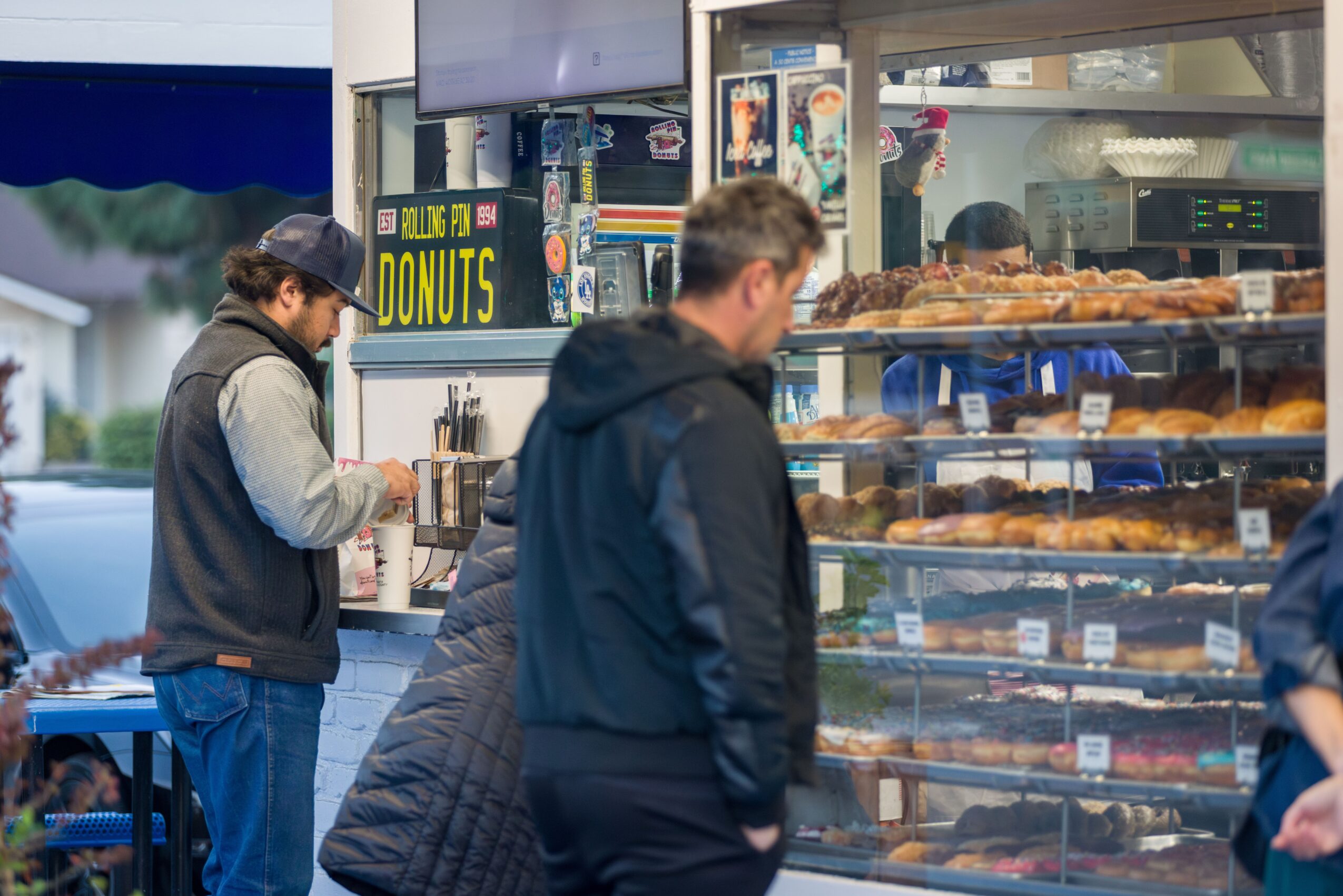
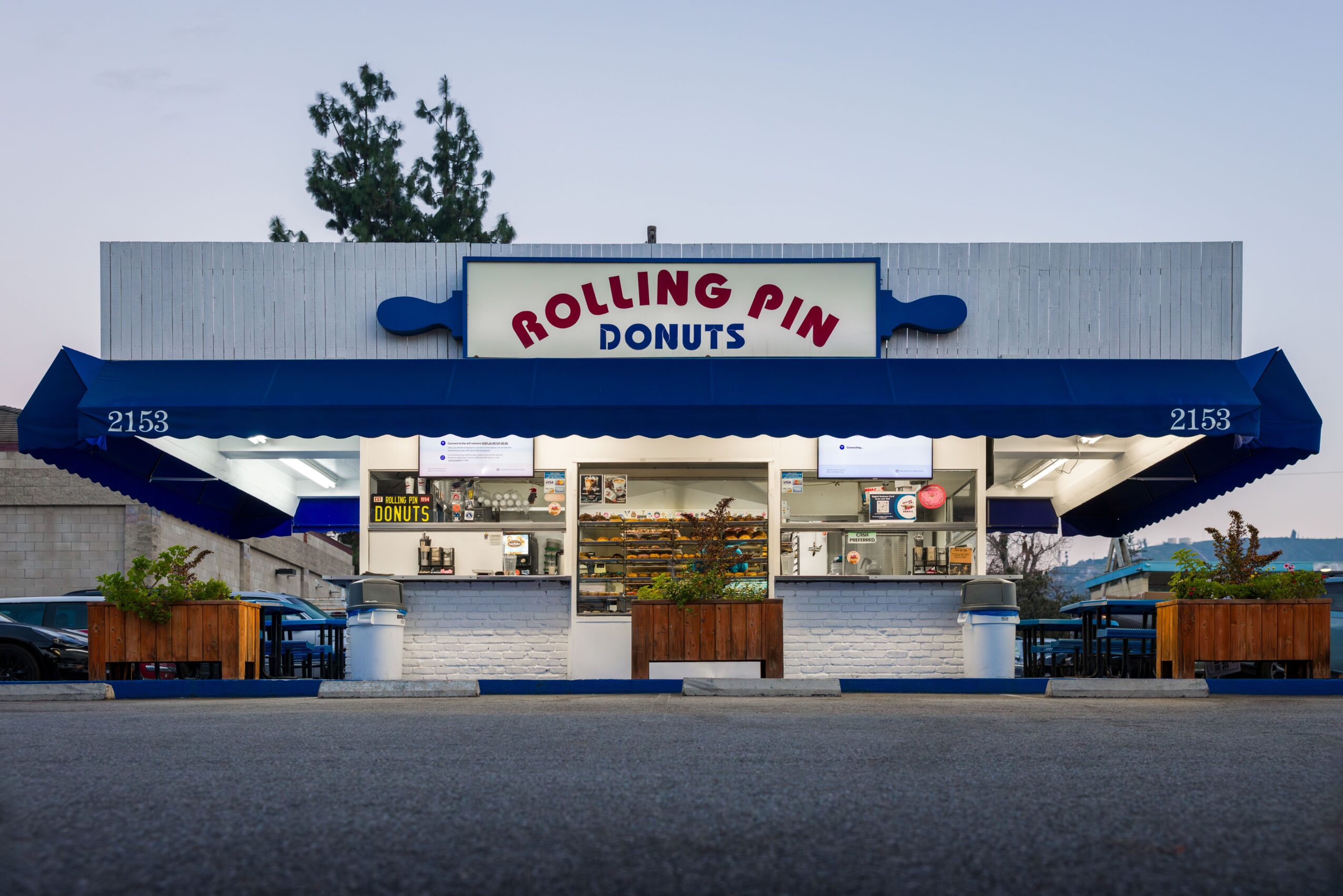
For generations of Camarillo residents, 2153 Las Posas Road has meant something remarkably specific: a little standalone donut shop, a blue awning, bright lights after most of the city has gone quiet, trays of freshly made donuts behind the window, and—quite often—a line of people waiting outside. Today Rolling Pin describes the Camarillo shop as the nostalgic heart of its business, a place associated with first days of school, family Saturday mornings, post-game stops and late-night donut runs.
But the story did not begin with Instagram, branded boxes or a second location.
It began with a tiny building, a donut family, and a man named Robert “Bob” Kenny.
1994: A New Name on an Old Donut Stand
The building at 2153 Las Posas Road was already part of Camarillo’s roadside landscape before Rolling Pin became Rolling Pin.
Longtime residents remember an earlier donut shop there called Donna Lee Donuts. Local artist Linda Dark, who moved to Camarillo in 1978, remembered that name when she later painted the little shop as a local landmark. There is a slight disagreement in surviving accounts over exactly when the Rolling Pin name first appeared: a Conejo Valley history piece places Rolling Pin at the address as early as 1992, while Rolling Pin’s own company history and later Camarillo newspaper reporting identify 1994 as the business’s founding year under Bob Kenny. The earlier donut operation likely explains some of that overlap.
What is much clearer is who brought the business into the era Camarillo residents now remember.
Bob Kenny came from a family already deeply involved in donuts. Kenny and his wife, Marge, had entered the Southern California donut business years earlier. Bob, a former Los Angeles police officer, began selling donuts in 1980, building a business called Donut Stop that eventually grew to several locations. Their son Jay later carried the family’s recipes to Reno, Nevada, where DoughBoys Donuts was established in 2009. Industry coverage in 2017 still described the Kenny family as the operators of Rolling Pin Donuts in Camarillo.
At Rolling Pin, Kenny followed an uncomplicated philosophy. He was not trying to turn a donut into a luxury object. He believed in making a good product, charging a reasonable price and keeping customers coming back.
The Camarillo location developed another advantage: it stayed awake.
By 2017, bakery-industry coverage noted that Rolling Pin sold donuts through the day, closing around 2 pm and reopening around 6 pm Kenny had watched donut buying shift beyond breakfast; late afternoon and nighttime business had become significant.
That unusual schedule would help turn a donut stand into something else entirely.
It became one of Camarillo’s unofficial nightspots.
The Years When Everybody Seemed to Know the Place
Camarillo has never been a city famous for an enormous late-night entertainment district. That helped make Rolling Pin distinctive.
At eleven at night, when much of town was dark, the little white-and-blue stand could still be glowing.
Teenagers came after games. College students came late at night. Couples stopped after movies. Night-shift workers picked up warm pastries. Families arrived early the next morning.
Customer accounts from the 2010s repeatedly describe lines despite the late hour, along with fresh glazed donuts, cinnamon rolls, croissants and oversized tiger tails. A 2016 visitor recalled getting out of a movie around 11 p.m. on a Sunday and finding a line still waiting at the shop. Another local described Rolling Pin as both an early-morning favorite and a weekend-night gathering place for high school and college students.
The line became part of the experience.
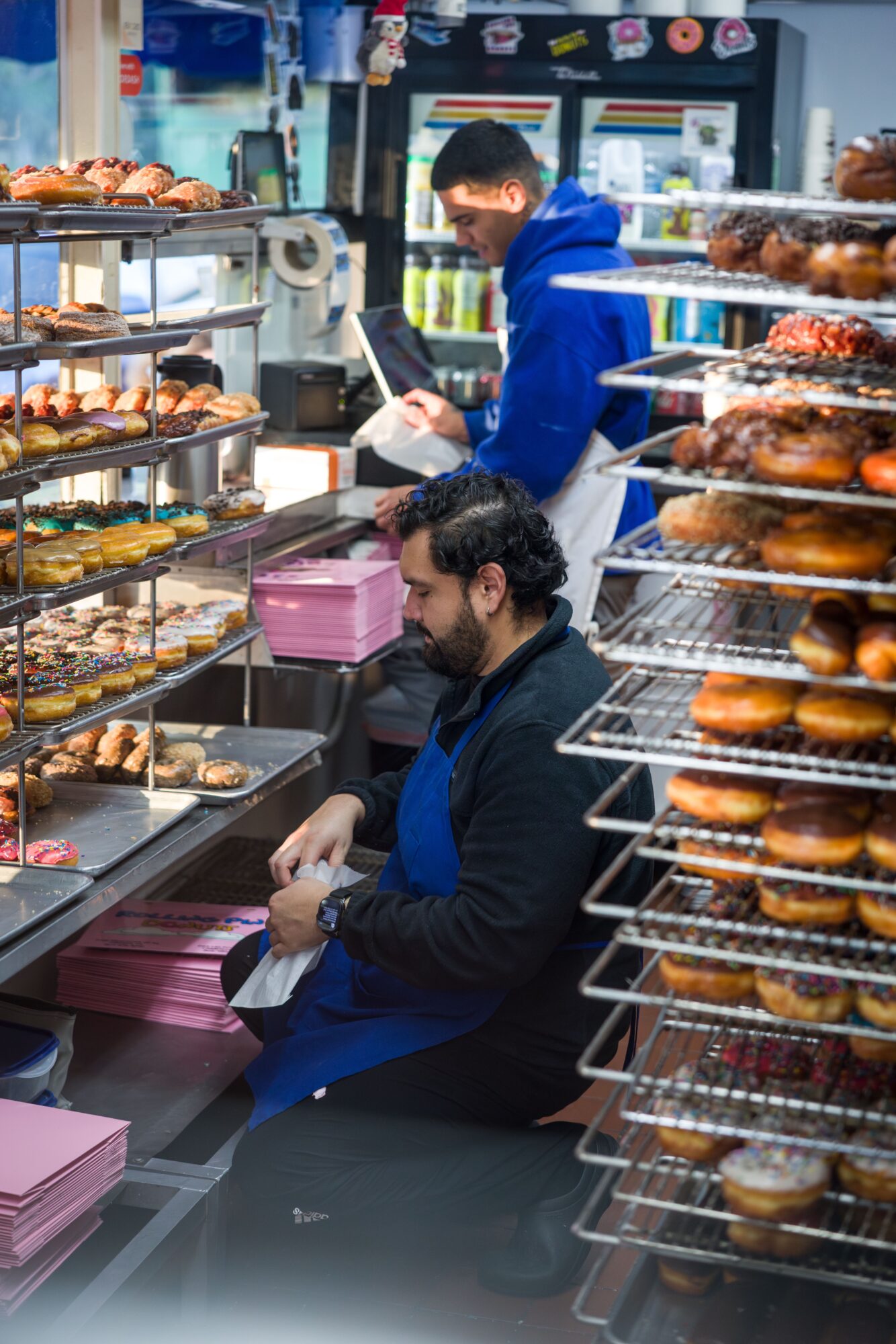
You could arrive irritated that twenty people were ahead of you and then realize that the line moved quickly. Through the windows you could see the racks. You could smell the dough. Somewhere behind the counter another batch was being made.
Rolling Pin was becoming famous without behaving very much like a place trying to become famous.
Then, in 2006, a young immigrant looking for work entered the story.
His name was Ivan Ortiz.
2006: Ivan Ortiz Walks Through the Door
Ortiz later described arriving in the United States in 2006 with no home waiting for him, no family nearby and no circle of friends to help him get established.
Bob Kenny gave him an opportunity.
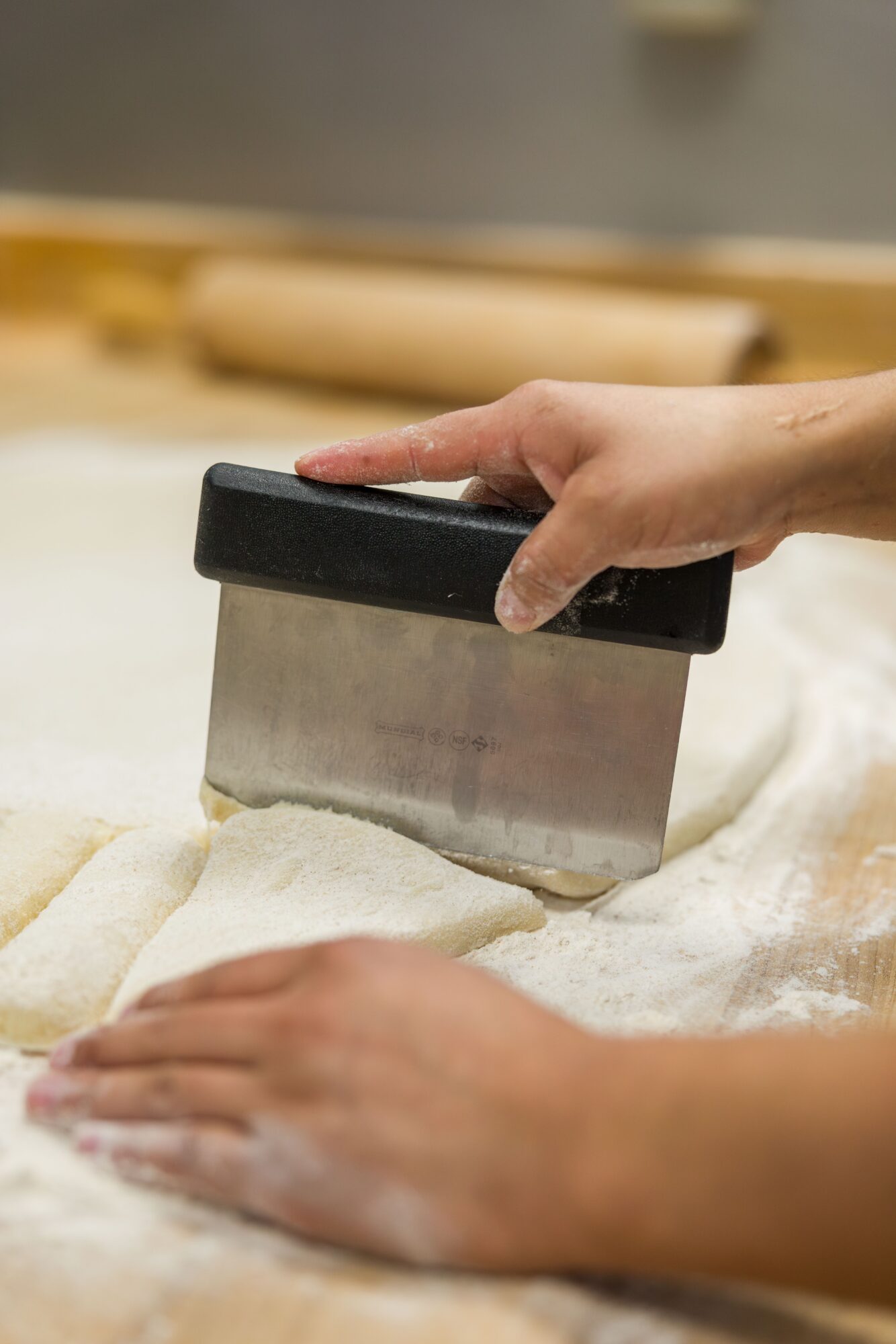
Ortiz began learning how to make donuts at Rolling Pin. He was also trying to learn English and survive financially, at one point working three jobs. Formal English classes were difficult to fit around that schedule. Instead, much of his education happened through work itself.
He learned the dough.
He learned the fryer.
He learned timing, consistency and what customers expected when they had stood outside waiting for a fresh glazed donut at an hour when sensible people were sleeping.
And Kenny noticed him.
Local reporting says Ortiz started as a baker and was eventually promoted to manager because of his work ethic. From that position, he began thinking not only about making donuts but about the business around them—sales, presentation, efficiency and the Rolling Pin name itself.
The relationship between Kenny and Ortiz gradually became larger than that of employer and employee.
Years later, after Ortiz became the owner, he would still publicly thank Robert Kenny, his former boss and friend, for giving him the chance that started everything.
A Shop Turns Into a Camarillo Landmark
By the late 2010s, Rolling Pin’s importance could be measured in ways that had little to do with accounting.
In 2018, Camarillo artist Linda Dark painted the shop in oils.
That is a curious milestone for a donut shop.
People paint missions, historic houses, old theaters and landscapes. Dark painted Rolling Pin—including a version showing the little building on a rainy day—because by then the building had become recognizable enough that a painting of it required very little explanation to locals.
The following year, another glimpse of Rolling Pin’s role in community life appeared in the Camarillo Acorn.
Most mornings, a group of retirees gathered there for coffee. Among them were Jack Sherman, Buzz Burns, Hal Williams, Tony Dean, Ruben Sanchez, Alder Iverson and Wayne Davis, many of them former 3M employees. Sherman was 100 years old at the time. He credited the daily coffee gathering with his friends as part of the reason for his longevity and said he was meeting them on doctor’s orders.
That scene says almost everything about what Rolling Pin had become.
At night, teenagers could be waiting for donuts.
A few hours later, retirees could be drinking morning coffee at the same little stand.
Different generations were using the same place for essentially the same purpose: to have somewhere familiar to go.
2020: When Familiar Places Suddenly Mattered More
Then came 2020.
Restaurants and bakeries across California faced the uncertainty of the COVID-19 pandemic. In April, Rolling Pin used its social-media presence to urge people to support local restaurants and bakeries during the outbreak.
For a business built around routine—people stopping after work, after school, after games, after movies—the disruption was enormous in cultural terms even beyond the economics.
Yet Rolling Pin entered the pandemic with something difficult to manufacture: decades of customer habit.
People already knew the building.
They already knew the phone number.
They already knew what they wanted before they reached the window.
And inside the business, a much bigger change was approaching.
2021: The Baker Becomes the Owner
By the time Bob Kenny prepared to retire in early 2021, Ivan Ortiz had spent roughly fifteen years learning Rolling Pin from the inside.
Ortiz had actually been planning another future.
He had saved money with the intention of opening a business of his own. Years earlier, while watching his children at a community pool, he had become increasingly concerned that his salary would not allow him to provide the future he wanted for them. That moment pushed him to begin teaching himself how businesses worked.
Then Kenny retired.
Instead of using his savings to start something unrelated from scratch, Ortiz used them to buy Rolling Pin Donuts. Local reporting describes the handoff as occurring in early 2021.
It was a remarkable reversal.
The man who had arrived in 2006 needing an opportunity was now the owner of the place that had given it to him.
Ortiz did not immediately try to erase the old Rolling Pin and replace it with something fashionable.
He began building around what already worked.
But he also thought much more aggressively about branding.
Boxes. Bags. Stickers. Keychains. Shirts. Hoodies. Hats.
Rolling Pin would still be a neighborhood donut shop, but Ortiz wanted people to recognize the name away from the building too. In a 2025 interview, he explained that after taking ownership he deliberately expanded the company’s branding and began thinking about taking Rolling Pin into additional cities—and perhaps eventually beyond California.
The tiny stand was beginning to think bigger than its parking lot.
2023: The Secret Plan Becomes Public
By 2023, Ortiz had decided that one Rolling Pin was no longer enough.
The second shop would be in Ventura.
This was not a completely new dream. Ortiz had previously suggested expansion to Bob Kenny, but a second location never materialized while Kenny owned the business. Once Ortiz controlled Rolling Pin, he could finally act on the idea.
In November 2023, the Camarillo Acorn reported plans for a second Rolling Pin.
The concept was deliberately different from Las Posas Road.
The Camarillo location’s charm came partly from what it lacked: it was a small stand with walk-up service and limited outdoor seating. Ventura would have indoor and outdoor seating. Ortiz talked about creating the feeling of a slow Sunday morning—a place where customers might stay instead of simply collecting a pink box and leaving.
Yet the original shop would remain the template in the most important respect.
The donuts had to taste like Rolling Pin.
2024: Thirty Years, and Then Two Stores
Rolling Pin celebrated its 30th anniversary in 2024. The company’s own public history now traces its Camarillo regulars back to 1994, the year Bob Kenny opened the business.
Expansion, however, proved slower than Ortiz hoped.
The Ventura location occupied a former Baja Fresh space at 4726-B Telephone Road. Plumbing and construction problems complicated the project, pushing the opening beyond earlier expectations.
Finally, on August 28, 2024, Rolling Pin Donuts opened in Ventura.
For the first time in its thirty-year history, Rolling Pin was no longer simply that little donut stand in Camarillo.
It was a two-location brand.
But the company was careful about the distinction. In its current description, Rolling Pin calls Camarillo the original, the nostalgic heartbeat of the business, while Ventura represents an extension designed for people to linger over coffee and conversation.
The expansion was proof that Rolling Pin could grow without pretending its history had happened somewhere else.
Then, less than a year later, the original shop was hit—literally—by one of the strangest events in its history.
April 19, 2025: The Car in the Donut Shop
On April 19, 2025, a vehicle crashed into the side of the Camarillo Rolling Pin.
The impact caused extensive damage to the front of the business and forced the location to close temporarily.
Considering the shop’s small footprint and the position of customers near its walk-up windows, the most important detail was almost unbelievable:
Nobody was injured.
Rolling Pin shared video of the accident and told customers it hoped repairs would allow the business to resume operations before the end of the following week.
For a few days, 2153 Las Posas Road went dark.
And for a business whose identity had been built partly around the fact that its lights seemed always to be on, that darkness was noticeable.
Repairs moved quickly.
On April 25, 2025—roughly one week after the crash—Rolling Pin reopened.
The blue-and-white stand had survived another chapter.
Ivan Ortiz Looks Back
Two months later, in June 2025, Ortiz gave an interview that made the unusual arc of his life at Rolling Pin particularly clear.
He remembered arriving in America in 2006.
He remembered Kenny giving him a job.
He remembered struggling with English and working multiple jobs.
He remembered becoming a manager.
Then an owner.
Then the man opening Rolling Pin’s second location.
When asked who deserved recognition for helping him get there, Ortiz named Robert Kenny and the Camarillo community.
That combination is probably the closest thing Rolling Pin has to a complete explanation for its survival.
One person gave another person an opportunity.
And an entire city kept showing up at the window.
Rolling Pin Today
As of 2026, Rolling Pin Donuts remains in operation at its original Camarillo address, 2153 Las Posas Road, alongside the Ventura location at 4726 Telephone Road. The current menu still revolves around donuts and croissants while also featuring items such as croissant-donut hybrids and large birthday donuts.
The company now has merchandise, online ordering, social media, a second storefront and ambitions that would have seemed enormous compared with the little shop Bob Kenny operated in the 1990s.
But the most valuable piece of Rolling Pin may still be the thing that cannot be franchised or printed on a T-shirt:
Memory.
A child who once went there with a parent can now take a child of their own.
A teenager who stood in line at midnight can return twenty years later at seven in the morning.
Someone remembers Donna Lee Donuts.
Someone remembers Bob Kenny.
Someone remembers Ivan working behind the counter before he owned the place.
Someone remembers the retirees drinking coffee.
Someone remembers the line after a football game.
Someone remembers the week a car smashed into the building.
And somebody walking up to that same window tonight will be creating another memory without realizing it.
That is how certain small businesses survive decades.
Not because they remain unchanged.
Rolling Pin certainly did not.
Ownership changed. Camarillo changed. The menu grew. Social media arrived. A pandemic came. A second location opened. A car crashed through the building.
Yet the basic ritual survived all of it.
A customer approaches a small window on Las Posas Road.
Behind the glass are trays of donuts.
The lights are on.
And Camarillo knows exactly where it is.
Alright, so let’s dig a little deeper into the story – has it been an easy path overall and if not, what were the challenges you’ve had to overcome?
1. Maintaining freshness and consistency. Rolling Pin is strongly associated with fresh donuts, but some customer feedback mentions donuts occasionally being stale or dry. With a large variety available and very long operating hours, keeping every product equally fresh throughout the day is difficult.
2. Hours of operation. Camarillo location operating extremely long hours, listing it as 24 hours during much of the week. That requires substantial staffing, baking coverage, utilities, cleaning, and supervision.
3. Balancing prices with customer expectations. Customers of neighborhood donut shops tend to be price-sensitive, so the business has to cover rising operating and ingredient costs without making customers feel that donuts have become too expensive.
4. Inventory and food waste. Rolling Pin offers many varieties—including cake donuts, filled donuts, croissant donuts, specialty pastries, and custom products. The challenge is producing enough so popular items don’t sell out while avoiding excess donuts that become stale and have to be discarded.
5. Protecting it’s established reputation. The Camarillo location has around 980 reviews and a 4.3/5 rating in current business listings. That recognition is a major strength, but it also creates high expectations. A few poor experiences involving freshness, service, availability, or pricing can stand out because customers already expect Rolling Pin to be one of Camarillo’s better-known donut shops.
Thanks for sharing that. So, maybe next you can tell us a bit more about your business?
Rolling Pin Donuts is a local Camarillo favorite built around one simple idea: making great donuts the traditional way, with quality ingredients, variety, and a commitment to freshness. We specialize in classic donuts as well as the unique, oversized, and specialty creations that have helped make Rolling Pin memorable in our community.
Along with traditional glazed, cake, filled, and old-fashioned favorites, we’re known for our fancy donuts, including apple fritters, tiger tails, chocolate chip rolls, cinnamon rolls, bear claws, and our popular croissant-donut hybrids. We also offer croissants, specialty filled pastries, jumbo donuts, and celebration donuts that give customers something a little different from the typical donut-shop experience.
What sets Rolling Pin apart is the combination of tradition, creativity, variety, and accessibility. We want to be the place people think of for an early-morning coffee and donut, a late-night craving, a box for the office, or something special for a birthday or celebration.
Brand-wise, we’re most proud of the reputation Rolling Pin has built within Camarillo and Ventura County. Our customers have made us part of their routines, family traditions, celebrations, and late-night stops, and that connection means a great deal to us.
More than anything, we want people to know that Rolling Pin Donuts is about creating an experience that feels local, familiar, and fun. We take pride in offering something for everyone—from the classics people have loved for years to specialty donuts you may not find anywhere else—and we’re grateful to continue serving the community that has supported us.
Any big plans?
For the future, we’re focused on continuing to grow Rolling Pin Donuts while staying true to what our customers already know and love about us. We want to keep improving the customer experience, introducing new and creative donut flavors, and finding fresh ways to make our menu exciting while still offering the classics that have built our reputation.
We’re also looking forward to strengthening our connection with the Camarillo and Ventura County community. Whether that means being part of more local events, creating special seasonal offerings, or making it easier for customers to order for parties, offices, and celebrations, we see a lot of opportunity to keep building those relationships.
As we grow, our priority is to maintain the quality, freshness, variety, and welcoming atmosphere that make Rolling Pin special. We’re excited about evolving with our customers, trying new ideas, and continuing to make Rolling Pin a place people look forward to visiting for years to come.
Pricing:
- $3.75 For a Fancy Donuts
- $2.45 for Jelly Filled Donuts
- $2.20 for any Round Yeast Donut
- $1.75 for Cake Donuts
- $4.50 for Croissant Donuts
Contact Info:
- Website: https://rollingpindonuts.toast.site/
- Instagram: https://www.instagram.comn/rollingpin.camarillo
- Facebook: https://facebook.com/RollingPinCamarillo
- Yelp: https://www.yelp.com/biz/rolling-pin-donuts-camarillo-2?osq=Donuts