




Today we’d like to introduce you to Justin Martinez.
Alright, so thank you so much for sharing your story and insight with our readers. To kick things off, can you tell us a bit about how you got started?
I’ve been a musician since before I can remember. There are photos of me strumming a guitar and playing a drum set from the time I was three or four years old. I started studying music at eleven, when my parents finally let me have a guitar, but only if I joined the middle school band. So I played clarinet, then trumpet, to keep them happy while I dove into guitar on the side. I grew up on the classic rock of my dad’s era and before it: Led Zeppelin, AC/DC, Santana, Jimi Hendrix, the Eagles, Aerosmith. I say I was a musician from a young age because I was hooked on music, and I listened intently, mostly to the guitar part. I could sing you back a Led Zeppelin solo before I could sing you the words.
Once I had a guitar and a year of lessons, I was cranking up the amp and jamming to Hendrix and Santana, then Van Halen. The internet didn’t really have tabs like it does now, and I didn’t have much access to it anyway, so I used my ears, some tab books, and whatever my friends knew to figure out the sounds that were stuck in my head. That way of listening, honing in on the guitar part and being able to hear it back in my mind before playing it, was crucial to how I developed as a musician.
We moved to the Australian outback for a few years, right after my first guitar teacher back in California told me she had nothing left to teach me. In Australia, all I had was magazines and CDs. I was into Metallica, Pearl Jam, Nirvana, and other alt rock by then, along with Van Halen and Santana. I’d put a CD on repeat and play one song over and over until I had it: riffs and chords first, then the full solos. By this point I could read tab well, and the middle school band had taught me to read sheet music, just not for guitar. I was playing with other musicians occasionally, got some recognition for it, and even started teaching a few peers and older players.
The last two years of high school, we moved to Virginia, and I landed at a school with a strong guitar program. They had a guitar ensemble, and coming in as a junior meant I had to audition: a solo piece and some sight reading. I had one summer to learn how to read music for guitar, so I bought a book and got to work. I wasn’t sure I was ready, but I passed. That program changed my life. It ran like an orchestra, with sections, chair auditions, and real stakes, all on nylon-string classical guitar (the school lent them out to anyone who didn’t have one). I took to it immediately and worked my way up to first chair.
At the same time, I was discovering a different musical world at home. I’d gotten into Joe Satriani before Australia but couldn’t figure out how to play most of it until I got my hands on tab books. Every night after homework and skateboarding, I’d be in the basement working through songs. Then my great aunt, who had a big record collection, handed me a CD she didn’t want anymore: Al Di Meola’s World Symphonic. His playing floored me, especially since it was all on nylon-string guitar, fast and clean and entirely picked rather than legato. The last track on that album was a piece by the composer Astor Piazzolla, and it stuck with me. I spent years trying to play it and couldn’t get the technique. When I finally found the tab online, I still couldn’t crack it, because I didn’t know anything about classical technique or fingerpicking yet. About a year later, once I was in the ensemble learning that technique, it clicked. I applied it to the Piazzolla piece and it finally worked. That was my first classical piece.
Al Di Meola led me to John McLaughlin and Paco de Lucia, and their trio recordings floored me all over again, especially Paco de Lucia’s speed with his fingers. That’s how I found Flamenco. McLaughlin’s work with Shakti led me to Indian classical music, then Ravi Shankar, then Philip Glass. From there my attention shifted almost entirely toward nylon-string guitar, world music, and classical music.
I decided to study music in college, and most programs wanted at least two years of lessons, so I signed up for classical guitar. I had a year with a teacher who was a great guide into that world, someone who taught me to play musically and think about practicing, not just grind through pieces. Between him and my guitar teacher at school, I had strong role models, not just for playing but for teaching and sharing the guitar with other people. I ended up at Cal Poly as a music major, with two guitar instructors and a mentor who pushed me to perform in the community and keep growing.
I had to leave the area after graduating for family reasons, so I moved to the Bay Area, where I kept performing and practicing, composed some, played more piano, and dug into jazz, Brazilian music, Middle Eastern music, and contemporary classical. After a few years I moved back, partly because I was still driving down to play events since my name was known in those circles, and partly because my friends were still here.
That’s when the next phase started. I bought a mandolin on a whim in December 2010. In January 2011, a friend called to say his friend was going into the studio with a batch of songs and thought a mandolin would fit. I said yes, because jumping in the deep end is a good way to learn how to swim. I had about a month before the studio dates, so I got to work. That crunch is what pushed me to take everything I’d learned in college, all the theory and performance training, and boil it down to the essentials. It’s when I really understood how all those pieces fit together, and how to get back to playing by ear instead of leaning only on sheet music. By the time the studio dates came, I was ready, and that experience shaped how I’ve played and taught ever since: building from the roots up, everything connected and in context, with listening and ear training at the center.
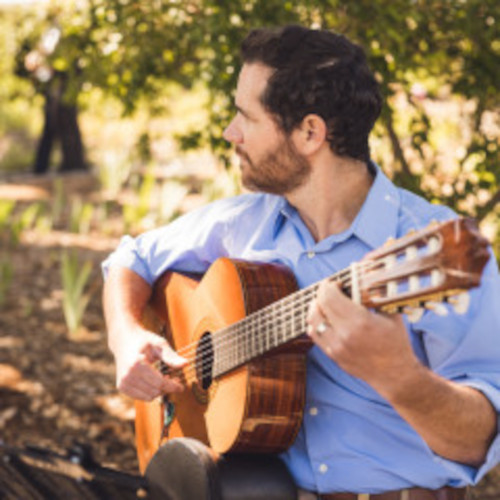
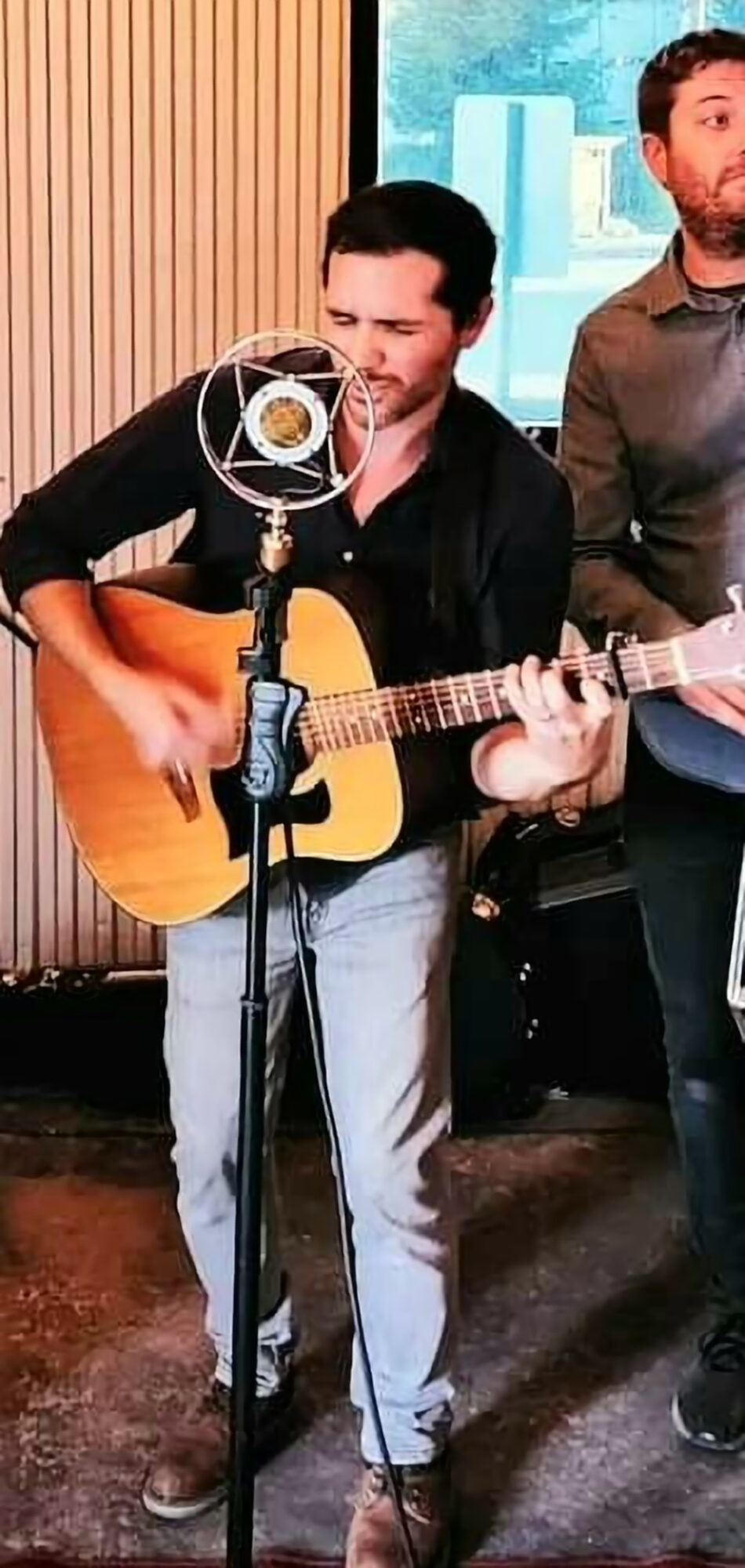
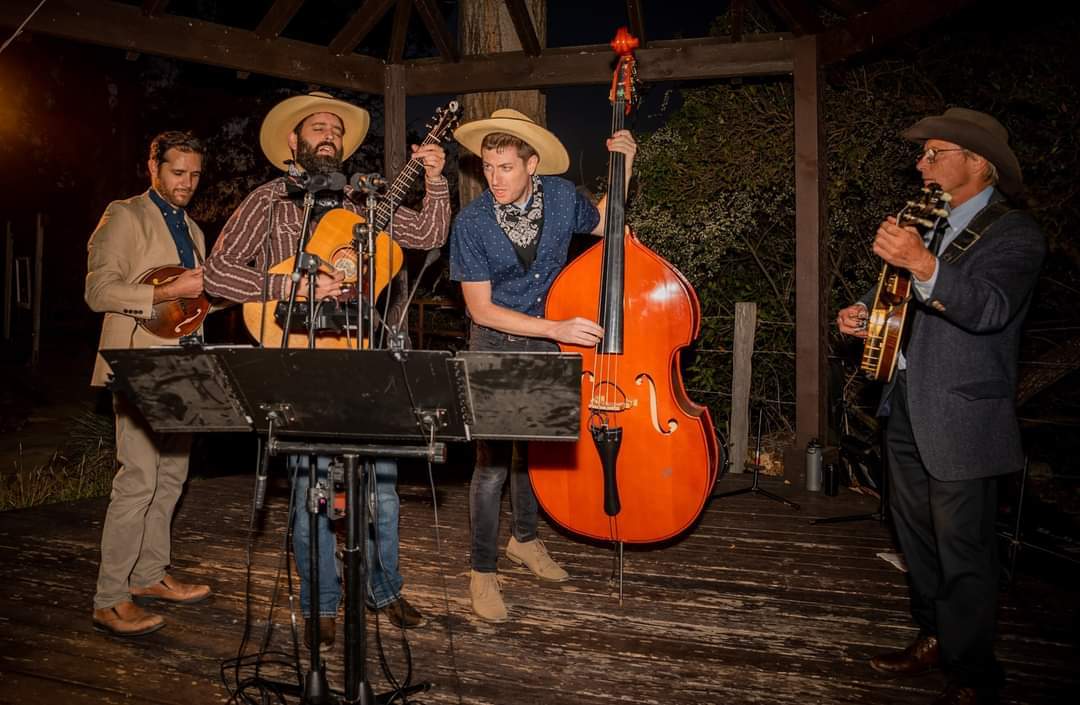
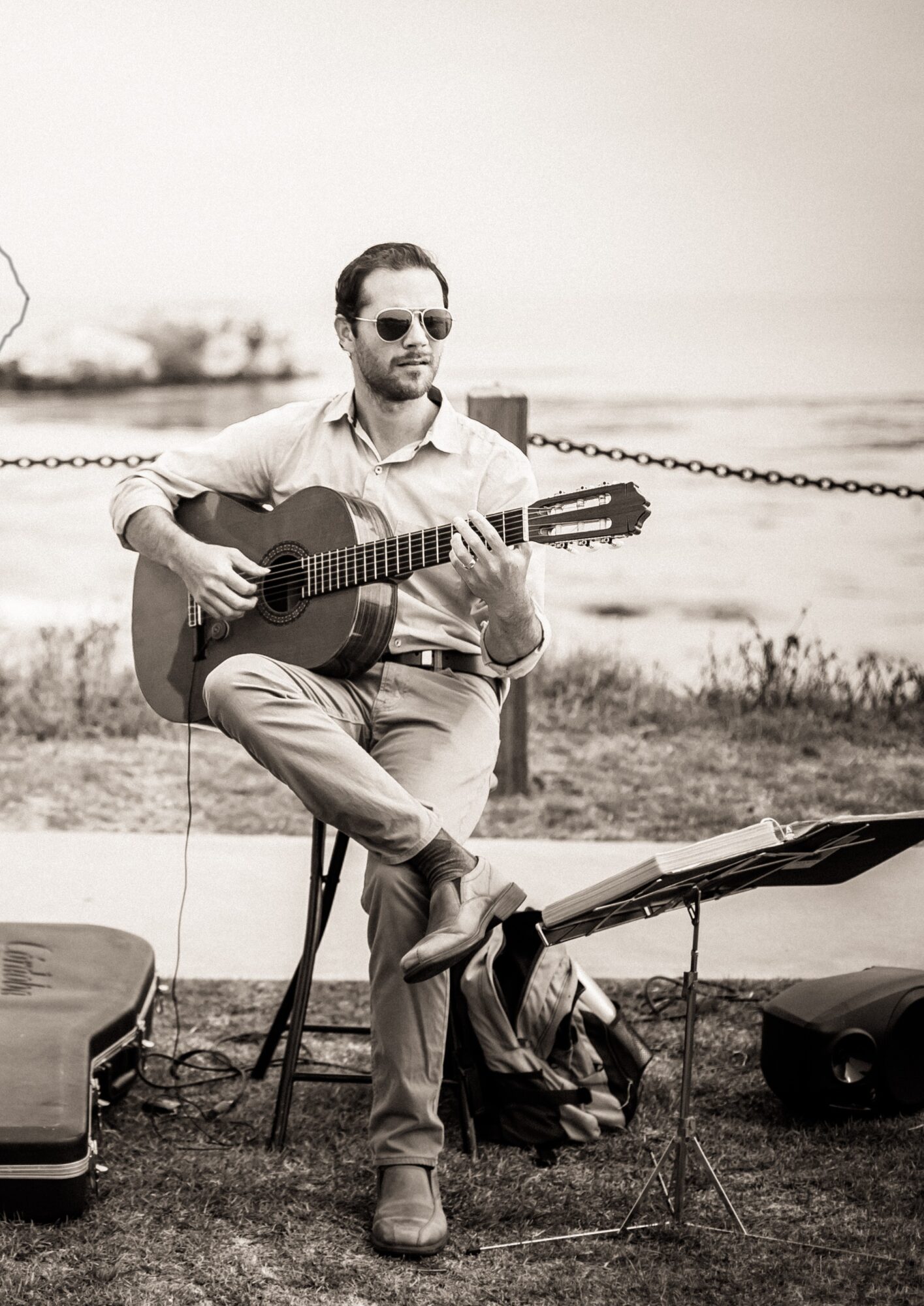
Today, my performing life splits into two worlds that both go back to that path. On one side, I play classical guitar and Flamenco, solo and alongside a Flamenco dancer for theatrical shows. On the other, I play bluegrass, country, and folk, both as a solo act and with my band, with a style that leans on players like Tony Rice and Billy Strings. Between the two, I’ve been performing for weddings, wineries, breweries, private events, and festivals since 2004.
Teaching has grown right alongside that. I work with private students out of my home studio, teach group classes, work with school classes, and run online classes as well. All of it comes back to an approach I built around the foundations and essentials of playing, something I put together for adult guitarists who feel stuck. My starting point with any student is the same one I learned the hard way: if you’re stuck, it’s almost never a talent problem. It’s a method problem. It’s been a long and winding road to get here, but I wouldn’t change any of it.
Would you say it’s been a smooth road, and if not what are some of the biggest challenges you’ve faced along the way?
Hopefully, I answered that in the last section! But here are some thoughts:
Not entirely smooth, no. A few things stand out.
The biggest one early on was access. I grew up without the internet having tabs the way it does now, and even when it did, I didn’t have much access to it. So I had to figure out songs by ear, using tab books and whatever my friends knew. That was slow and frustrating at times, but it ended up being the thing that trained my ear, so I can’t complain too much about it in hindsight.
Moving around made things harder too. We moved to the Australian outback for a few years right when I was starting to develop as a player, and all I had there was magazines and CDs. Then we moved again to Virginia for my last two years of high school, and I had to audition into a guitar ensemble I wasn’t really prepared for. I had one summer to teach myself to read music for guitar well enough to pass that audition. I made it, but I wasn’t confident going in.
The Piazzolla piece was its own struggle. I heard it on an Al Di Meola album and became obsessed with learning it, but I spent years unable to play it. Even after I finally found the tab, it didn’t help much because I didn’t understand classical technique or fingerpicking yet. It took getting into that guitar ensemble and learning the technique properly before it clicked.
When the mandolin opportunity came up in 2011, I only had about a month to get good enough on an instrument I’d never played before I walked into a recording studio. That kind of pressure forced me to condense everything I’d learned in school into something usable fast, which turned out to be a turning point, but it didn’t feel like one at the time.
None of it was a straight line. But looking back, each of those rough patches is what pushed the ear training, the technique, and the teaching approach I use today.
We’ve been impressed with Arroyo Grande Music Lessons, but for folks who might not be as familiar, what can you share with them about what you do and what sets you apart from others?
At Arroyo Grande Music Lessons, I teach guitar, mandolin, and ukulele out of my home studio, and I also perform professionally on classical guitar, Flamenco, and bluegrass, country, and folk. I’ve been performing since 2004 and hold a music degree from Cal Poly, so the teaching side comes directly out of real playing and performing experience, not just theory.
I work with students in a few different formats: private lessons, group classes, school classes, and online classes. Most of my private students are adults who’ve hit a wall with guitar, sometimes after years of playing, and can’t figure out why they’re stuck.
What sets me apart is how I approach that problem. I built my teaching around the idea that if you’re stuck, it’s almost never a talent issue, it’s a method issue. So instead of just handing someone more songs or more theory, I break things down to the foundations and essentials and rebuild from there, the same way I had to teach myself early on when I didn’t have easy access to lessons or resources.
What I’m most proud of is watching that click for people, especially adults who assumed they’d hit their ceiling. On the performing side, I’m proud of maintaining two distinct musical identities, classical and Flamenco on one hand, bluegrass and roots music on the other, and being able to bring either one to weddings, wineries, breweries, and private events around the Central Coast.
Can you talk to us about how you think about risk?
Risk is a big part of how I’ve developed as a musician, performer, and teacher. I regularly take on projects, gigs, and teaching assignments I’m not fully prepared for, because I know I can put in the work to catch up.
A good early example: years ago I took a teaching job at SLO Adult School that meant leading group classes for the first time and teaching ukulele, an instrument I’d never taught or really played. I took it anyway, knowing the pressure would force me to learn.
That pattern has repeated throughout my career. When Flamenco gigs started coming in, I could only sort of fake it at first, and never thought I’d perform that music professionally. But when the calls came, I took them and used the deadline to get to work: strip the music down to its essentials, train my ear on it, then build up the technique to actually perform it well.
Solo bluegrass singing is probably the clearest example. I never saw myself as a singer, just someone who could carry a tune. But bluegrass is a singing genre, so playing in a band eventually meant singing tunes. A few years ago I got a call to play a solo bluegrass gig, three hours, just me. I said yes and realized I only knew about three songs. I had a month to fix that, so I built a method for learning and retaining songs quickly, and I was ready by the gig. I’ve been performing solo bluegrass more and more ever since, and it keeps pushing both my playing and my singing.
That’s become a real teaching principle for me too: set up real deadlines to force focus and accelerate learning. I take on that kind of risk every year, and I take it gladly, because it’s what keeps me growing and keeps me sharing this music with people.
Contact Info:
- Website: https://arroyograndemusiclessons.com
- Instagram: @fluentguitar.com
- Soundcloud: https://soundcloud.com/fluentguitar
- Other: justinmartinezguitar.com | fluentguitar.com