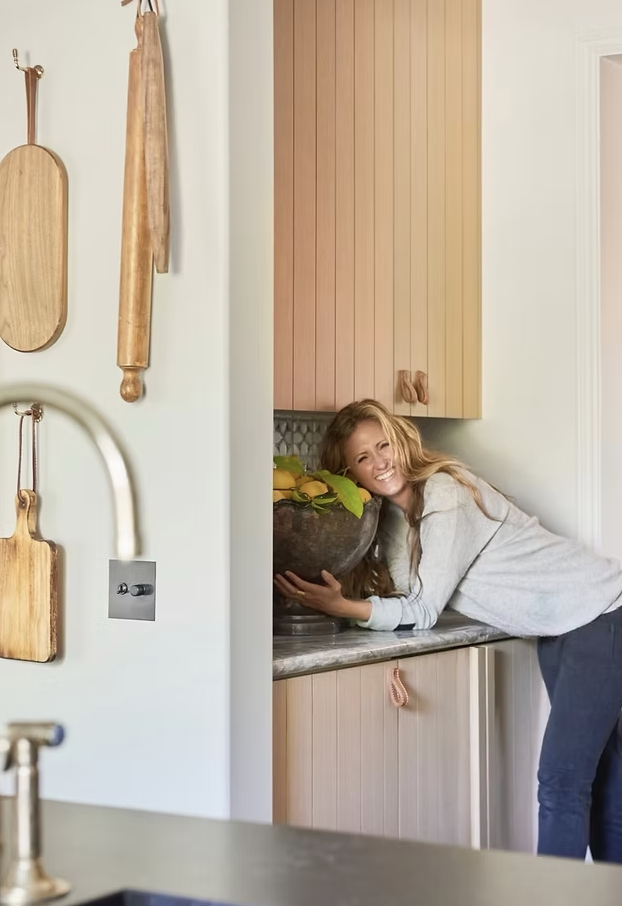





Today we’d like to introduce you to Andrea Brown.
Andrea, we appreciate you taking the time to share your story with us today. Where does your story begin?
Interior design has been part of my family’s story for at least three generations. My great-grandmother studied under Frank Alvah Parsons at the New York School of Art (which later became Parsons School of Design), and I grew up surrounded by the language of interiors—antiques passed down through the family, my mother’s tapestries, conversations about how people live, trips to the Seattle Design Center, museums, art, architecture, and travel. Those early influences shaped the way I see the world long before I ever called myself a designer.
I actually began my career in fashion design. At the time it felt like the natural next creative challenge, but looking back I realize I was simply following the thread that had always been there. The move into interior design felt less like a career change and more like a homecoming. In 2014 I founded Brown + Brown Design, continuing that family lineage while building something of my own.What has remained constant is the principle my mother taught me early on: good design is never about imposing the designer’s personal aesthetic onto someone else. It’s about understanding a client’s budget, lifestyle, history, and ultimately their truth—and then translating that truth into the built environment. Sometimes that means helping someone articulate a feeling they can’t yet put into words. Sometimes it means creating the visual equivalent of a sound bath: a space with extraordinary materials and architecture, but also stillness and places to simply exhale.Today, Brown + Brown Design works on residential and hospitality projects across the country and internationally—new construction, remodels, and renovations—guiding clients from the initial vision through architectural planning, interior detailing, materials, lighting, furnishings, and procurement. Alongside the technical side of the work, my personal practice through Pure Essence has deepened my belief that a home should do more than look beautiful. It should feel grounded, restorative, and completely personal—an environment that allows people to live within their own truth.That’s the through-line of my story: from a childhood steeped in design, through fashion, into founding the firm, and continuing to refine a practice that honors both the artistic and the deeply human side of creating a home.
We all face challenges, but looking back would you describe it as a relatively smooth road?
It hasn’t been a completely smooth road—there have definitely been ebbs and flows. I’ve come to see those fluctuations as simply part of building a business and doing this kind of work. Some of the real challenges have centered around relationships, boundaries, and time. Creating someone’s home is an intimate process, so building genuine trust with clients is essential, but it also means learning where to set clear boundaries so the work stays healthy and sustainable for everyone involved. The same is true with subcontractors and the larger team of builders, artisans, and tradespeople—strong collaborative relationships are everything, yet they require constant communication and clear expectations. Managing time across multiple projects, each with its own pace and demands, has been another ongoing lesson. There are seasons of intense momentum and seasons that feel slower or more complex. Learning to navigate those rhythms without losing sight of the bigger vision has been one of the most important parts of growing both the firm and myself as a designer. Those struggles haven’t been obstacles so much as necessary teachers. They’ve sharpened how I work, how I protect the creative process, and how I show up for clients.
Alright, so let’s switch gears a bit and talk business. What should we know about your work?
I lead Brown + Brown Design, an interior design and architecture firm focused on residential and hospitality work—new construction, remodels, and renovations, both nationally and internationally. We stay with a project from the first conversation through architectural planning, interior detailing, materials, lighting, furnishings, and procurement, working closely with architects, builders, artisans, and trades along the way. What I specialize in is not a signature look. I’m not interested in creating a recognizable “Andrea Brown interior” that could belong to anyone. I’m interested in discovering the client’s truth—their lifestyle, history, values, how they gather, how they rest, what they want the next chapter of their life to feel like—and translating that into the built environment. Sometimes clients already know exactly what they want. Other times they know how they want to feel but don’t yet have the language for it. My job is to listen closely enough to recognize that truth and help make it tangible. What I’m most proud of is walking into a finished home and feeling that it could only belong to that particular person or family. When the architecture, the way light moves through the rooms, the materials, the objects that carry meaning, and the way people actually live all come together, the space stops being something you simply look at and becomes something you experience. I sometimes think of it as creating the visual equivalent of a sound bath—beauty and presence, but also stillness. What sets the work apart is that combination of intuition and execution. There is an artistic side to seeing a vision before a client can fully articulate it, and there is a highly technical side to actually building it—drawings, construction, budgets, lighting, vendors, and craft. A home should be more than beautiful. It should function beautifully for the people living in it, feel grounded and restorative, and reflect who they truly are. That, for me, is the work.
Do you have any advice for those just starting out?
Go after the work that actually calls you. Don’t wait until the path looks perfectly clear—start, stay present, and let the next step reveal itself through the work itself. I wish I had understood earlier how important it is to be in the present moment. Design, construction, and building a practice all have their own timing. When you stay grounded in what is in front of you—the client, the drawing, the conversation, the material—you make better decisions and you hear more clearly what the project (and your own path) is asking for. Reach out. Talk to colleagues. Get involved with organizations like ASID. Pursue credentials like NCIDQ if that supports the kind of practice you want. Find mentors who will be honest with you about both the artistic side and the business side: relationships, boundaries, time, budgets, and how a vision actually gets built. You don’t have to invent the profession from scratch. At the same time, only you know what your path looks like. Other people can show you structures, standards, and possibilities, but the direction has to come from something quieter—what I think of as the truth you already carry. Listen to that as carefully as you listen to clients. The work becomes meaningful when you build a practice that is skilled, connected, and still unmistakably your own.
Contact Info:
- Website: https://www.brownandbrowndesign.net
- Instagram: brownandbrowndesign