




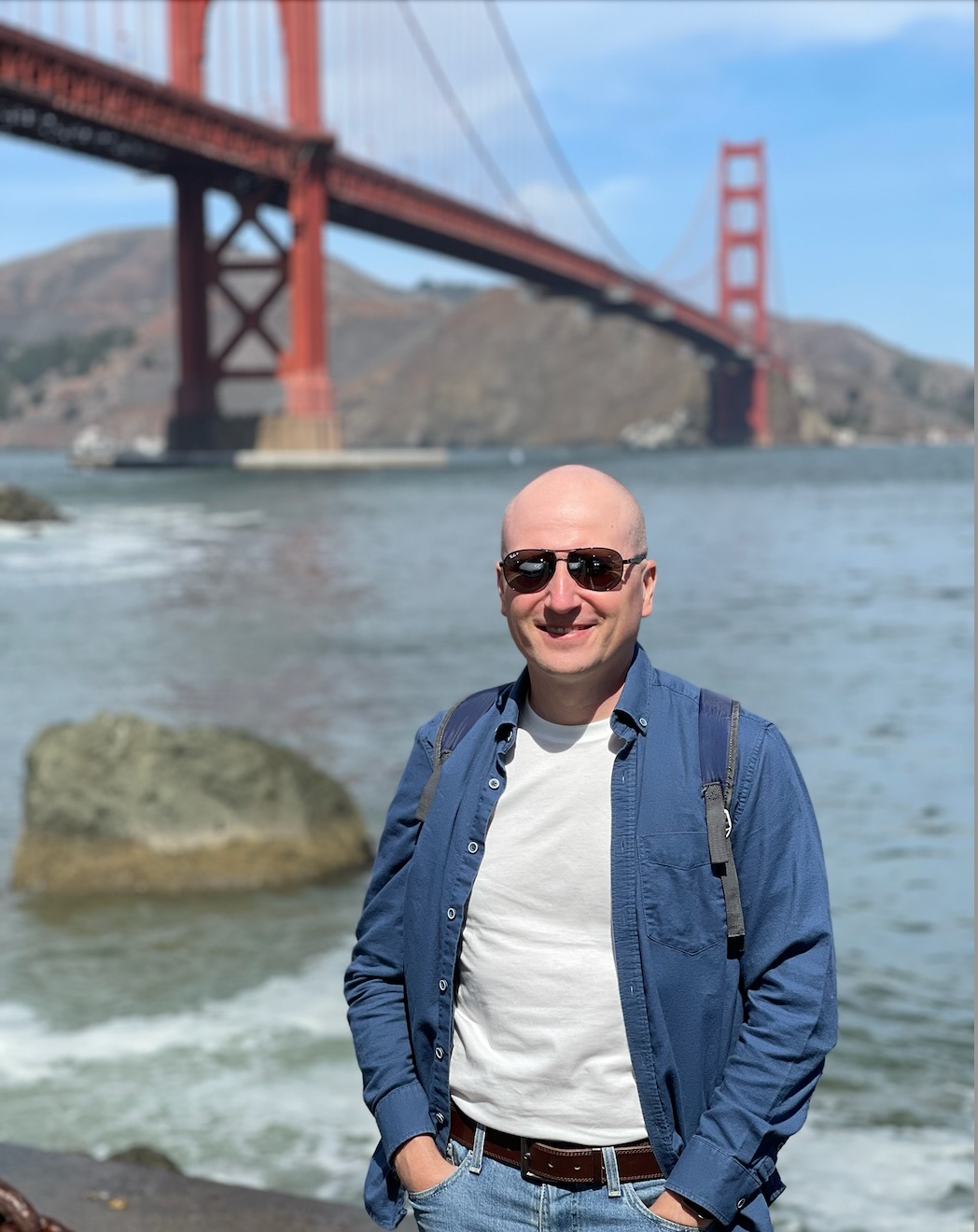
Today we’d like to introduce you to Dmytro Havrylov.
Dmytro, we appreciate you taking the time to share your story with us today. Where does your story begin?
Technology has been part of my life for as long as I can remember. As a child, I built my first computer with my own hands. I made a circuit board, soldered the processor and memory chips onto it, connected a cassette recorder to store data, and used a television as a monitor. It was a very simple machine by today’s standards, but I could write programs in BASIC. For me, it was fascinating to see how something I had built myself could follow my instructions.
While studying at university, I started developing software that I hoped to sell. At that time, the commercial software market in my country was barely developed, so my first products never became commercially successful. But that experience didn’t discourage me. I knew I wanted to build my career around technology.
I started working as an IT engineer and eventually became an IT director. I led IT departments at several companies, often joining businesses that wanted to fundamentally change how they operated. My responsibility was not simply to maintain computers and software, but to build information systems that could support business growth.
Eventually, I reached a point where I had a good position, a stable salary, and interesting responsibilities, but I felt there was nowhere further to grow within that role.
Leaving a secure job to start my own IT consulting business was one of the most difficult professional decisions I made. My first client was actually my previous employer. We agreed that I would continue supporting their systems under a consulting arrangement. That gave me the opportunity to find new clients and start building an independent business.
That decision completely changed my professional life. Instead of working inside one company, I began working with businesses from different industries, learning how they operated, understanding their challenges, and designing solutions to make them more efficient.
Over time, I developed a philosophy that still guides my work today: businesses don’t really need software. They need solutions to business problems. Software is simply a tool to achieve that goal.
My professional journey eventually brought me to the United States, where I continued developing my consulting business and working with American companies. Entering a new market meant building my reputation again, but it also gave me new opportunities to work with entrepreneurs and understand different approaches to business.
Today, my work combines business consulting, CRM and ERP system architecture, and the development of AI-powered solutions. Although technology has changed dramatically since I built that first computer, what motivates me is still the same: finding ways to make complex things work more simply and effectively.
We all face challenges, but looking back would you describe it as a relatively smooth road?
One of the biggest lessons I’ve learned in my career is that technology is rarely the most difficult part of an IT project.
The real challenge is understanding how a business actually works.
Every company has its own processes, people, habits, and problems. To design a successful technology solution, you need to understand much more than the technical requirements. You need to understand how decisions are made, how employees work, and what really affects the company’s results.
That kind of understanding only comes with experience. After working on many projects across different industries, I began recognizing patterns: which approaches usually work, which create problems, and what results a business can realistically expect.
Today, clients often contact me not only to implement software but simply to ask for advice about how to organize or improve their business processes.
Another major challenge is helping employees accept change.
Business owners and management teams may have a clear vision of what they want to achieve, but the people who will use a new system every day may see things very differently. Even an excellent technology solution can fail if employees don’t understand it or don’t want to use it.
That’s why I pay so much attention to the people who actually do the work.
Sometimes I spend an entire working day sitting next to an employee, watching how they use existing systems and handle their daily responsibilities. Other times, I ride along with sales representatives as they visit customers, so I can see how their work happens outside the office.
These experiences often teach me much more than a formal meeting with management.
I believe that employees should see technology as something that makes their jobs easier, not as another complicated system they are forced to use. Training, communication, and understanding their needs are essential parts of my projects.
I also faced a different kind of challenge when I began developing my IT consulting business in the United States.
The American business environment is quite different from the European market I knew. Clients often prefer established providers with a strong history of local customer reviews and recommendations.
I decided to build my reputation through an American freelance marketplace. I started working with clients online, completing projects and gradually earning the reviews and trust needed to establish myself in the market.
That experience reinforced something I already believed: professional knowledge is important, but trust and the ability to deliver real results are what build lasting business relationships.
My experience has taught me that successful IT projects are not just about technology. They are about helping people work more efficiently and giving business owners better tools to manage and grow their companies.
Thanks for sharing that. So, maybe next you can tell us a bit more about your business?
The main goal of my work is to help businesses operate more efficiently by using technology to eliminate unnecessary routine tasks.
I believe a well-designed IT system should manage business processes and guide employees through their work, not the other way around. Employees shouldn’t have to constantly enter data, manage the software, or remember what they need to do next. The system should automatically coordinate workflows, provide the right information at the right time, and guide people through each step of the process.
I believe people should spend their time doing what they do best. Salespeople should focus on building relationships with customers and closing deals. Marketing professionals should focus on strategy and creative ideas. Production employees should focus on manufacturing products.
They shouldn’t have to spend a large part of their day entering the same information into different systems, preparing repetitive documents, or performing tasks that software could handle automatically.
At the same time, business owners should have a clear understanding of what is happening inside their companies. They should be able to see how different departments are performing, identify problems, and understand what needs to change.
My company focuses on designing and implementing integrated business systems, including CRM, ERP, sales, marketing, inventory management, accounting, and other business operations.
My approach is to create one connected information environment rather than a collection of separate software products.
For example, I believe a company should be able to follow the entire customer journey, from the first visit to its website through the sales process, order fulfillment, customer service, and future purchases.
When this information is connected, businesses can understand which marketing activities attract valuable customers, how their sales teams perform, and which decisions actually contribute to growth.
One example is a project I worked on for a company that operated several factories manufacturing equipment for power plants.
Each factory worked almost independently, with separate purchasing, inventory, and business processes. Important customer information was scattered across different employees, and management didn’t have a clear picture of the company’s overall performance.
We brought all the factories together into one integrated business system. This allowed the company to combine purchasing, reduce costs and excess inventory, standardize business processes, and manage shared departments more efficiently.
Most importantly, the company’s leadership gained a clear, real-time view of the entire business and could make better decisions based on actual data.
Projects like this shaped the way I think about business technology.
Today, my main focus is taking business software to the next level with artificial intelligence.
My team and I have developed an AI-powered technology that allows people to work with complex business systems using ordinary human language. We are now launching pilot projects with clients, and we have also filed a patent application for this technology.
The idea is simple: instead of learning how to use complicated software, people can just tell an AI assistant what they want to accomplish.
For example, a business owner could simply ask the AI to analyze sales, identify customers who need attention, assign tasks to employees, or prepare and send business documents. The AI translates these requests into actions inside the company’s existing business system.
All of this can happen through a simple conversation, without even opening the traditional software interface.
I believe this is a fundamental change in how people interact with business software.
For decades, the software industry has focused on making programs easier to use. Companies have invested enormous efforts in designing simpler interfaces, adding visual tools, and developing Low-Code and No-Code technologies that allow users to build business processes with little or no programming.
These approaches have made software more accessible, but people still need to learn how the systems work, understand their logic, and configure the processes they want to automate.
Our approach is different. Instead of making software easier for people to learn, we are teaching software to understand people.
A business owner doesn’t need to know how to configure an ERP system or build an automated workflow. They can simply explain what they need in everyday language, and AI can turn that request into the necessary actions.
I see enormous potential in this approach, especially for small and medium-sized businesses that cannot afford large IT departments or expensive software implementation projects.
My goal is to make powerful business technology accessible to any business, regardless of its size or the technical experience of its employees.
What quality or characteristic do you feel is most important to your success?
I believe one of my most important professional qualities is the ability to think strategically and see the bigger picture.
When I look at a client’s problem, I try to see it through the eyes of the business owner, not just as a programmer or a systems analyst.
Sometimes a problem that appears to require complicated software development and thousands of lines of code can actually be solved by making a simple change in how an employee works.
I don’t believe in implementing technology just because it is available. I believe in finding the simplest effective solution to a real business problem.
Another quality I value very highly is the ability to build trust.
When clients trust my experience and judgment, we can work together on much deeper changes within their businesses. But that trust also creates responsibility. I take the quality of my work very seriously because I understand that the decisions I recommend can affect an entire company.
Curiosity is another important part of who I am.
People sometimes ask how I stay interested in technology when everything changes so quickly. My answer is very simple: I genuinely enjoy it.
I still find it exciting to explore new technologies, experiment with new ideas, and figure out how they can solve problems that seemed impossible before. That’s also why I’m so interested in artificial intelligence.
At the same time, I believe it’s important to approach AI with a healthy level of skepticism.
AI can provide very confident and professional-sounding advice, but that doesn’t mean the advice is always correct. Sometimes it’s like talking to someone who has read every book about running a business but has never actually managed one.
Real business experience, critical thinking, and an understanding of people are still essential.
For me, professional success isn’t just completing a project or delivering a new software system.
The greatest satisfaction comes when I see a client’s company continuing to grow and develop using the technology foundation I designed for them long ago.
That’s when I know my work has created something truly valuable.
Contact Info:
- Website: https://havrylov.com
- Instagram: https://www.instagram.com/dmytro_havrylov
- LinkedIn: https://www.linkedin.com/in/dmytro-havrylov/